The Upper Elementary Geometry - Volume is a Educational Materials Montessori material designed for children aged 3-6, crafted by Nienhuis Montessori to AMI standards.
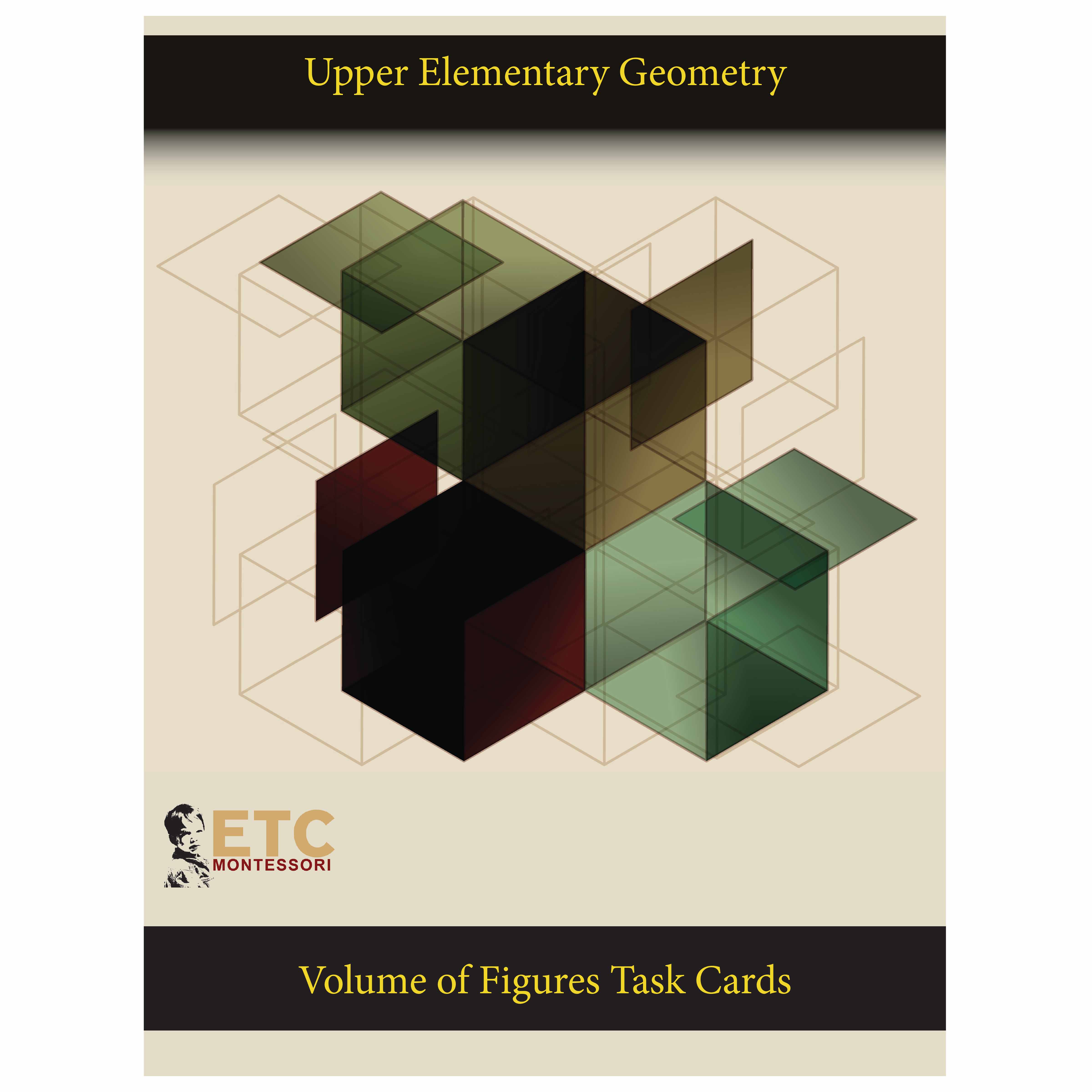
This Upper Elementary Geometry Volume task card introduces advanced spatial concepts through clear visual representations of three-dimensional shapes and their volume calculations. The laminated reference card features transparent cube outlines and colored volume representations, helping students visualize how geometric solids occupy space and relate to mathematical formulas.
“The child is both a hope and a promise for mankind.”— Maria MontessoriEducation and Peace
“The hands are the instruments of man's intelligence.”
— Maria Montessori, The Absorbent Mind
The Volume task card addresses the upper elementary child's need to understand how three-dimensional space can be measured and quantified. Through its transparent cube outlines and colored volume representations, this card bridges the gap between concrete geometric solids and abstract mathematical formulas. The laminated surface allows repeated exploration as students trace dimensions and calculate volumes. Each visual representation on the card connects directly to the child's previous work with geometric solids, now extending into mathematical relationships. The clear visual format of the Volume card respects the child's developing capacity for abstraction while maintaining a concrete reference point. By presenting volume calculations alongside transparent geometric forms, the card enables students to see inside shapes and understand how space is occupied. This task card serves as a bridge between the sensorial exploration of geometry and the mathematical precision required in upper elementary work.
Each order includes everything needed for proper presentation and long-term use.
Follow the Montessori method of presentation for optimal child development.
Begin by matching real geometric solids to the transparent outlines on the card
Trace the cube outline and identify length, width, and height dimensions
Build the shape using unit cubes, counting to verify the volume calculation
Apply the formula shown on the card to calculate volume mathematically
Compare the calculated result to the colored volume representation on the card
Every material is carefully selected for durability, safety, and authentic Montessori experience.
Sourced from sustainably managed European forests. Beechwood is chosen for its exceptional durability, smooth grain, and natural warmth that invites touch.
Natural, unbleached cotton in child-friendly colors. The fabric provides the right amount of friction for developing fingers while being gentle on sensitive skin.
Water-based, child-safe finish that meets the strictest European safety standards. Designed to withstand years of daily use without chipping or peeling.
Each material supports multiple areas of child development simultaneously.
Develops understanding of three-dimensional space and how geometric solids occupy volume through visual representations.
Bridges concrete geometric shapes to abstract mathematical formulas, supporting advanced mathematical thinking.
Reinforces volume concepts through clear diagrams and color-coded representations that aid comprehension.
Enables self-directed learning with comprehensive reference material for exploring geometric volume concepts.
Designed for child-sized hands
Professional tips from AMI-trained guides to maximize the educational value of this material.
“Introduce volume only after students have mastered area calculations and understand square units”
Use water displacement experiments to demonstrate volume concepts concretely before using the card
Create a volume journal where students record daily volume calculations of classroom objects
Connect volume work to practical applications like packaging design or architecture
Everything you need to know about this material.
This appears to be a labeling error. Upper Elementary Geometry Volume materials are designed for ages 9-12, not 3-6. The content covers advanced spatial concepts and volume calculations appropriate for upper elementary students who have mastered basic geometric shapes and are ready for three-dimensional mathematical concepts.
The task card introduces volume calculations for three-dimensional shapes through visual representations. It features transparent cube outlines and colored volume representations that help students understand how geometric solids occupy space, connect visual understanding to mathematical formulas, and develop spatial reasoning skills essential for advanced mathematics.
The transparent cube outlines allow students to see through the shapes and understand their internal structure, making abstract volume concepts concrete. Combined with colored volume representations, students can visualize how space is filled within geometric solids, supporting the transition from concrete manipulation to abstract mathematical thinking.
Students should have experience with basic geometric shapes, understanding of multiplication, familiarity with cubic units, and prior work with Montessori geometric solids. They should also have developed abstract thinking skills and be comfortable with mathematical formulas, typically achieved in lower elementary before advancing to volume calculations.
This task card builds upon earlier work with geometric solids, the pink tower, and brown stairs. It bridges concrete manipulatives and abstract mathematical concepts, preparing students for advanced geometry while maintaining Montessori's visual and hands-on approach to learning mathematical relationships.
Can't find what you're looking for?
Contact Our Experts
Share your experience with this material and help other educators and parents.


