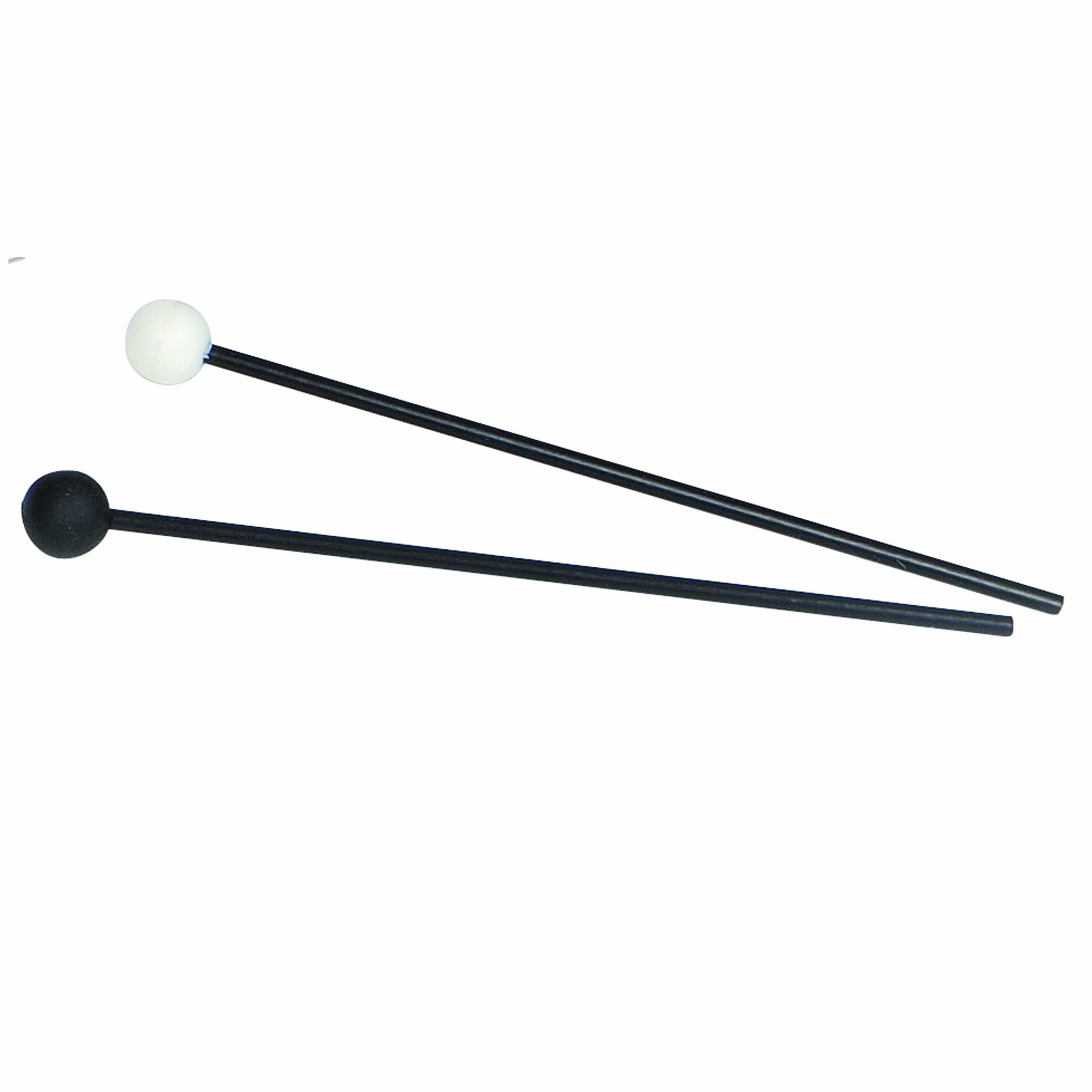
The Tone Bar Mallet: Soft is a Educational Materials Montessori material designed for children aged 6-12, crafted by Nienhuis Montessori to AMI standards.
These specialized soft tone bar mallets feature spherical rubber heads designed to produce gentle, mellow tones when striking resonator bells or tone bars in Montessori music activities. The lightweight plastic handles provide comfortable grip for extended musical exploration, while the soft rubber heads protect delicate instrument surfaces and create warm, sustained sounds ideal for developing auditory discrimination.
“The child is both a hope and a promise for mankind.”— Maria MontessoriEducation and Peace
“The hands are the instruments of man's intelligence.”
— Maria Montessori, The Absorbent Mind
The Tone Bar Mallet with soft rubber heads serves a precise function in the Montessori elementary music curriculum, where children explore the physics of sound production and the mathematics of musical intervals. These mallets, with their spherical rubber heads, enable children to produce consistent, gentle tones that allow for focused listening and comparison of pitch relationships. The soft rubber material creates sustained vibrations that children can observe and feel, connecting the abstract concept of sound waves to concrete sensory experience. The lightweight plastic handles of these mallets accommodate the developing grip strength of elementary children while allowing precise control over striking force. In Montessori education, the quality of sound produced by these soft mallets becomes essential for activities involving pitch matching, interval recognition, and harmonic exploration. The mellow tones generated by the rubber heads create an acoustic environment conducive to concentration, enabling children to discern subtle differences in frequency and timbre that harder mallets would obscure through excessive volume or harsh attack.
Each order includes everything needed for proper presentation and long-term use.
Follow the Montessori method of presentation for optimal child development.
Demonstrate proper mallet grip: hold plastic handle loosely between thumb and first two fingers, allowing wrist flexibility
Strike the center of each tone bar gently with the rubber head, lifting immediately after contact
Explore dynamic range by varying striking force from pianissimo to forte
Practice alternating hands in simple patterns, maintaining consistent tone quality
Create musical phrases using the warm timbre unique to soft mallets
Each material supports multiple areas of child development simultaneously.
Soft heads produce distinct tonal qualities that help children differentiate between various pitches and timbres.
Precise striking movements develop hand-eye coordination and controlled wrist movements essential for musical expression.
Enables children to explore dynamics and tone color, building understanding of musical concepts through hands-on experimentation.
Connects physical movement to sound production, integrating tactile and auditory experiences in meaningful ways.
Designed for child-sized hands
Professional tips from AMI-trained guides to maximize the educational value of this material.
“Store mallets horizontally to prevent rubber heads from developing flat spots that affect tone quality”
Demonstrate how soft rubber produces longer sustain, making these mallets ideal for slow, expressive pieces
Use these mallets specifically for ear training exercises where tone clarity matters more than volume
Pair soft mallet activities with hard mallet work to develop awareness of timbre variations
Everything you need to know about this material.
These soft mallets produce gentle, mellow tones that help children develop auditory discrimination skills without overwhelming their sensitive hearing. The rubber heads create warm, sustained sounds ideal for exploring pitch relationships and musical concepts in a controlled, peaceful classroom environment.
Soft mallets produce warmer, quieter tones with longer sustain, making them perfect for indoor classroom use and ear training activities. Hard mallets create brighter, louder sounds with sharper attack. Soft mallets also protect delicate instrument surfaces better and are more forgiving for beginners.
Yes, these soft mallets are universally compatible with all standard resonator bells, tone bars, and metallophones. The spherical rubber heads work effectively on both metal and wood surfaces, making them versatile for various Montessori musical instruments and activities.
While designed for ages 6-12, soft mallets are particularly beneficial for younger children (6-8 years) who are just beginning musical exploration. The gentle tones help prevent auditory fatigue during extended practice sessions and allow children to focus on pitch discrimination without distraction from harsh sounds.
Clean the rubber heads with a damp cloth and mild soap when needed, ensuring they're completely dry before storage. Store mallets horizontally or hanging to prevent warping of handles. Inspect regularly for wear on the rubber heads and replace when the spherical shape becomes flattened or damaged.
Can't find what you're looking for?
Contact Our Experts
Share your experience with this material and help other educators and parents.

