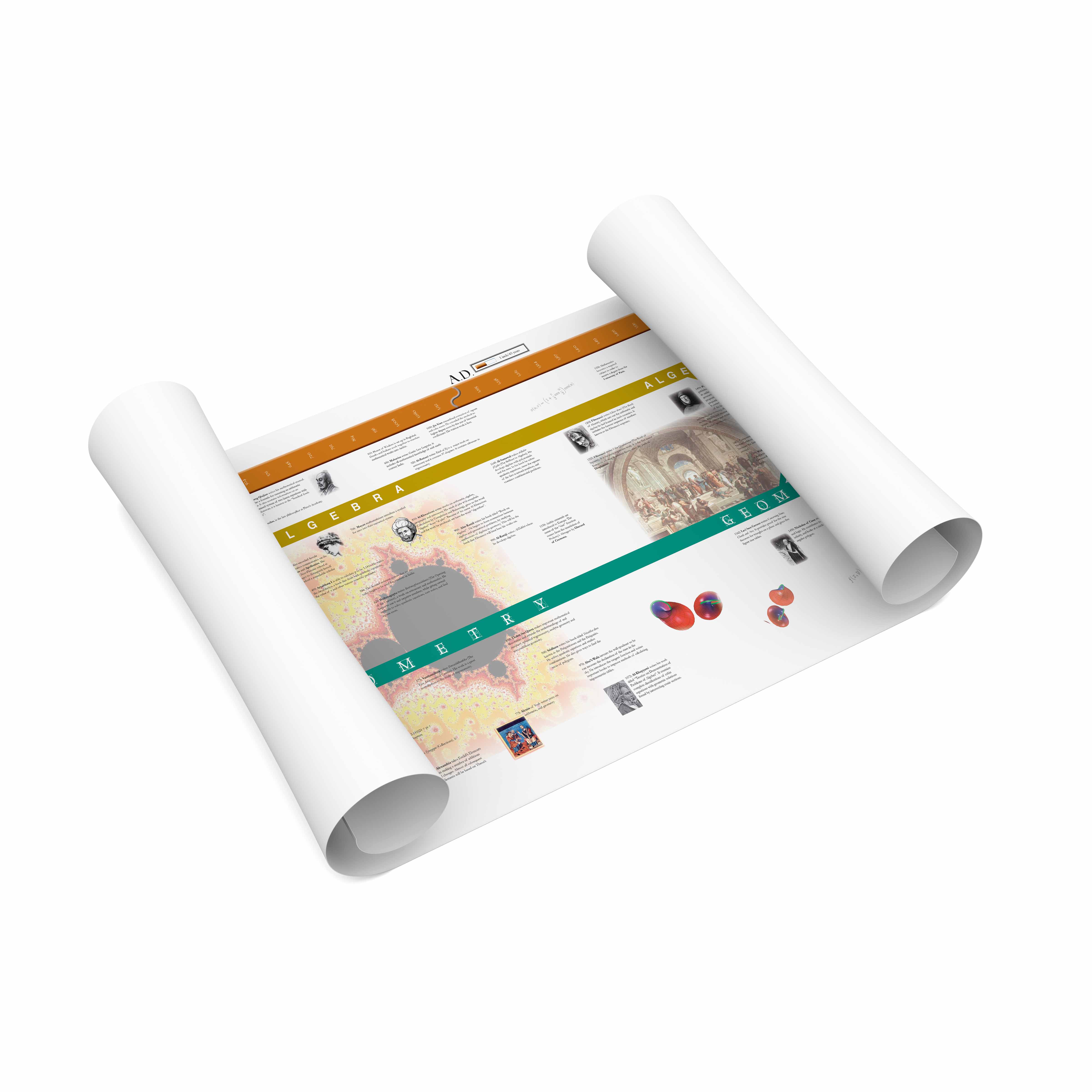
The Timeline Of History Of Numbers (Large Display) is a Mathematics Montessori material designed for children aged 3-6, crafted by Nienhuis Montessori to AMI standards.
This large-format Timeline of History of Numbers presents a comprehensive visual journey through the development of numerical systems across civilizations. The color-coded timeline features historical images and text organized in chronological bands, helping children understand how different cultures contributed to our modern number system. Perfect for classroom walls, this laminated poster serves as a constant reference for exploring mathematical history.
“Children display a universal love of mathematics, which is par excellence the science of precision, order, and intelligence.”— Maria MontessoriThe Discovery of the Child
“The greatest sign of success for a teacher is to be able to say, 'The children are now working as if I did not exist.'”
— Maria Montessori, The Absorbent Mind
The Timeline of History of Numbers transforms abstract mathematical concepts into a tangible visual narrative that children can explore daily. Its large-format design and permanent wall placement allow spontaneous discovery of how Egyptian hieroglyphs, Roman numerals, and Arabic symbols evolved into our current number system. The color-coded bands organize centuries of mathematical innovation into digestible segments, making complex historical progressions accessible to young minds. By presenting numbers as human inventions rather than abstract concepts, this timeline connects mathematics to real civilizations and cultures. The laminated surface invites children to trace symbols with their fingers, creating a physical connection to mathematical heritage. This visual reference bridges the concrete manipulatives of early mathematics work with the abstract symbols children will use throughout their lives, showing that every number they write has a rich historical journey.
Each order includes everything needed for proper presentation and long-term use.
Follow the Montessori method of presentation for optimal child development.
Introduce the timeline by pointing to familiar numbers in the modern section, then trace backwards to show their origins
Focus on one civilization's band, examining their unique symbols and discussing what made their system special
Create matching games where children find the same quantity represented in different number systems across the timeline
Encourage children to copy historical number symbols on paper or chalkboards during free exploration
Every material is carefully selected for durability, safety, and authentic Montessori experience.
Sourced from sustainably managed European forests. Beechwood is chosen for its exceptional durability, smooth grain, and natural warmth that invites touch.
Natural, unbleached cotton in child-friendly colors. The fabric provides the right amount of friction for developing fingers while being gentle on sensitive skin.
Water-based, child-safe finish that meets the strictest European safety standards. Designed to withstand years of daily use without chipping or peeling.
Each material supports multiple areas of child development simultaneously.
Introduces children to the concept that mathematics has evolved over thousands of years across different cultures.
Large format with images and color coding supports visual learners in grasping abstract historical concepts.
Shows contributions from various civilizations, fostering appreciation for global mathematical heritage.
Timeline format develops understanding of chronological order and historical progression.
Designed for child-sized hands
Professional tips from AMI-trained guides to maximize the educational value of this material.
“Reference the timeline during regular mathematics lessons to reinforce that our number system has a history”
Use pointing lessons to highlight specific details without overwhelming children with too much information at once
Connect timeline exploration to cultural studies by discussing the civilizations when they appear in other contexts
Create simple reproduction materials allowing children to practice writing historical number symbols at tables
Everything you need to know about this material.
This timeline is specifically designed for children ages 3-6 years old. It presents mathematical history in a visual, accessible way that young children can understand and explore, making it ideal for Casa/Children's House environments.
This is a large-format display poster that's laminated for durability. The lamination protects it from daily classroom use and allows for easy cleaning. The large size makes it perfect for wall mounting where children can easily see and reference it.
The timeline provides cultural and historical context for mathematical concepts, helping children understand that numbers were developed by real people across different civilizations. This connects mathematics to human history and cultural studies, supporting the Montessori approach of integrated learning.
The timeline features multiple civilizations and their contributions to number systems, presented in color-coded chronological bands. It shows how different cultures developed and used numbers, from ancient systems to our modern numerals, with historical images and explanatory text.
Teachers can reference the timeline during number work, cultural studies, and history lessons. Children can explore which civilization created specific number symbols, compare different counting systems, and understand how mathematical knowledge evolved over time. It serves as a constant visual reference that enriches mathematical discussions.
Can't find what you're looking for?
Contact Our Experts
Share your experience with this material and help other educators and parents.


