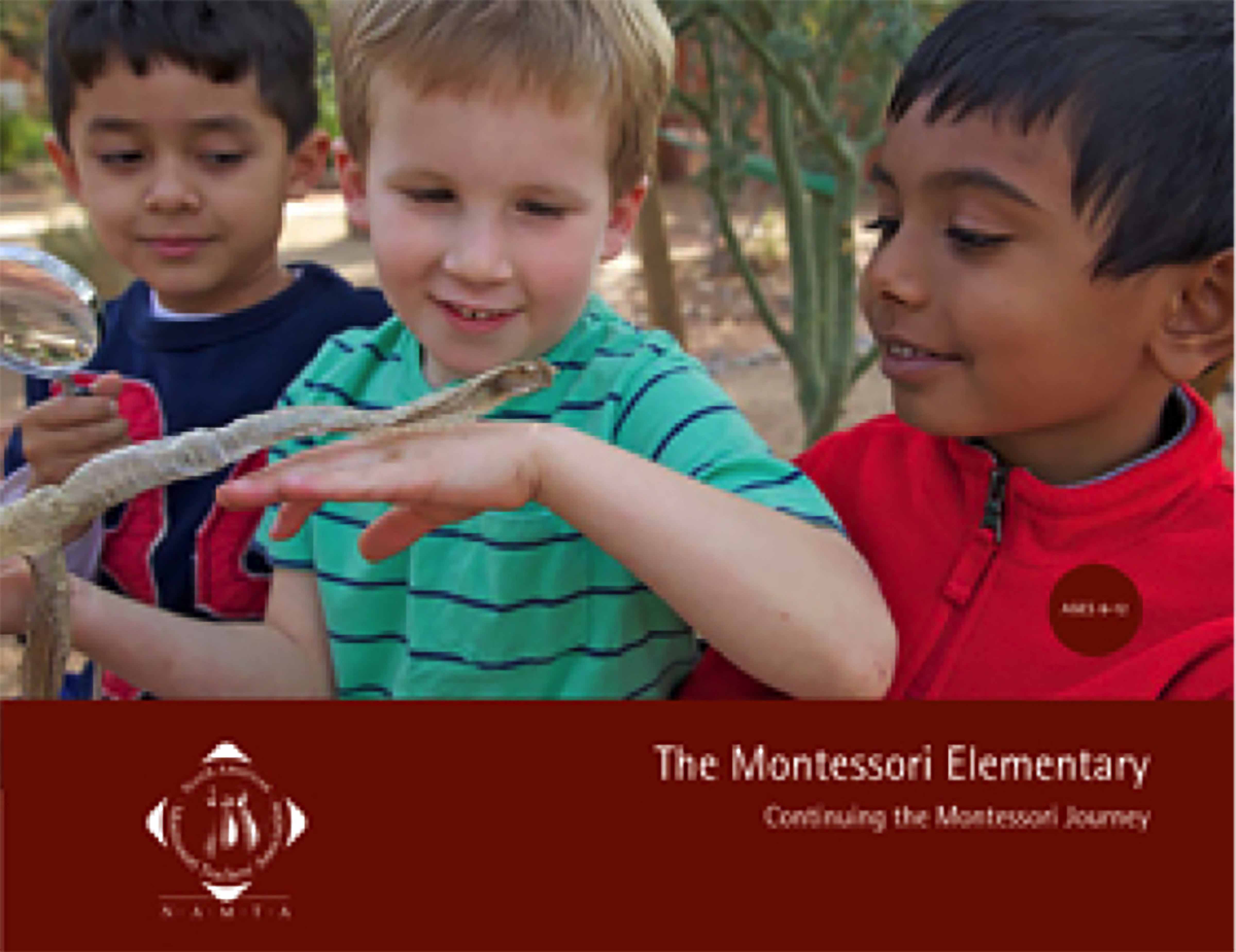
The The Montessori Elementary: Continuing The Montessori Journey is a Educational Materials Montessori material designed for children aged 3-6, crafted by Nienhuis Montessori to AMI standards.
This comprehensive guide supports educators and parents in extending Montessori principles into the elementary years, providing practical strategies for continuing the child's developmental journey beyond the primary classroom. Published in collaboration with NAEYC, this resource bridges the transition from early childhood to elementary education while maintaining the integrity of Montessori philosophy and practice.
“The child is both a hope and a promise for mankind.”— Maria MontessoriEducation and Peace
“The hands are the instruments of man's intelligence.”
— Maria Montessori, The Absorbent Mind
The Montessori Elementary guide addresses a critical developmental transition as children move from the absorbent mind of early childhood to the reasoning mind of the elementary years. This NAEYC-endorsed publication recognizes that elementary-aged children develop new capacities for abstract thinking, moral reasoning, and collaborative work. The guide's practical strategies help educators maintain continuity in the child's learning journey while adapting to their expanding intellectual and social needs. By bridging primary and elementary environments, this resource ensures that the child's natural progression toward independence and intellectual exploration continues uninterrupted. The book acknowledges that elementary children seek to understand not just 'what' but 'why' and 'how,' requiring evolved approaches while preserving core Montessori principles. Through its comprehensive framework, educators learn to create environments that honor the elementary child's need for broader explorations, group dynamics, and connections between subjects.
Each order includes everything needed for proper presentation and long-term use.
Follow the Montessori method of presentation for optimal child development.
Read one chapter focusing on a specific developmental area
Identify three practical strategies from the chapter
Create an implementation plan for one strategy
Every material is carefully selected for durability, safety, and authentic Montessori experience.
This professionally published guide represents the collaboration between Montessori educators and early childhood experts, printed on quality paper to serve as a lasting reference for educators.
Each material supports multiple areas of child development simultaneously.
Provides framework for maintaining Montessori principles as children transition to elementary, supporting their continued independence and love of learning.
Equips educators with research-based strategies for implementing Montessori philosophy in elementary settings.
Addresses academic, social, and emotional development within the Montessori framework for older children.
Offers concrete examples and guidance for creating elementary environments that honor the child's developmental needs.
Designed for child-sized hands
Professional tips from AMI-trained guides to maximize the educational value of this material.
“Use the guide's transition checklists when preparing children for elementary programs”
Reference specific chapters during parent conferences to explain developmental changes
Create a timeline for implementing new strategies throughout the school year
Collaborate with elementary teachers to ensure smooth transitions for students
Everything you need to know about this material.
Yes, this guide is written for both educators and parents, providing clear explanations of Montessori principles and practical strategies for implementing them at home or in the classroom during the elementary years.
This appears to be a listing error - the book focuses on elementary-aged children (typically 6-12 years). It helps transition from the 3-6 primary classroom to elementary, making it valuable for those working with children completing their primary years.
This resource specifically addresses the continuation of Montessori principles beyond the primary classroom, offering targeted strategies for elementary education while maintaining authentic Montessori philosophy and practices throughout the transition.
The book covers practical strategies for elementary Montessori implementation, developmental characteristics of elementary-aged children, curriculum adaptations, classroom environment setup, and methods for maintaining child-centered learning approaches.
Yes, this guide is published in collaboration with NAEYC (National Association for the Education of Young Children), ensuring it meets professional standards and aligns with recognized Montessori educational practices.
Can't find what you're looking for?
Contact Our Experts
Share your experience with this material and help other educators and parents.


