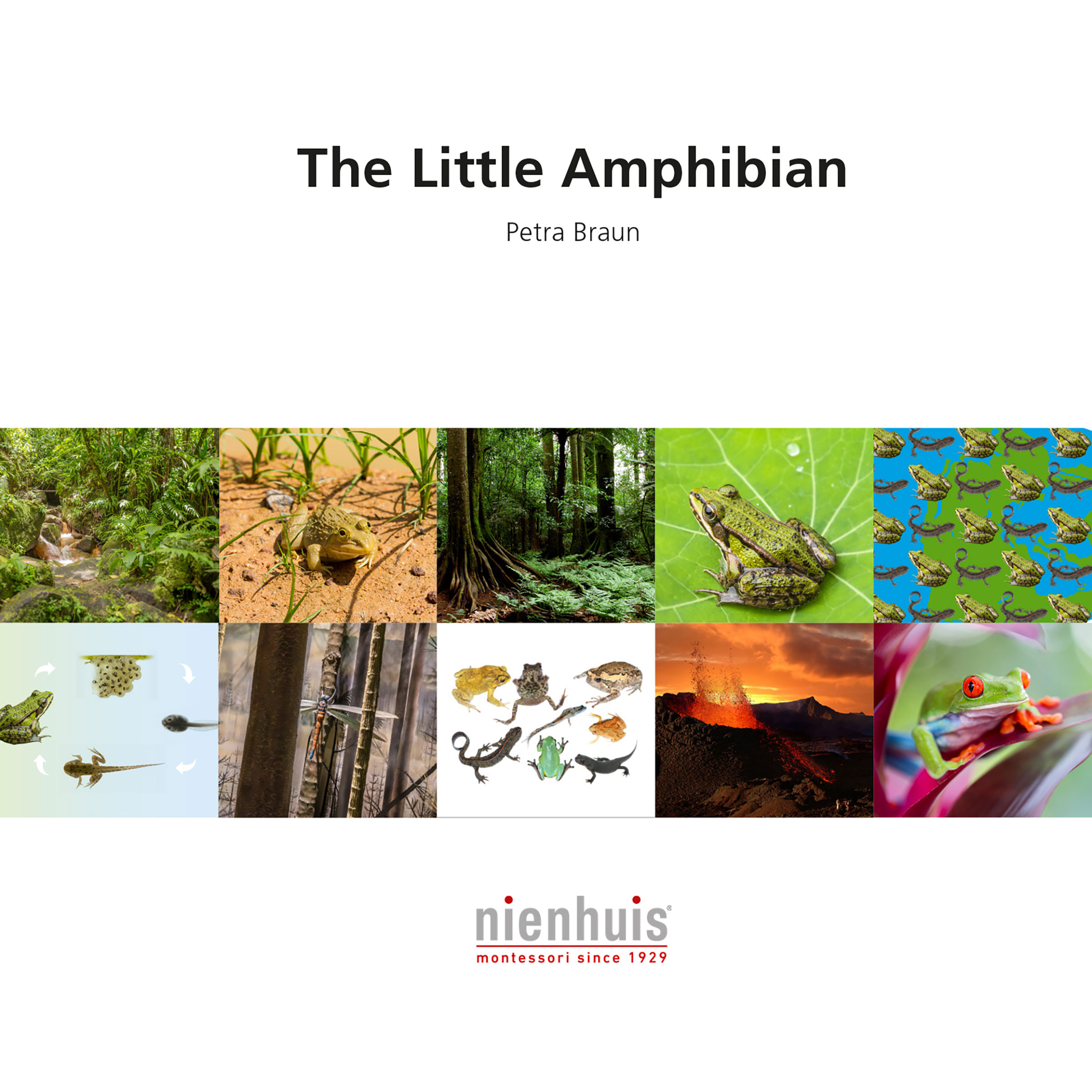
The The Little Amphibian is a category.biology Montessori material designed for children aged 3-6, crafted by Nienhuis Montessori to AMI standards.
The Little Amphibian introduces children to the fascinating world of amphibians through stunning nature photography cards. This Montessori biology material features real photographs of various amphibian species, their lifecycles, and natural habitats, supporting the child's understanding of these unique creatures that live both in water and on land. Perfect for nature discussions, classification activities, and expanding vocabulary about the animal kingdom.
“Education is a natural process spontaneously carried out by the human individual, and is acquired not by listening to words but by experiences upon the environment.”— Maria MontessoriEducation for a New World
“The child is both a hope and a promise for mankind.”
— Maria Montessori, Education and Peace
The Little Amphibian photographic cards meet the young child's intense interest in naming and classifying the living world around them. These real photographs of frogs, toads, salamanders, and newts satisfy the child's need for reality-based learning experiences during the sensitive period for language. The Little Amphibian cards present amphibians as complete organisms within their natural environments, allowing children to observe authentic details like moist skin textures, webbed feet, and habitat preferences. By showing both aquatic tadpoles and terrestrial adult forms, these photographic cards reveal the remarkable transformation that defines amphibian life. The realistic images in The Little Amphibian collection enable precise vocabulary development - children learn specific terms like 'metamorphosis,' 'gills,' and 'permeable skin' while examining actual photographs rather than simplified illustrations. This visual precision respects the child's developing powers of observation and classification, fundamental to scientific thinking in the Montessori approach.
Each order includes everything needed for proper presentation and long-term use.
Follow the Montessori method of presentation for optimal child development.
Begin with three contrasting amphibian cards (e.g., tree frog, salamander, toad). Name each one clearly while pointing to distinguishing features
Introduce lifecycle cards showing tadpole to frog transformation. Arrange in sequence left to right
Sort cards by habitat - pond dwellers, forest floor species, tree climbers
Play matching games with adult and juvenile forms of the same species
Create amphibian fact cards together using the child's observations
Every material is carefully selected for durability, safety, and authentic Montessori experience.
Sourced from sustainably managed European forests. Beechwood is chosen for its exceptional durability, smooth grain, and natural warmth that invites touch.
Natural, unbleached cotton in child-friendly colors. The fabric provides the right amount of friction for developing fingers while being gentle on sensitive skin.
Water-based, child-safe finish that meets the strictest European safety standards. Designed to withstand years of daily use without chipping or peeling.
Each material supports multiple areas of child development simultaneously.
Children learn to identify and classify different amphibian species, developing their understanding of biological categories.
Visual representation of metamorphosis helps children grasp complex biological processes through concrete images.
Habitat photographs connect amphibians to their ecosystems, fostering respect for nature and biodiversity.
Introduces scientific terminology and descriptive language related to amphibians and their characteristics.
Designed for child-sized hands
Professional tips from AMI-trained guides to maximize the educational value of this material.
“Display lifecycle sequences at child's eye level to encourage independent exploration of metamorphosis”
Rotate featured amphibians weekly, introducing 3-4 new species at a time to maintain interest
Connect card work to practical life by setting up a misting station to demonstrate amphibian skin needs
Use precise terminology consistently - 'amphibian' not 'froggy' - to build scientific vocabulary
Everything you need to know about this material.
The cards include photographs of various amphibian species such as frogs, toads, salamanders, and newts. Each card shows high-quality nature photography of these creatures in their natural habitats, helping children identify and learn about different types of amphibians.
The material includes sequential cards showing amphibian metamorphosis, from eggs to tadpoles to adult frogs. Children can arrange these lifecycle cards in order, learning about the unique transformation process that amphibians undergo as they develop from water-dwelling larvae to land-capable adults.
Children can sort cards by habitat (water vs. land), match baby amphibians to adults, create lifecycle sequences, practice vocabulary with three-part cards, and engage in nature discussions about amphibian characteristics. The cards also support classification activities and comparative studies with other animal groups.
Following Montessori principles, these cards use real photographs instead of illustrations, allowing children to observe authentic details of amphibians. The material supports hands-on classification work, builds scientific vocabulary, and connects to broader zoology studies while respecting the child's natural curiosity about living creatures.
Yes, The Little Amphibian cards complement other Montessori zoology materials perfectly. They can be integrated with vertebrate/invertebrate sorting activities, animal kingdom classification work, and habitat studies. The cards help children understand amphibians' unique position as creatures that bridge aquatic and terrestrial environments.
Can't find what you're looking for?
Contact Our Experts
Share your experience with this material and help other educators and parents.


