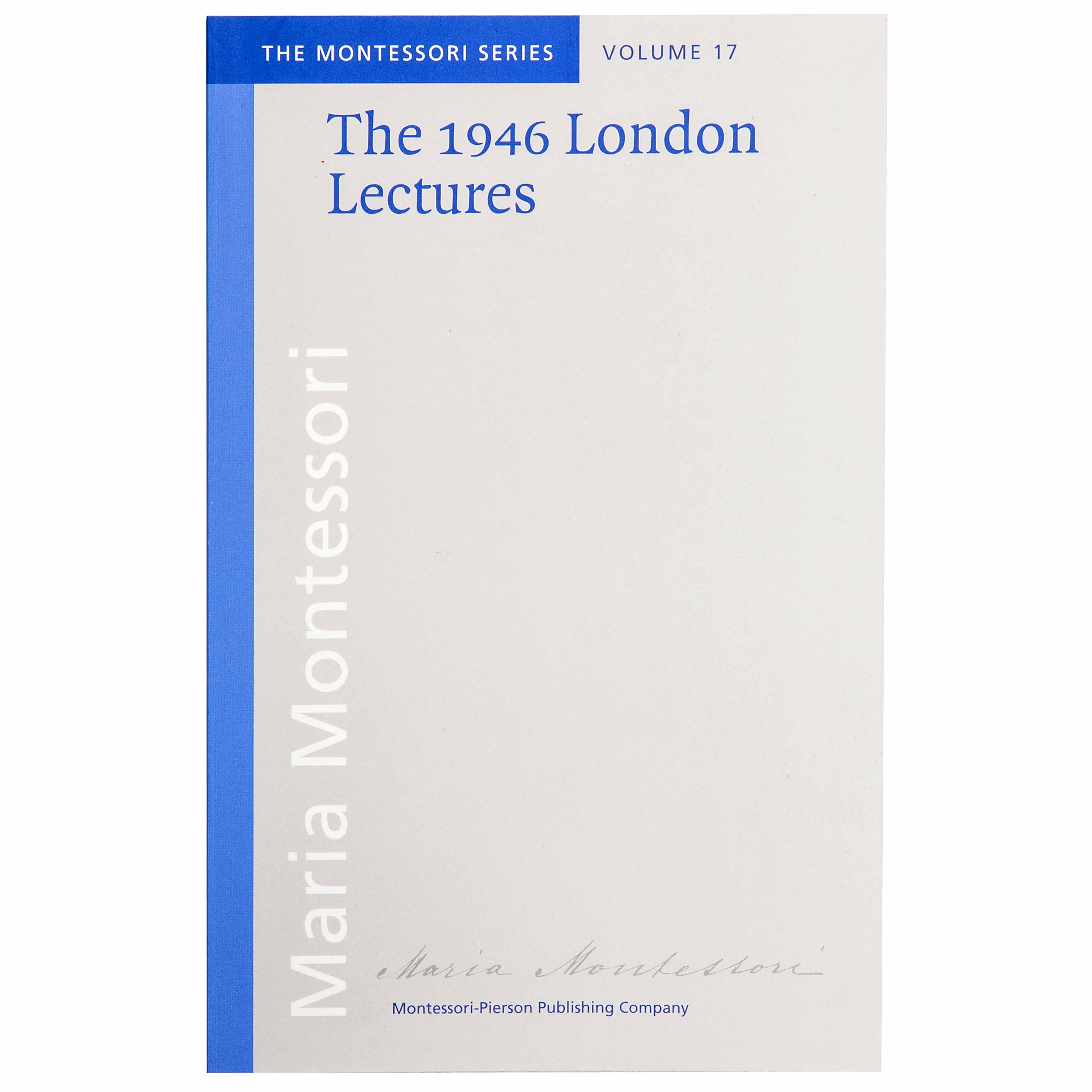
The The 1946 London Lectures is a Educational Materials Montessori material designed for children aged 3-6, crafted by Nienhuis Montessori to AMI standards.
This authoritative volume presents Dr. Maria Montessori's 1946 London lectures, offering profound insights into child development and the prepared environment. Part of The Montessori Series (Volume 17), these historically significant talks reveal Montessori's mature understanding of education, making essential reading for teachers, parents, and anyone seeking to understand authentic Montessori pedagogy.
“The child is both a hope and a promise for mankind.”— Maria MontessoriEducation and Peace
“The hands are the instruments of man's intelligence.”
— Maria Montessori, The Absorbent Mind
The 1946 London Lectures captures Dr. Montessori's mature vision of childhood development, presented when she was 76 years old with decades of observation behind her. These lectures specifically address the prepared environment's role in meeting children's developmental needs between ages 3-6. Within these pages, Montessori articulates how young children construct themselves through interaction with their environment, making this volume essential for understanding why specific materials appear in Children's Houses. The 1946 London Lectures provides the theoretical foundation that transforms classroom practice from mere activity to purposeful development. As Volume 17 in The Montessori Series, this text bridges Montessori's earlier works with her final insights, offering readers her most refined understanding of how children learn. These London lectures particularly emphasize the adult's role as observer and preparer of the environment rather than direct instructor.
Each order includes everything needed for proper presentation and long-term use.
Follow the Montessori method of presentation for optimal child development.
Read each lecture completely before taking notes
After reading, identify three key concepts that relate to your classroom or child
Write reflective notes connecting lecture concepts to observed behaviors
Discuss insights with other Montessori educators or parents
Every material is carefully selected for durability, safety, and authentic Montessori experience.
Sourced from sustainably managed European forests. Beechwood is chosen for its exceptional durability, smooth grain, and natural warmth that invites touch.
Natural, unbleached cotton in child-friendly colors. The fabric provides the right amount of friction for developing fingers while being gentle on sensitive skin.
Water-based, child-safe finish that meets the strictest European safety standards. Designed to withstand years of daily use without chipping or peeling.
Each material supports multiple areas of child development simultaneously.
Deepens comprehension of Montessori philosophy through Dr. Montessori's own words and experiences.
Provides historical context and practical insights for implementing Montessori principles in modern settings.
Essential reading for Montessori educators seeking AMI-level understanding of the method.
Offers unique insight into Montessori's post-war vision for education and peace.
Designed for child-sized hands
Professional tips from AMI-trained guides to maximize the educational value of this material.
“Read lectures in chronological order to follow Montessori's thought progression throughout the series”
Keep a observation journal while reading to connect theory with classroom practice
Form a study group with colleagues to discuss each lecture's implications
Reference specific lectures when explaining classroom choices to parents
Everything you need to know about this material.
These lectures explore child development, the prepared environment, the role of the teacher, and Montessori's evolved understanding of education after World War II. They provide deep insights into the psychological and spiritual aspects of childhood development.
This book is essential for Montessori teachers, teacher trainees, and parents who want to understand authentic Montessori principles. It's also valuable for education students, child development professionals, and anyone interested in Montessori's educational philosophy.
While the lectures contain profound insights, they may be challenging for complete beginners. We recommend starting with introductory Montessori texts first, then advancing to these lectures for deeper understanding of Montessori's mature pedagogical thinking.
The 1946 lectures represent Montessori's refined understanding after decades of observation and practice. They show her evolved perspective on peace education, cosmic education, and the child's role in human development, reflecting her post-war vision for education.
As Volume 17 of The Montessori Series, this book is part of the authoritative collection of Montessori's works. The series ensures accurate translations and historical context, making these essential texts accessible to modern readers while preserving Montessori's original insights.
Can't find what you're looking for?
Contact Our Experts
Share your experience with this material and help other educators and parents.


