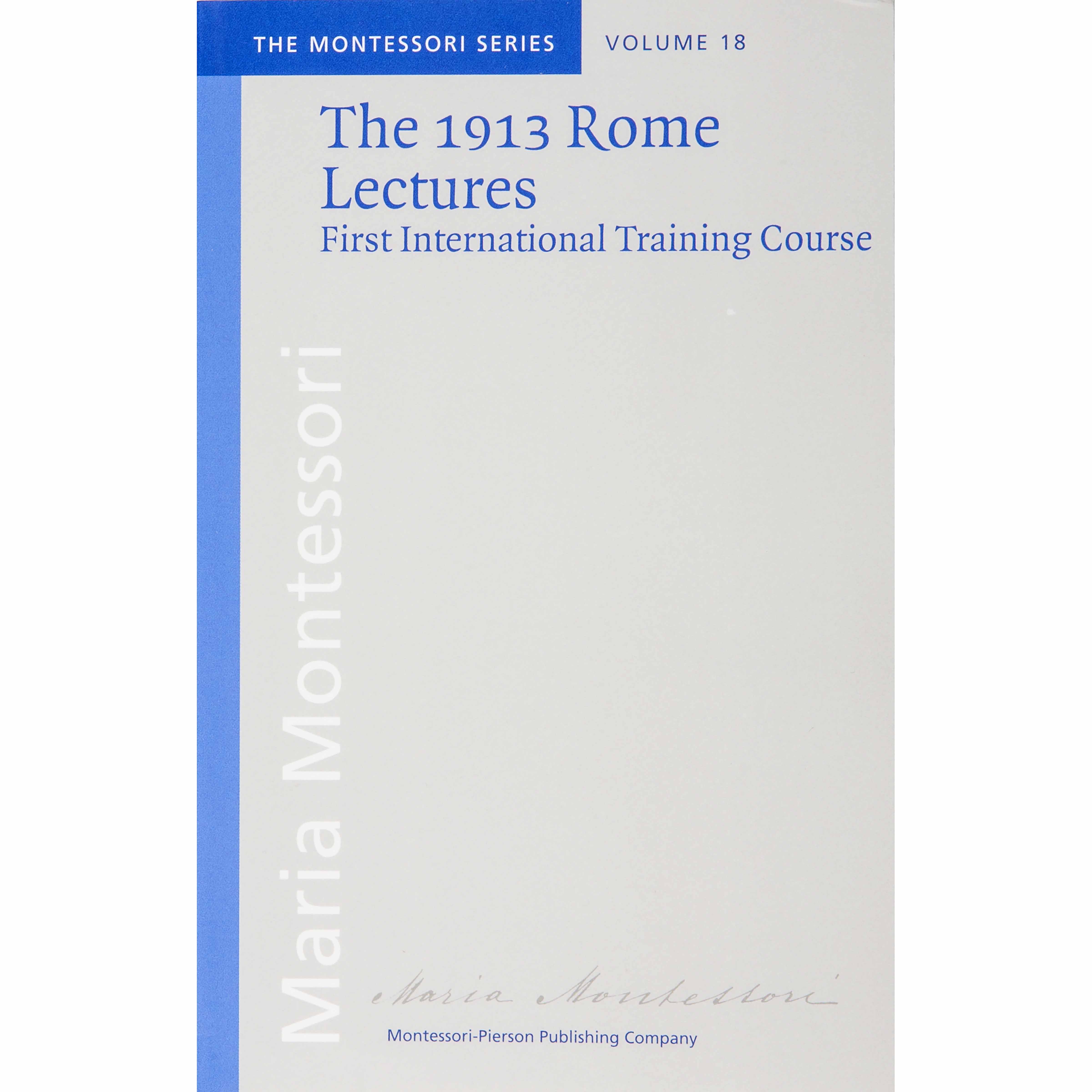
The The 1913 Rome Lectures is a Educational Materials Montessori material designed for children aged 3-6, crafted by Nienhuis Montessori to AMI standards.
Volume 18 of The Montessori Series presents Maria Montessori's groundbreaking 1913 Rome lectures, marking a pivotal moment in the development of her educational philosophy. This historical text captures Dr. Montessori's original insights on child development and the prepared environment, offering educators and parents direct access to her revolutionary pedagogical approach during its formative years.
“The child is both a hope and a promise for mankind.”— Maria MontessoriEducation and Peace
“The hands are the instruments of man's intelligence.”
— Maria Montessori, The Absorbent Mind
The 1913 Rome Lectures captures Maria Montessori's earliest systematic presentation of her method, documenting her observations of children's spontaneous learning processes. This Volume 18 text reveals how Dr. Montessori discovered children's innate drive for independence through careful scientific observation. The Rome Lectures articulate her revolutionary understanding that children construct themselves through interaction with their environment, a principle that transformed educational practice worldwide. These historical pages demonstrate how Montessori identified specific sensitive periods when children eagerly absorb particular skills and knowledge. The 1913 lectures present her original framework for preparing environments that respond to children's developmental needs rather than imposing adult-directed curricula. Reading Dr. Montessori's own words from these formative Rome presentations allows modern educators to understand the observational foundations underlying every classroom material and practice.
Each order includes everything needed for proper presentation and long-term use.
Follow the Montessori method of presentation for optimal child development.
Read one lecture thoroughly, noting Montessori's specific observations about children
Compare her 1913 descriptions with your current classroom observations
Identify one principle from the lecture to implement in your environment
Every material is carefully selected for durability, safety, and authentic Montessori experience.
Sourced from sustainably managed European forests. Beechwood is chosen for its exceptional durability, smooth grain, and natural warmth that invites touch.
Natural, unbleached cotton in child-friendly colors. The fabric provides the right amount of friction for developing fingers while being gentle on sensitive skin.
Water-based, child-safe finish that meets the strictest European safety standards. Designed to withstand years of daily use without chipping or peeling.
Each material supports multiple areas of child development simultaneously.
Provides direct access to Montessori's early theoretical framework and the evolution of her educational philosophy.
Deepens educator comprehension of foundational Montessori principles through primary source material.
Illuminates the original context and rationale behind core Montessori practices and materials.
Serves as an authoritative resource for research, training, and implementation of authentic Montessori methodology.
Designed for child-sized hands
Professional tips from AMI-trained guides to maximize the educational value of this material.
“Read lectures slowly, allowing time to digest Montessori's dense observational data”
Cross-reference with modern AMI training materials to see evolution of concepts
Use lectures as foundation for parent education about Montessori principles
Return to specific lectures when facing classroom challenges for historical perspective
Everything you need to know about this material.
The lectures cover Dr. Montessori's early theories on child development, the prepared environment, sensorial education, practical life activities, and the role of the directress. These foundational talks explore the child's absorbent mind, sensitive periods, and the importance of freedom within limits in education.
While written as professional lectures, this book is valuable for both educators and parents interested in understanding Montessori's original vision. Parents will gain insights into their child's natural development, while teachers will appreciate the historical context and theoretical foundations of Montessori practices.
These 1913 lectures capture Montessori's philosophy in its early formation, showing the origins of principles still used today. Readers can trace how contemporary Montessori methods evolved from these foundational ideas, making it essential reading for understanding the authentic roots of the approach.
The lectures primarily discuss the Casa dei Bambini (Children's House) environment for ages 3-6, Montessori's original focus. While the book itself is for adult readers, the educational principles and observations described specifically address this crucial developmental period in early childhood.
Yes, this is an English translation of Dr. Montessori's original Italian lectures. As part of The Montessori Series, the text maintains academic integrity while being accessible to contemporary readers, though some may find the early 20th-century lecture style more formal than modern educational texts.
Can't find what you're looking for?
Contact Our Experts
Share your experience with this material and help other educators and parents.


