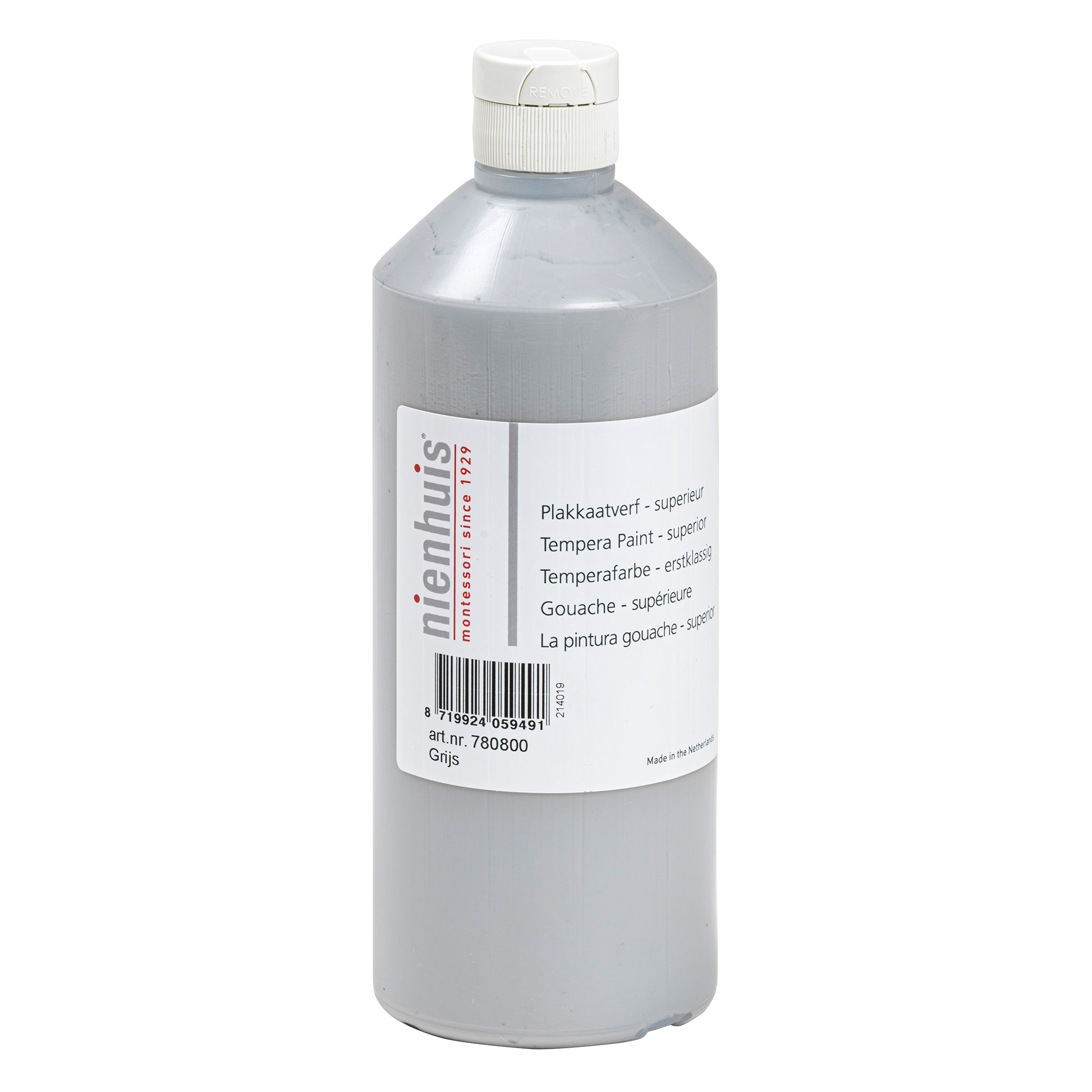
The Tempera Paint - Premium: Gray is a Educational Materials Montessori material designed for children aged 3-6, crafted by Nienhuis Montessori to AMI standards.
This premium gray tempera paint provides the perfect neutral tone for Montessori art activities, supporting children's creative expression and color mixing explorations. The easy-squeeze bottle with flip-top cap enables independent use, allowing children to control paint flow while developing fine motor skills and artistic confidence.
“The child is both a hope and a promise for mankind.”— Maria MontessoriEducation and Peace
“The hands are the instruments of man's intelligence.”
— Maria Montessori, The Absorbent Mind
The premium gray tempera paint bottle serves as a bridge between the child's inner creativity and external expression in Montessori environments. Gray tempera offers unique possibilities for color mixing experiments, allowing children to discover how adding gray transforms bright colors into subtle, sophisticated hues. The easy-squeeze bottle design respects the child's developmental need for independence, enabling three-to-six-year-olds to control their own paint dispensing without adult intervention. This gray paint specifically teaches nuance and gradation - concepts often overlooked in early childhood art. When children mix gray tempera with primary colors, they experience firsthand how colors can be muted, creating earth tones and natural shades they observe in their environment. The flip-top cap on this tempera bottle becomes a practical life exercise in itself, requiring precise finger movements to open and close. Through working with gray paint, children develop aesthetic discrimination and learn that art encompasses more than just bright, pure colors.
Each order includes everything needed for proper presentation and long-term use.
Follow the Montessori method of presentation for optimal child development.
Demonstrate opening the flip-top cap with thumb pressure
Squeeze a small amount of gray onto the palette
Add tiny amounts of primary colors to gray samples
Paint gradient strips showing pure gray to mixed tones
Create a 'shadow painting' using only gray variations
Each material supports multiple areas of child development simultaneously.
Supports artistic development and self-expression through painting activities
Gray paint serves as essential tool for mixing tones and understanding color values
Squeezing bottle and controlling paint flow strengthens hand muscles and coordination
Learning to pour, clean up spills, and care for materials builds independence
Designed for child-sized hands
Professional tips from AMI-trained guides to maximize the educational value of this material.
“Store gray tempera horizontally to prevent settling and ensure consistent flow”
Introduce gray after children master primary color mixing for developmental progression
Create color mixing cards showing ratios of gray to other colors for reference
Use gray paint to teach concepts of light and shadow in observational drawing
Everything you need to know about this material.
Yes, this premium tempera paint is specifically designed for ages 3-6 and is non-toxic, water-based, and safe for children's use in educational settings.
The easy-squeeze bottle with flip-top cap promotes independence by allowing children to open, pour, and close the paint themselves, developing practical life skills and fine motor control.
Absolutely! Gray is an excellent neutral tone for color mixing experiments. Children can create various shades and tones by combining it with other tempera colors, supporting their understanding of color theory.
The product details don't specify the exact volume, but at €4.59, these are individual bottles sized appropriately for classroom use and easy handling by young children.
Premium tempera paint is water-based and typically washes out of most fabrics with soap and water when cleaned promptly, though we recommend using aprons during art activities.
Can't find what you're looking for?
Contact Our Experts
Share your experience with this material and help other educators and parents.

