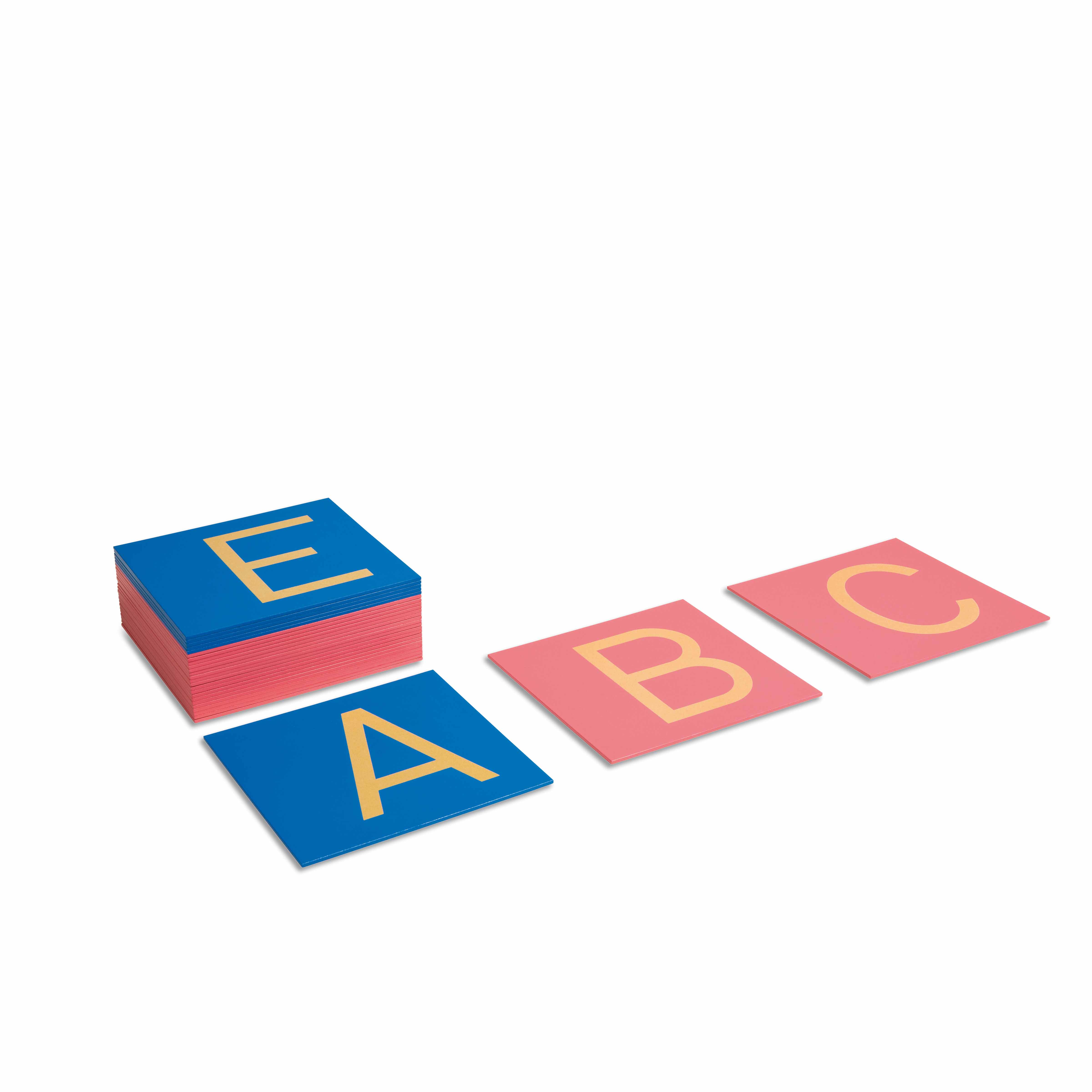
The Sandpaper Capitals: International Print is a Language Montessori material designed for children aged 3-6, crafted by Nienhuis Montessori to AMI standards.
These Sandpaper Capitals introduce children to letter formation through tactile exploration, featuring International Print style letters. The textured sandpaper surface guides the child's fingers along the correct letter shapes while color-coded backgrounds (pink for vowels, blue for consonants) support phonetic awareness and classification skills.
“The greatest sign of success for a teacher is to be able to say, 'The children are now working as if I did not exist.'”— Maria MontessoriThe Absorbent Mind
“Free the child's potential, and you will transform him into the world.”
— Maria Montessori, To Educate the Human Potential
Sandpaper Capitals connect the tactile and visual pathways essential for writing readiness. The textured sandpaper surface engages muscle memory as children trace each capital letter, creating neural pathways between touch, sight, and movement. Pink backgrounds for vowels and blue for consonants introduce phonetic classification through color association, helping children recognize these fundamental sound categories. The International Print style presents letters in their most recognizable form, matching what children encounter in books and environmental print. Each sandpaper letter isolates a single learning focus—the shape and formation of one capital letter—allowing concentrated practice without distraction. The rough texture provides sensory feedback that plain paper cannot, making incorrect strokes immediately apparent to the child's fingers. This material bridges the gap between recognizing letters visually and forming them physically, addressing the developmental need for multi-sensory letter learning that precedes actual writing with pencils.
Each order includes everything needed for proper presentation and long-term use.
Follow the Montessori method of presentation for optimal child development.
Demonstrate tracing the first letter with your index and middle fingers while saying its phonetic sound
Invite the child to trace the same letter while you guide their hand if needed
Introduce the color coding: 'This pink background tells us A is a vowel'
Present each letter with its sound, not its name: 'This is /t/' not 'tee'
Practice tracing each letter 3-5 times while repeating its sound
Every material is carefully selected for durability, safety, and authentic Montessori experience.
Sourced from sustainably managed European forests. Beechwood is chosen for its exceptional durability, smooth grain, and natural warmth that invites touch.
Natural, unbleached cotton in child-friendly colors. The fabric provides the right amount of friction for developing fingers while being gentle on sensitive skin.
Water-based, child-safe finish that meets the strictest European safety standards. Designed to withstand years of daily use without chipping or peeling.
Each material supports multiple areas of child development simultaneously.
The sandpaper texture creates muscle memory for letter formation, preparing the hand for writing.
Color-coding helps children distinguish between vowels and consonants while learning letter shapes.
Tracing sandpaper letters develops the fine motor control and directionality needed for writing.
International Print style supports clear letter recognition and sound-symbol correspondence.
Designed for child-sized hands
Professional tips from AMI-trained guides to maximize the educational value of this material.
“Store letters in order to quickly locate specific ones for individualized lessons”
Observe which letters children struggle with and provide extra practice through games
'This is...', 'Show me...', 'What is this?'
Create a quiet corner for sandpaper letter work to minimize auditory distractions
Everything you need to know about this material.
International Print style refers to simple, clear letterforms without serifs that closely resemble standard printed text. This style is ideal for young children as it matches the letters they'll encounter in most books and written materials, making the transition from tactile learning to reading smoother.
Children trace each textured letter with their index and middle fingers while saying the letter's phonetic sound. This multi-sensory approach combines touch, sight, sound, and movement to create strong neural pathways for letter recognition and formation. The rough sandpaper provides sensory feedback that helps develop proper letter formation habits.
The color coding helps children classify letters into vowels (pink backgrounds) and consonants (blue backgrounds). This visual distinction supports early phonetic awareness and helps children understand that these two groups of letters function differently in forming words. It's a foundational concept for later reading and spelling work.
While designed for ages 3-6, the ideal time to introduce them is when a child shows interest in letters and has developed sufficient fine motor control to trace shapes accurately. Most children are ready around age 3.5-4, after they've worked with sensorial materials and can distinguish rough from smooth textures.
By repeatedly tracing the sandpaper letters, children develop muscle memory for correct letter formation before they ever pick up a pencil. This tactile preparation strengthens the hand muscles, establishes proper directionality, and creates a kinesthetic understanding of each letter's shape, making the transition to writing with implements much easier and more natural.
Can't find what you're looking for?
Contact Our Experts
Share your experience with this material and help other educators and parents.


