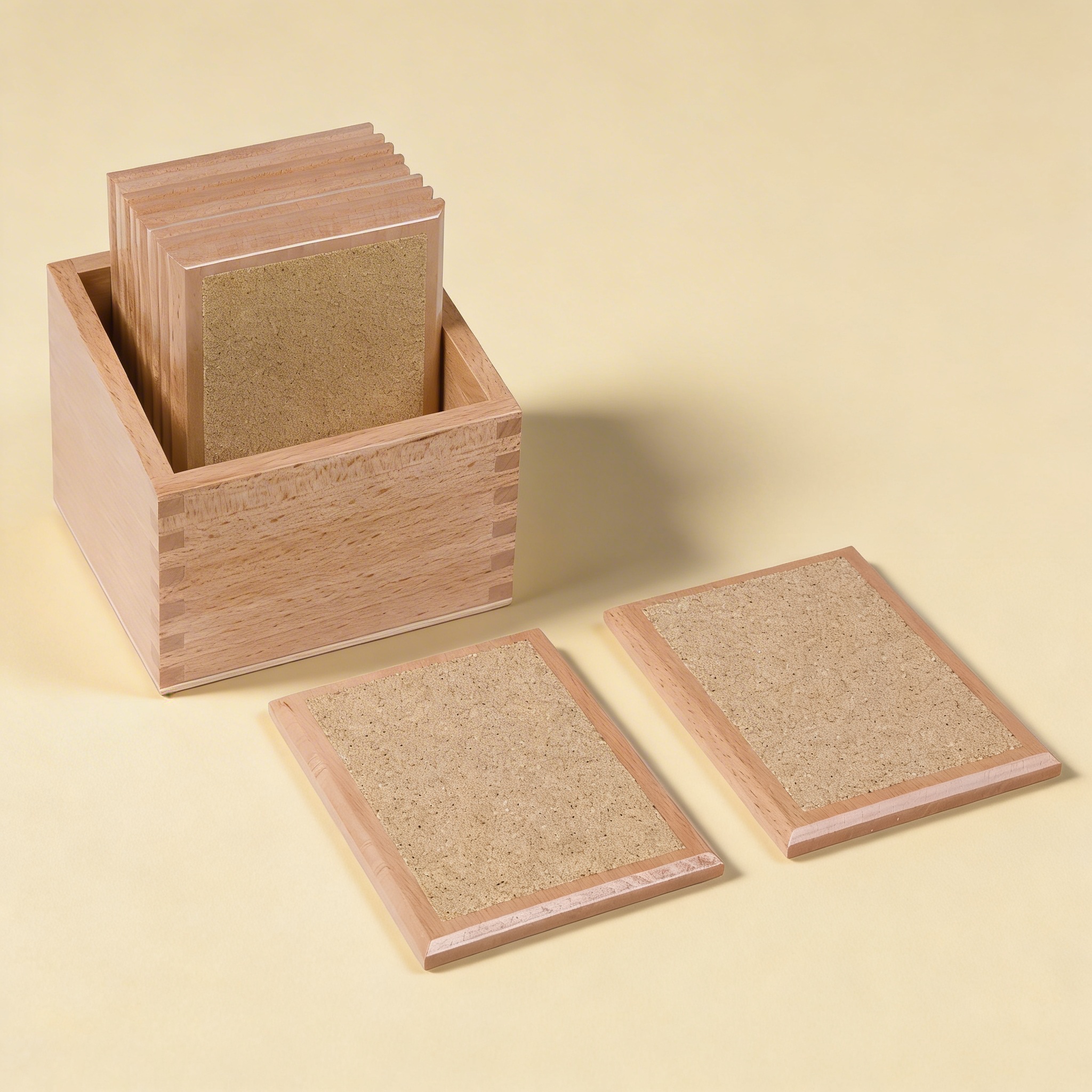
The Rough Gradation Tablets — Tactile Discrimination Activity is a Sensorial Montessori material designed for children aged 3-6, crafted by Nienhuis Montessori to AMI standards.
The Rough Gradation Tablets develop tactile discrimination through a series of wooden tablets with sandpaper surfaces progressing from very rough to smooth textures. This sensorial material refines the child's sense of touch while building concentration and preparing the hand for writing movements through systematic exploration of graduated textures.
“The greatest sign of success for a teacher is to be able to say, 'The children are now working as if I did not exist.'”— Maria MontessoriThe Absorbent Mind
“Free the child's potential, and you will transform him into the world.”
— Maria Montessori, To Educate the Human Potential
The Rough Gradation Tablets embody Dr. Montessori's principle of education through the senses, recognizing that young children learn through concrete, sensorial experiences. This material isolates the tactile sense, allowing the child to focus solely on the quality of texture without visual distraction. Through repeated exploration of these graduated surfaces, children develop refined tactile discrimination - a foundation for later academic work. The material's self-correcting nature supports the child's natural drive toward precision and order. As children trace the sandpaper surfaces, they simultaneously prepare their hands for writing movements, demonstrating Montessori's integrated approach where indirect preparation weaves through all activities. The gradation aspect satisfies the child's mathematical mind, introducing the concept of series and sequence through touch.
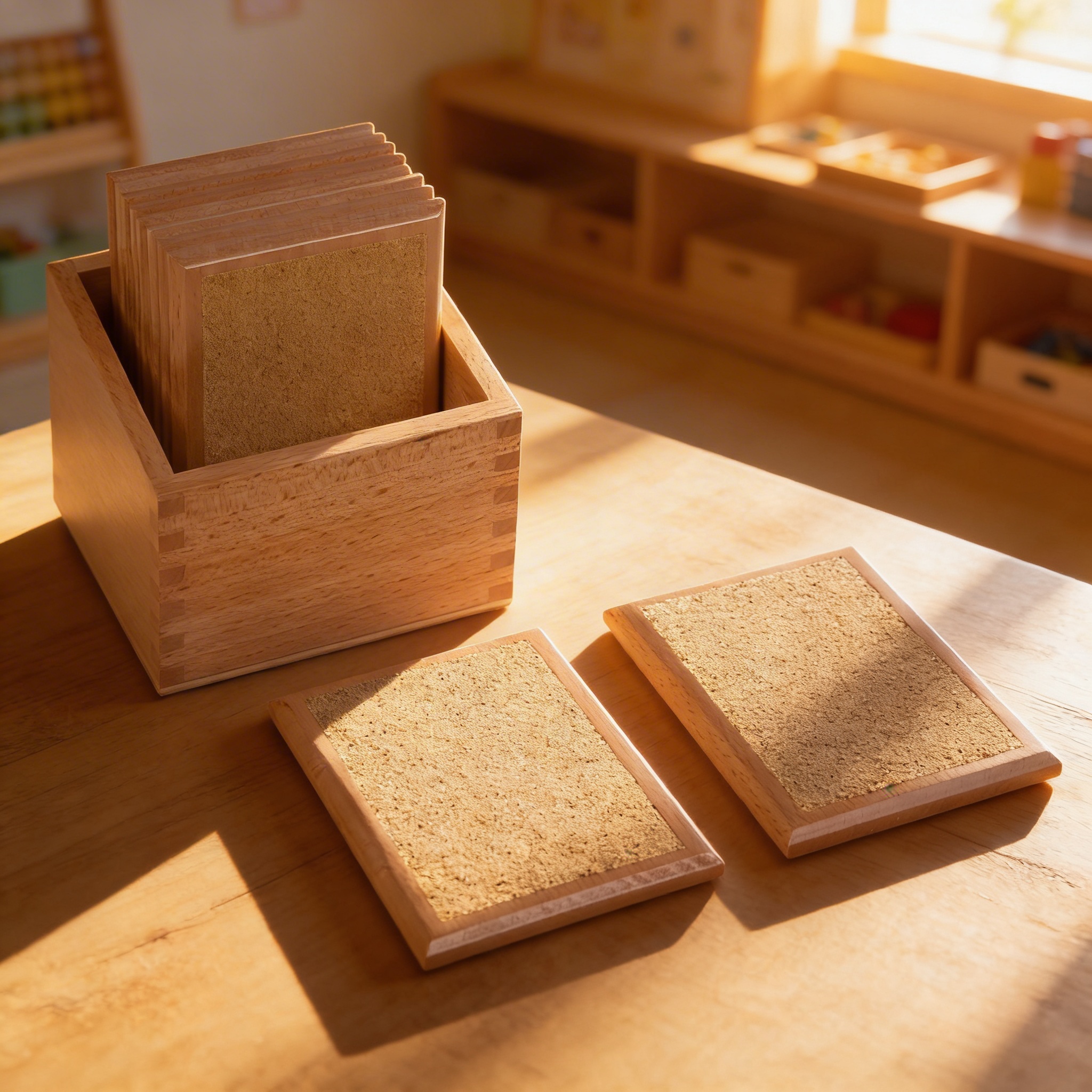
Each order includes everything needed for proper presentation and long-term use.
Follow the Montessori method of presentation for optimal child development.
Remove the first tablet (roughest) and demonstrate tracing with two fingers (index and middle) moving from top to bottom slowly
Invite the child to trace the same tablet, observing their touch pressure
Introduce the smoothest tablet for contrast, using the same tracing motion
Mix these two tablets and invite the child to find the rough one with eyes closed
Gradually introduce middle gradations, always working with contrasts first
Once familiar with all tablets, invite the child to grade from roughest to smoothest
Every material is carefully selected for durability, safety, and authentic Montessori experience.
Each tablet features carefully selected sandpaper grades that progress systematically from very coarse to very fine, allowing the child to perceive subtle differences in texture through focused touch.
Each material supports multiple areas of child development simultaneously.
Refines the sense of touch through systematic exploration of graduated textures, developing the ability to perceive subtle differences.
Light touch movements across surfaces prepare the hand muscles and sensitivity needed for proper pencil grip and writing pressure.
Matching and grading activities require sustained focus, building the child's capacity for concentrated work.
Introduces comparative language: rough, rougher, roughest, smooth, smoother, smoothest, supporting precise communication.
Designed for child-sized hands
Professional tips from AMI-trained guides to maximize the educational value of this material.
“Check tablets regularly for wear - worn sandpaper reduces the clarity of gradations”
Introduce this material after the child has worked with Touch Boards for basic rough/smooth discrimination
Observe the child's hand dominance and sit accordingly to avoid crossing their midline
Store tablets in sequence to support the child's self-checking process
Everything you need to know about this material.
The set typically includes 5-6 pairs of wooden tablets, each pair featuring identical sandpaper surfaces that progress from very rough to smooth textures, allowing children to match and grade the tablets by touch.
Children develop refined tactile discrimination, concentration, and finger sensitivity. The material also prepares the hand for writing through controlled finger movements and builds vocabulary for describing textures (rough, smooth, rougher than, smoother than).
Children use their fingertips to feel each tablet's texture, then match pairs with identical roughness or arrange them in order from roughest to smoothest. Work progresses from matching to grading, and can be done with eyes open or blindfolded for increased challenge.
While both develop tactile discrimination, Rough Gradation Tablets specifically focus on graduated sandpaper textures from rough to smooth. Touch Tablets typically feature contrasting textures (rough/smooth) without the fine gradations, making them suitable for younger children.
Yes, the Rough Gradation Tablets complement other tactile materials like Touch Boards, Fabric Box, and Sandpaper Letters. They form part of the sensorial curriculum's systematic approach to refining the sense of touch and preparing for academic work.
Can't find what you're looking for?
Contact Our Experts
Share your experience with this material and help other educators and parents.
Bundle related materials and save. Free curriculum guide included with every set.


