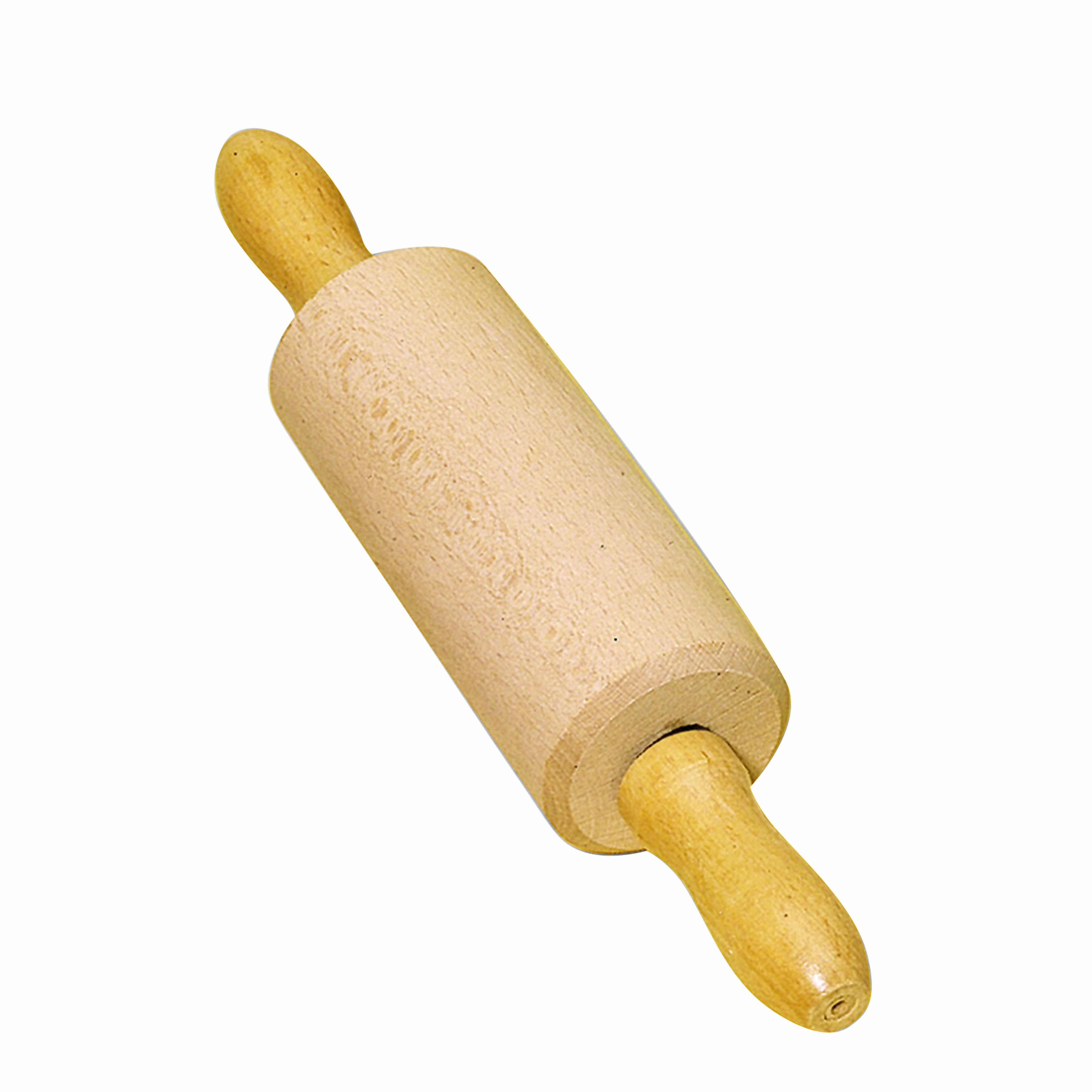
The Rolling Pin is a Educational Materials Montessori material designed for children aged 0-3, crafted by Nienhuis Montessori to AMI standards.
This child-sized wooden rolling pin introduces young children to practical life activities in the Montessori environment. The smooth cylindrical roller with rounded handles is perfectly proportioned for small hands, enabling authentic participation in food preparation activities. Crafted from natural wood, it supports the development of bilateral coordination and purposeful movement while fostering independence in real kitchen work.
“The child is both a hope and a promise for mankind.”— Maria MontessoriEducation and Peace
“The hands are the instruments of man's intelligence.”
— Maria Montessori, The Absorbent Mind
The Rolling Pin serves as a bridge between the child's desire to participate in adult work and their need for appropriately sized tools. Its smooth wooden surface and child-proportioned handles address the developmental need for bilateral coordination that emerges strongly between ages two and three. The Rolling Pin transforms abstract arm movements into concrete, visible results when dough flattens beneath its surface. This wooden cylinder offers immediate feedback through resistance and texture changes, allowing children to refine their pressure control naturally. The rounded handles of the Rolling Pin guide proper grip formation while its balanced weight teaches controlled, purposeful movement. In Montessori environments, the Rolling Pin becomes an essential tool for real food preparation, validating the child's capability to contribute meaningfully to daily life activities.
Each order includes everything needed for proper presentation and long-term use.
Follow the Montessori method of presentation for optimal child development.
Demonstrate placing both hands on the rolling pin handles, keeping them equidistant from center
Roll forward with gentle pressure, then pull back to starting position
Show how to lift and reposition the rolling pin when the dough spreads
Invite the child to try, observing without correcting
Every material is carefully selected for durability, safety, and authentic Montessori experience.
Carefully selected wood provides the perfect weight and texture for young children learning practical life skills. The natural grain offers sensory feedback while maintaining durability for repeated use.
Each material supports multiple areas of child development simultaneously.
Rolling motion requires both hands working together, developing cross-body coordination essential for later writing skills.
Authentic kitchen tool allows meaningful participation in food preparation, building confidence and independence.
Gripping and applying pressure while rolling develops the hand muscles needed for pencil control.
The smooth wood texture and rolling resistance provide important tactile and proprioceptive feedback.
Designed for child-sized hands
Professional tips from AMI-trained guides to maximize the educational value of this material.
“Start with playdough before introducing real dough to build confidence”
Place a vinyl placemat under the work to define boundaries
Offer dough in small portions to prevent overwhelming the child
Store the rolling pin at child height with other food preparation tools
Everything you need to know about this material.
This child-sized rolling pin is designed for children ages 0-3, though it's most suitable for toddlers 18 months and older who can stand independently and have developed basic hand coordination.
This rolling pin is specifically proportioned for small hands with a smooth cylindrical roller and rounded handles that allow young children to grip and use it comfortably during practical life activities.
Yes, this wooden rolling pin is crafted from natural, food-safe wood and can be used for real cooking and baking activities under adult supervision, supporting authentic Montessori practical life experiences.
The rolling pin develops bilateral coordination, strengthens hand muscles, promotes purposeful movement, and fosters independence by allowing children to participate meaningfully in real kitchen work and food preparation.
Clean with a damp cloth and mild soap after use, then dry thoroughly. Occasionally treat with food-safe mineral oil to maintain the wood's condition. Avoid soaking in water or putting in the dishwasher.
Can't find what you're looking for?
Contact Our Experts
Share your experience with this material and help other educators and parents.


