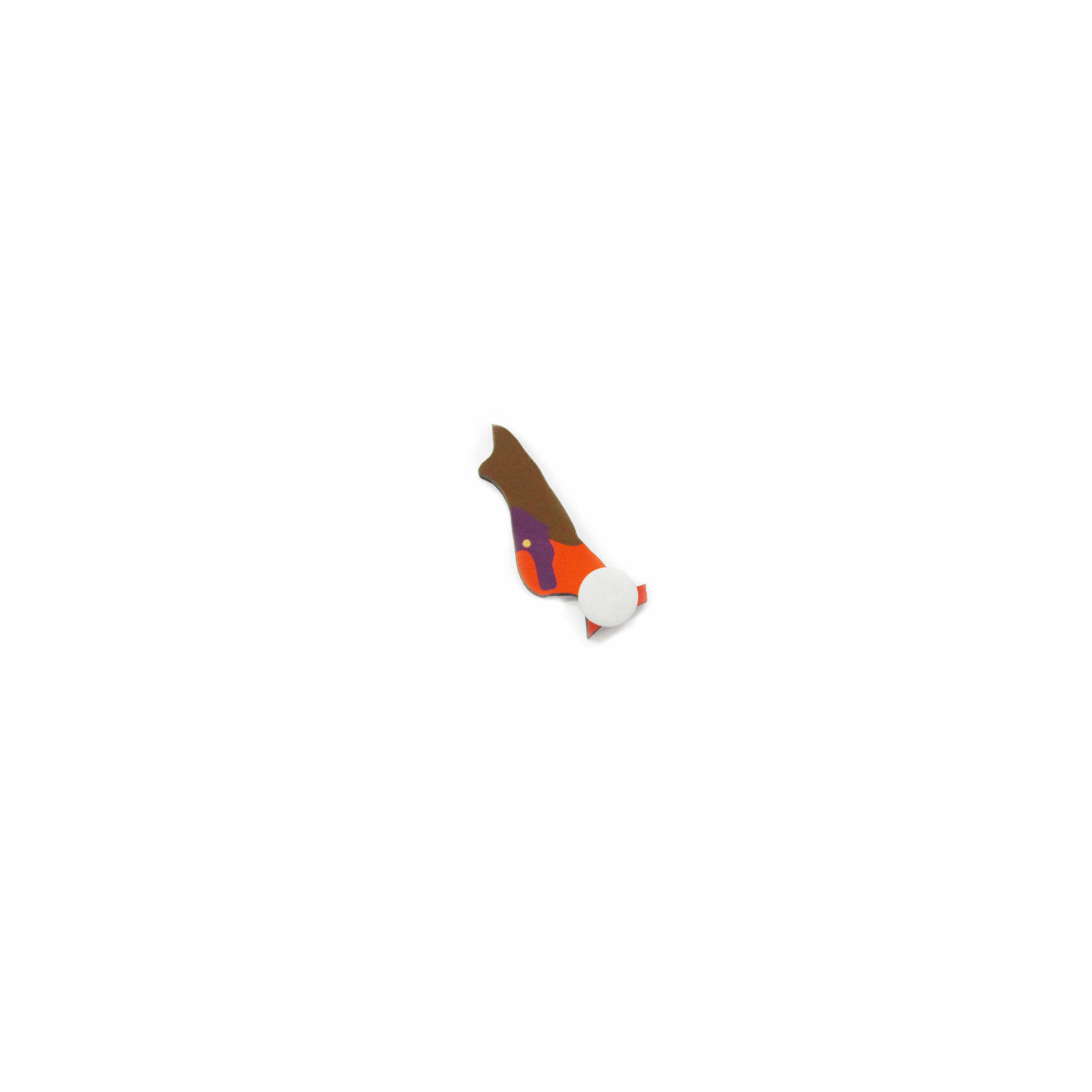
The Puzzle Piece Of Asia: Georgia / Armenia / Azerbaijan is a category.geography Montessori material designed for children aged 3-6, crafted by Nienhuis Montessori to AMI standards.
This wooden puzzle piece represents the Caucasus region of Georgia, Armenia, and Azerbaijan, designed for the Montessori puzzle map of Asia. The piece features distinct color-coded sections for each country and includes a control knob that supports the child's pincer grip development while exploring geographical boundaries and spatial relationships.
“Education is a natural process spontaneously carried out by the human individual, and is acquired not by listening to words but by experiences upon the environment.”— Maria MontessoriEducation for a New World
“The child is both a hope and a promise for mankind.”
— Maria Montessori, Education and Peace
The Puzzle Piece of Asia: Georgia/Armenia/Azerbaijan introduces young children to the concrete reality of political geography through manipulative exploration. Each color-coded section within this wooden piece creates a visual and tactile distinction between the three nations, allowing children to physically trace borders while developing spatial awareness. The control knob positioned on each country section serves dual purposes: enabling precise placement within the larger Asia puzzle map while simultaneously refining the pincer grip essential for future writing. This puzzle piece transforms abstract concepts of national boundaries into tangible experiences, as children can hold Armenia in their hands, feel Georgia's borders, and place Azerbaijan within its geographical context. The wooden construction provides weight and substance to these countries, making their existence real and memorable for the absorbent mind. By isolating this specific Caucasus region as a removable piece, children can study the relationship between these three neighboring countries intensively before understanding their position within the broader Asian continent.
Each order includes everything needed for proper presentation and long-term use.
Follow the Montessori method of presentation for optimal child development.
Invite the child to carry the tray to their workspace
Demonstrate grasping the control knob with thumb and index finger
Slowly trace the outline of each country section with your finger
Lift the piece by the knob and place it into the corresponding space on the map
Remove and replace the piece several times, naming the countries
Every material is carefully selected for durability, safety, and authentic Montessori experience.
Crafted from smooth, durable wood that withstands repeated handling while providing sensory feedback essential for geographical learning.
Each material supports multiple areas of child development simultaneously.
Children learn to identify and locate the Caucasus region while understanding how Georgia, Armenia, and Azerbaijan share borders.
The control knob promotes pincer grip development and hand-eye coordination through precise placement activities.
Color-coded sections help children distinguish between different countries and understand political boundaries.
Introduces children to the concept of neighboring countries and regional relationships in the Caucasus.
Designed for child-sized hands
Professional tips from AMI-trained guides to maximize the educational value of this material.
“Store this piece in a labeled compartment separate from other Asia puzzle pieces to facilitate independent selection”
Create a reference card showing the three countries' names and flags to accompany the puzzle work
Observe which control knob position children prefer - this indicates their dominant hand development
Use this piece to introduce the concept of 'landlocked' countries, as Armenia and Azerbaijan have no ocean borders
Everything you need to know about this material.
This puzzle piece is designed for children ages 3-6 years old, aligning with the Montessori early childhood curriculum for geography exploration.
This piece is designed as a replacement or additional component for the Montessori puzzle map of Asia. While children can explore the three countries independently, it functions best within the complete continental map framework.
The small knob on each country section is specifically sized to encourage proper pincer grip development, strengthening the same muscles children use for writing while they explore geography.
Yes, each country (Georgia, Armenia, and Azerbaijan) features distinct colors that typically correspond with Montessori geography color-coding systems, helping children visually distinguish political boundaries.
This material introduces spatial awareness, political geography, regional relationships, and cultural awareness while developing fine motor skills, concentration, and visual discrimination abilities.
Can't find what you're looking for?
Contact Our Experts
Share your experience with this material and help other educators and parents.


