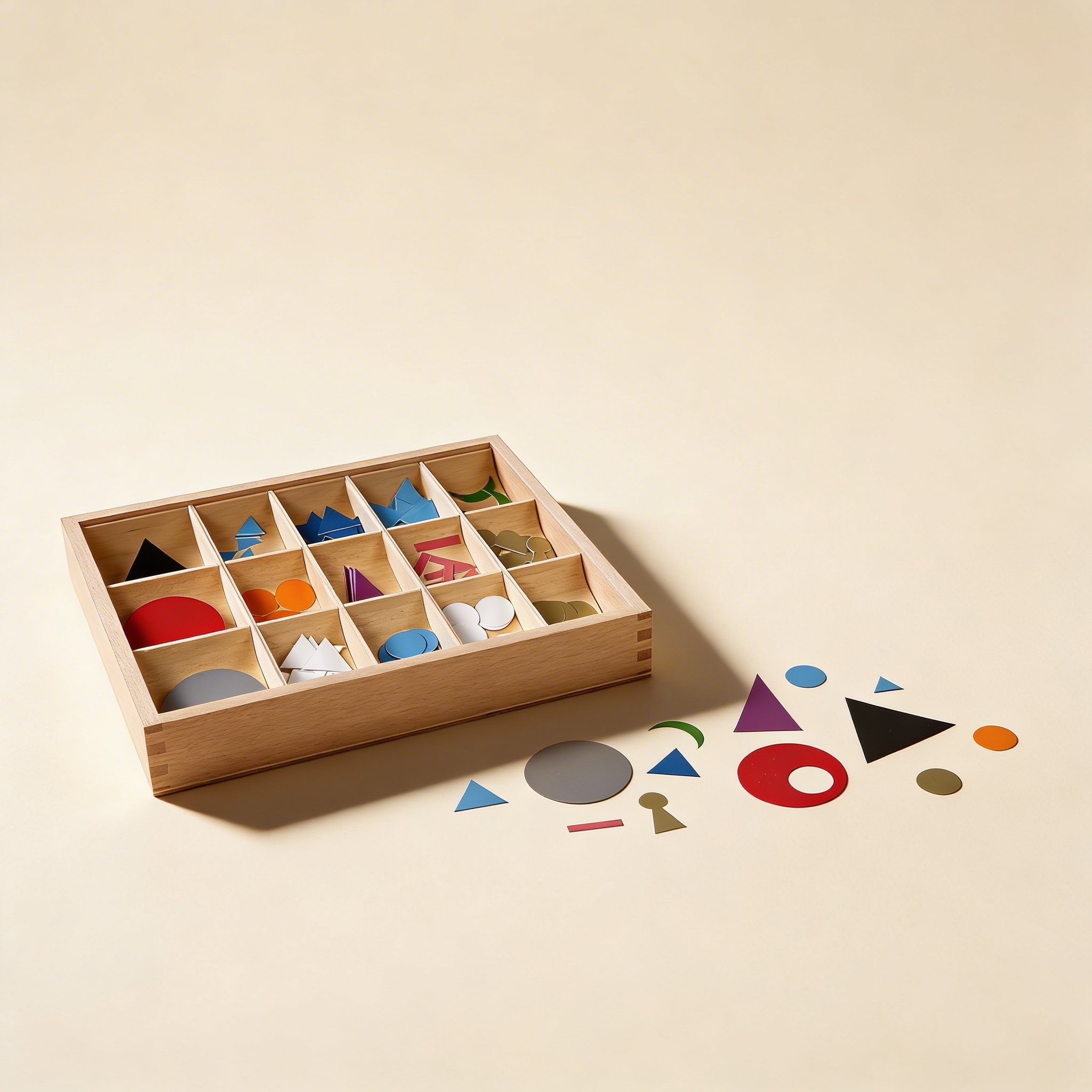
The Grammar Symbols Set — Plastic Colour-Coded Parts of Speech is a Sensorial Montessori material designed for children aged 3-6, crafted by Nienhuis Montessori to AMI standards.
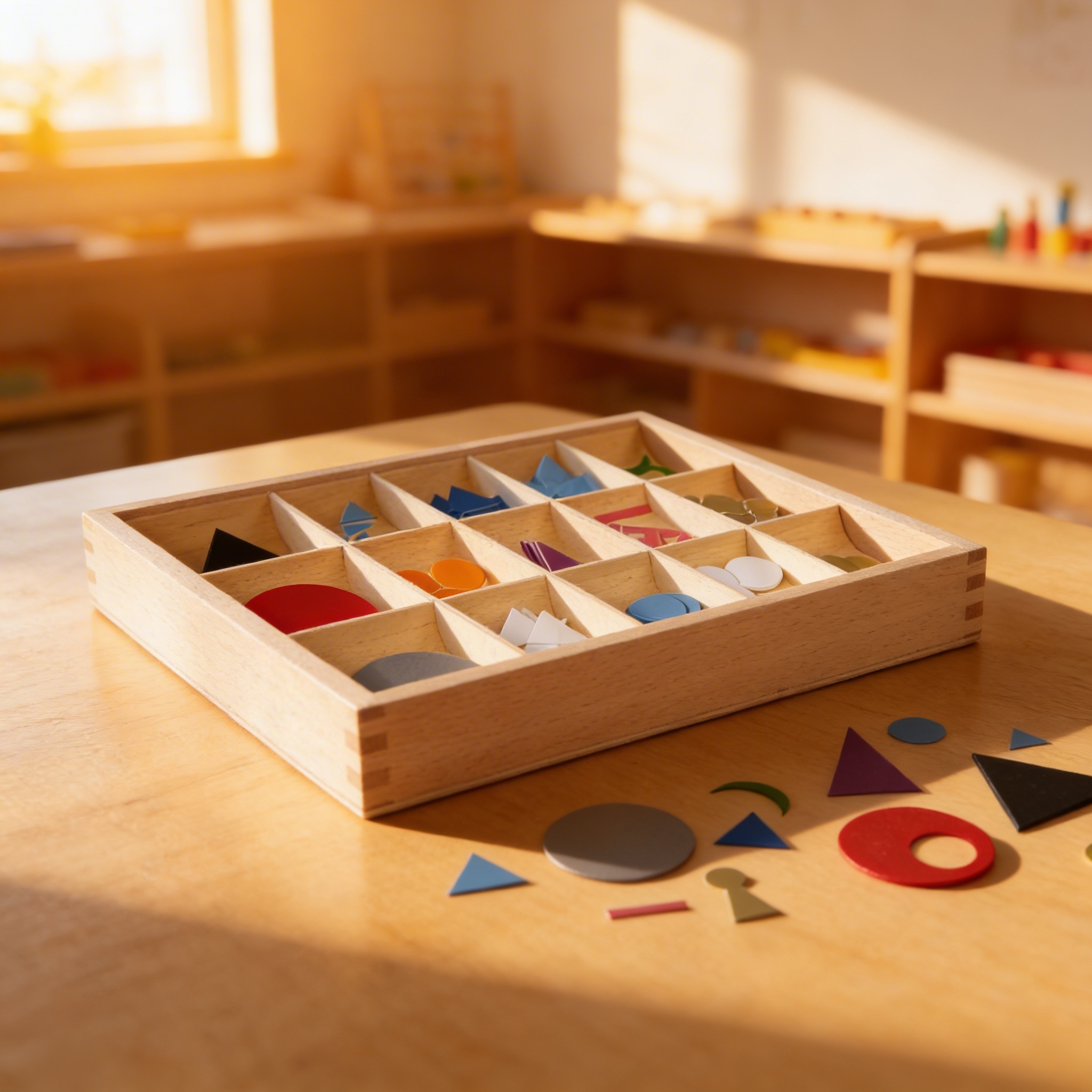
This comprehensive Plastic Grammar Symbols set provides color-coded geometric shapes that represent different parts of speech in Montessori language work. Housed in a beautifully crafted wooden box with 15 compartments, these durable plastic symbols enable children to analyze sentence structure and develop abstract grammatical understanding through hands-on manipulation.
“The senses, being explorers of the world, open the way to knowledge.”— Maria MontessoriThe Discovery of the Child
“Children display a universal love of mathematics, which is par excellence the science of precision, order, and intelligence.”
— Maria Montessori, The Discovery of the Child
The Plastic Grammar Symbols embody Montessori's principle of making abstract concepts concrete through sensorial experience. By representing parts of speech as geometric shapes, children can physically manipulate language structure, satisfying their need for movement while learning. This material bridges the gap between concrete and abstract thinking, allowing the child to literally hold grammar in their hands. The color-coding and distinct shapes appeal to the child's visual and tactile senses, creating multiple pathways for understanding. Following the principle of isolation of difficulty, each symbol represents one grammatical concept, enabling focused exploration. This hands-on approach transforms grammar from an abstract set of rules into a tangible, discoverable system that children can explore independently.
Each order includes everything needed for proper presentation and long-term use.
Follow the Montessori method of presentation for optimal child development.
Introduce one symbol at a time using the three-period lesson. Start with the black triangle for noun
Write a simple sentence on a strip. Read it together with the child
Ask the child to place the appropriate symbol above each word
Once comfortable with 3-4 symbols, introduce new parts of speech gradually
Progress to analyzing sentences from reading materials or child's own writing
Every material is carefully selected for durability, safety, and authentic Montessori experience.
Durable plastic ensures long-lasting use while maintaining precise geometric forms essential for visual grammar representation
Natural wood construction with traditional dovetail joints reflects Montessori's emphasis on beautiful, authentic materials
Each material supports multiple areas of child development simultaneously.
Children learn to identify and categorize parts of speech through concrete manipulation of symbols, building abstract grammatical understanding.
Different shapes and colors help children distinguish between grammatical categories, reinforcing language patterns through visual memory.
The compartmented box promotes organizational skills while teaching systematic approaches to language structure.
Designed for child-sized hands
Professional tips from AMI-trained guides to maximize the educational value of this material.
“Store frequently used symbols (article, adjective, noun, verb) in an accessible separate container for beginning work”
Create a reference chart showing each symbol with its name for independent checking
Observe which parts of speech the child naturally gravitates toward and build lessons from their interest
Use the grammar symbols during group lessons to analyze morning message or shared reading texts
Everything you need to know about this material.
This set includes 15 types of grammar symbols representing noun (black triangle), verb (red circle), adjective (dark blue triangle), adverb (orange circle), pronoun (purple triangle), preposition (green crescent), conjunction (pink rectangle), interjection (gold keyhole), article (light blue triangle), and additional symbols for advanced grammar work. Each symbol comes in multiple sizes for sentence analysis.
Children place the appropriate symbol above each word in a sentence to identify its grammatical function. They start with simple sentences using nouns and verbs, then gradually add more complex parts of speech. This visual and tactile approach helps children understand abstract grammatical concepts through concrete manipulation.
While primarily used for language work, these symbols engage the visual and tactile senses through their distinct shapes, colors, and sizes. The material bridges sensorial discrimination skills with language learning, helping children associate specific geometric forms and colors with grammatical concepts, making abstract ideas concrete and memorable.
Grammar symbols are typically introduced around age 5-6, after children have strong reading skills and understand basic sentence structure. However, some advanced 4-year-olds may be ready if they can read fluently. The material grows with the child, supporting grammar work through elementary years.
Plastic symbols are extremely durable and maintain their vibrant colors without fading. They're easy to clean, won't tear or bend like paper, and are lighter than wooden symbols for small hands to manipulate. The smooth plastic surface and precise shapes help children focus on the grammatical concepts rather than managing delicate materials.
Can't find what you're looking for?
Contact Our Experts
Share your experience with this material and help other educators and parents.
Bundle related materials and save. Free curriculum guide included with every set.


