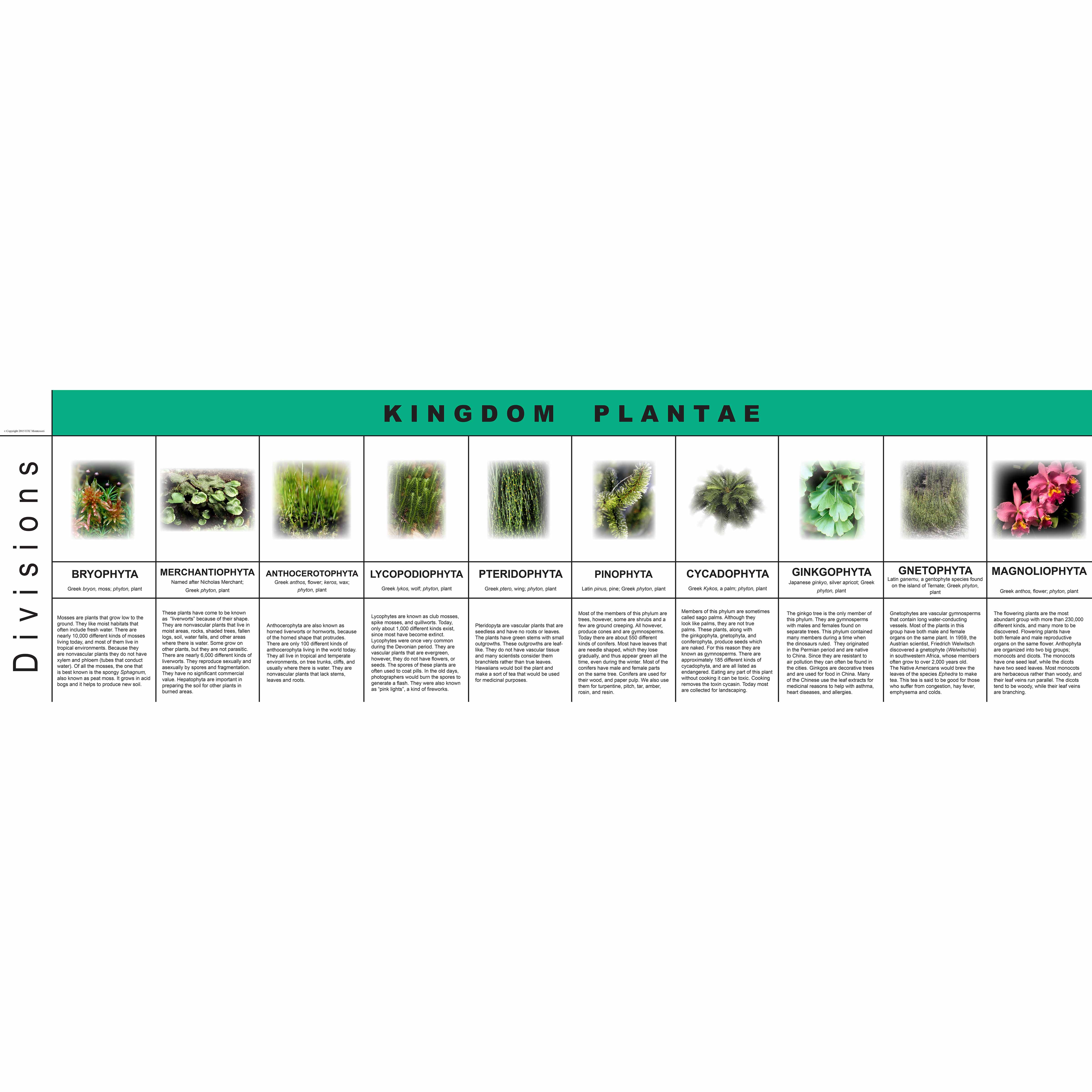
The Plant Kingdom Charts is a category.biology Montessori material designed for children aged 3-6, crafted by Nienhuis Montessori to AMI standards.
This comprehensive Plant Kingdom Chart presents ten major plant divisions through stunning photographic examples and scientific classifications. Designed for the Montessori biology curriculum, this large-format educational poster helps children aged 3-6 explore plant diversity from bryophytes to angiosperms, supporting their understanding of botanical classification and the natural world.
“Education is a natural process spontaneously carried out by the human individual, and is acquired not by listening to words but by experiences upon the environment.”— Maria MontessoriEducation for a New World
“The child is both a hope and a promise for mankind.”
— Maria Montessori, Education and Peace
The Plant Kingdom Charts introduce young children to the vast diversity of plant life through carefully selected photographic examples representing ten major divisions. This large-format poster transforms botanical classification from an abstract concept into a visual experience accessible to children as young as three. By presenting bryophytes, ferns, conifers, and flowering plants in vivid photographs, the charts satisfy the child's intense interest in naming and categorizing the natural world. The scientific classifications on each chart provide precise language that children at this age absorb effortlessly, building their vocabulary alongside their understanding of plant relationships. Rather than simplifying content, these charts trust in the child's capacity to grasp complex biological concepts when presented through clear visual organization. The photographic format allows children to recognize these plant divisions in their own environment, connecting classroom learning to their daily observations of mosses on rocks, ferns in gardens, and flowers in meadows.
Each order includes everything needed for proper presentation and long-term use.
Follow the Montessori method of presentation for optimal child development.
Begin with the simplest division (bryophytes/mosses), pointing to the photographs while naming each plant group
Invite the child to find similarities between plants within one division, observing leaf shapes, growth patterns, or reproductive structures visible in photos
Progress through divisions from simple to complex, spending time with each chart based on the child's interest
Connect chart images to real specimens or plants visible from classroom windows
Every material is carefully selected for durability, safety, and authentic Montessori experience.
Sourced from sustainably managed European forests. Beechwood is chosen for its exceptional durability, smooth grain, and natural warmth that invites touch.
Natural, unbleached cotton in child-friendly colors. The fabric provides the right amount of friction for developing fingers while being gentle on sensitive skin.
Water-based, child-safe finish that meets the strictest European safety standards. Designed to withstand years of daily use without chipping or peeling.
Each material supports multiple areas of child development simultaneously.
Introduces botanical taxonomy through visual examples, building foundations for scientific thinking and categorization skills.
Photographic examples help children observe and compare characteristics across different plant groups.
Exposure to scientific terminology and plant names enriches language while maintaining age-appropriate descriptions.
Fosters appreciation for plant diversity and encourages observation of plants in the child's environment.
Designed for child-sized hands
Professional tips from AMI-trained guides to maximize the educational value of this material.
“Introduce botanical terms naturally - 'This is a bryophyte, we also call it moss' - without requiring memorization”
Create matching cards with close-up photos of plants from each division for three-part card lessons
Use the charts as reference during other botany work like leaf shape studies or flower dissection
Document children's questions about specific plants to guide future lessons and specimen collection
Everything you need to know about this material.
The chart covers ten major plant divisions from simple to complex: bryophytes (mosses), hepatophytes (liverworts), anthocerotophytes (hornworts), lycophytes (club mosses), pteridophytes (ferns), cycadophytes (cycads), ginkgophytes (ginkgo), coniferophytes (conifers), gnetophytes, and angiosperms (flowering plants). Each division is illustrated with clear photographic examples.
This is a large-format educational poster designed for classroom wall display. The chart is professionally printed on durable, high-quality paper or card stock that can withstand regular classroom use. The exact dimensions are optimized for visibility from across the classroom while maintaining clarity of the photographic images and text.
Yes! While the chart includes scientific classifications and labels, the primary learning occurs through the stunning photographic examples. Young children can explore plant diversity visually, noticing differences in structure, leaves, and reproduction. Teachers guide oral presentations, introducing vocabulary gradually as children show interest and readiness.
This chart aligns with Montessori's approach to botanical education by presenting real photographic images rather than illustrations, showing the progression from simple to complex organisms, and introducing scientific classification in an accessible way. It supports lessons on plant parts, life cycles, and the interdependence of life, serving as a reference throughout the biology curriculum.
Absolutely! The Plant Kingdom Chart complements botany puzzles, nomenclature cards, plant life cycle materials, and leaf classification work. It serves as a comprehensive reference that ties together individual lessons, helping children see how specific plants they study fit into the larger plant kingdom. It's particularly useful for second-plane elementary extensions.
Can't find what you're looking for?
Contact Our Experts
Share your experience with this material and help other educators and parents.


