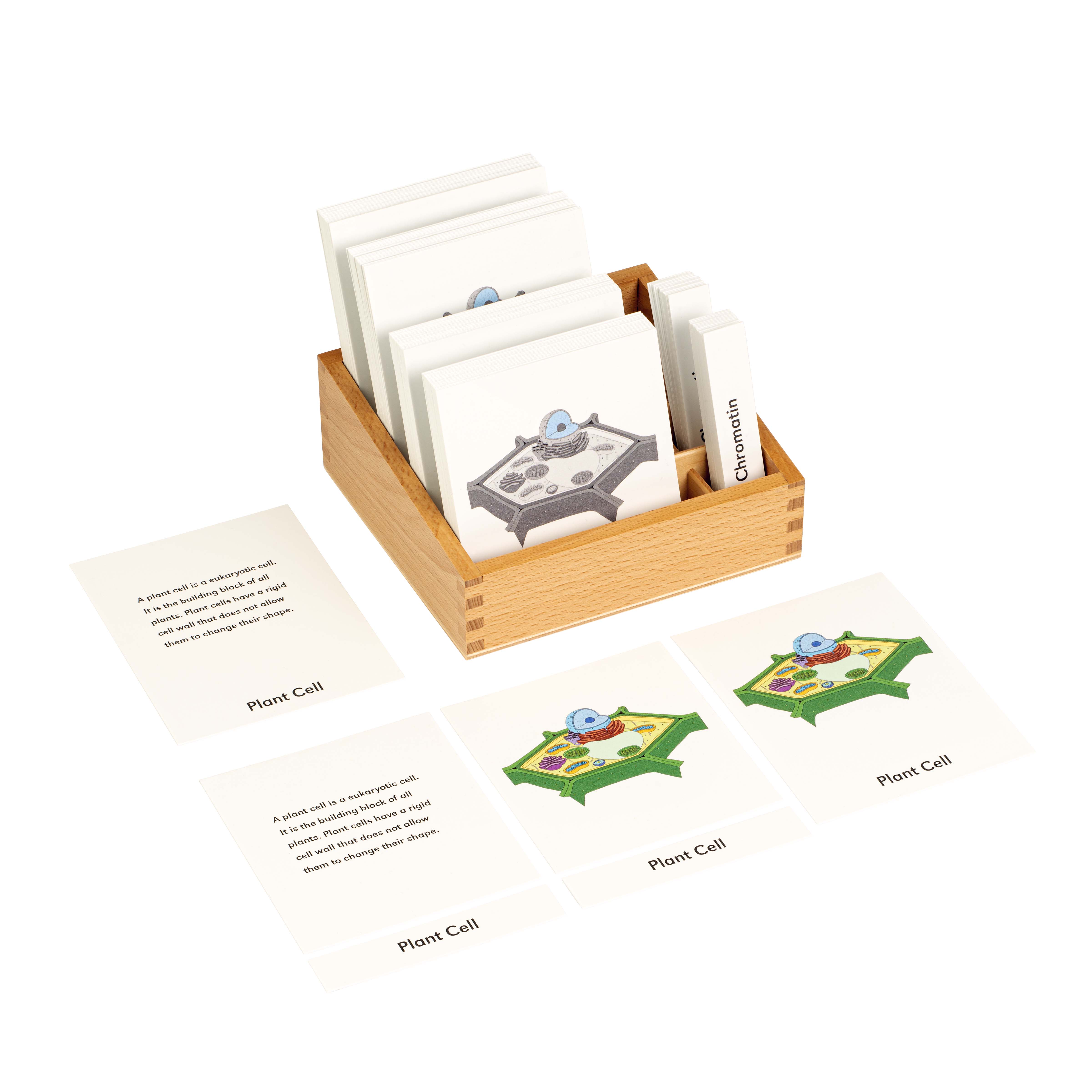
The Plant Cell Nomenclature Cards is a category.biology Montessori material designed for children aged 3-6, crafted by Nienhuis Montessori to AMI standards.
These Plant Cell Nomenclature Cards provide a systematic introduction to cellular biology through beautifully illustrated diagrams with color-coded components. Each card features clear labeling of plant cell structures, supporting the child's development of scientific vocabulary and understanding of living organisms. The wooden storage box with dividers ensures organized presentation and careful handling of this essential biology material.
“Education is a natural process spontaneously carried out by the human individual, and is acquired not by listening to words but by experiences upon the environment.”— Maria MontessoriEducation for a New World
“The child is both a hope and a promise for mankind.”
— Maria Montessori, Education and Peace
The Plant Cell Nomenclature Cards introduce young children to the invisible world of cellular structures through visual representation and precise language. These cards transform abstract microscopic concepts into concrete learning experiences by presenting each cell component with clear, color-coded illustrations that children can examine and discuss. The wooden storage box maintains the cards in pristine condition, emphasizing the scientific precision required when studying biology. By isolating individual cellular structures on separate cards, children can focus on one component at a time, building their understanding systematically. The nomenclature format connects visual recognition with scientific vocabulary, preparing children for advanced biological concepts. These cards bridge the gap between observable plant life and its microscopic foundation, satisfying children's curiosity about how plants function at the cellular level.
Each order includes everything needed for proper presentation and long-term use.
Follow the Montessori method of presentation for optimal child development.
Begin with the whole plant cell card, allowing the child to observe all components together
Introduce one cellular structure at a time, starting with the most visible like chloroplasts
Match picture cards with corresponding labels, pronouncing each term clearly
Compare different organelles using the color coding to highlight distinctions
Create a complete plant cell layout using all component cards together
Every material is carefully selected for durability, safety, and authentic Montessori experience.
The storage box is crafted from smooth natural wood, providing a sensory experience that connects the child to nature while studying plant cells.
Durable cardstock ensures these learning materials withstand repeated handling while maintaining their visual clarity and educational value.
Each material supports multiple areas of child development simultaneously.
Introduces precise terminology for plant cell structures, building a foundation for future biology studies.
Color-coded components help children identify and differentiate between cellular structures.
Matching and sorting activities develop the child's ability to categorize and organize information.
Label reading and matching supports emerging literacy skills through meaningful context.
Designed for child-sized hands
Professional tips from AMI-trained guides to maximize the educational value of this material.
“Present cards after children have extensive experience with whole plants and their parts”
Connect cellular structures to plant functions children already understand, like how leaves make food
Use consistent scientific terminology without simplification - children readily absorb precise language
Store cards in order within wooden dividers to maintain sequence for presentation
Everything you need to know about this material.
The cards present simplified, color-coded diagrams focusing on basic components like cell wall, nucleus, and chloroplasts. Children absorb the vocabulary and visual patterns through repetition and matching activities, building foundational knowledge for later detailed study.
The cards typically feature essential structures including cell wall, cell membrane, nucleus, chloroplasts, vacuole, cytoplasm, and mitochondria. Each component is distinctly colored and clearly labeled for easy identification.
Montessori nomenclature cards follow a three-part format: picture with label, picture without label, and label only. This allows for multiple learning activities including matching, memory work, and reading practice, progressing from concrete to abstract understanding.
Children can match labeled to unlabeled cards, create three-part layouts, use cards for vocabulary lessons, trace or copy labels, compare with real microscope images, and create their own plant cell drawings using the cards as reference.
Early exposure to scientific concepts builds vocabulary, satisfies children's natural curiosity about living things, and creates mental frameworks for understanding life processes. The visual and tactile nature of the cards makes abstract concepts accessible to young learners.
Can't find what you're looking for?
Contact Our Experts
Share your experience with this material and help other educators and parents.


