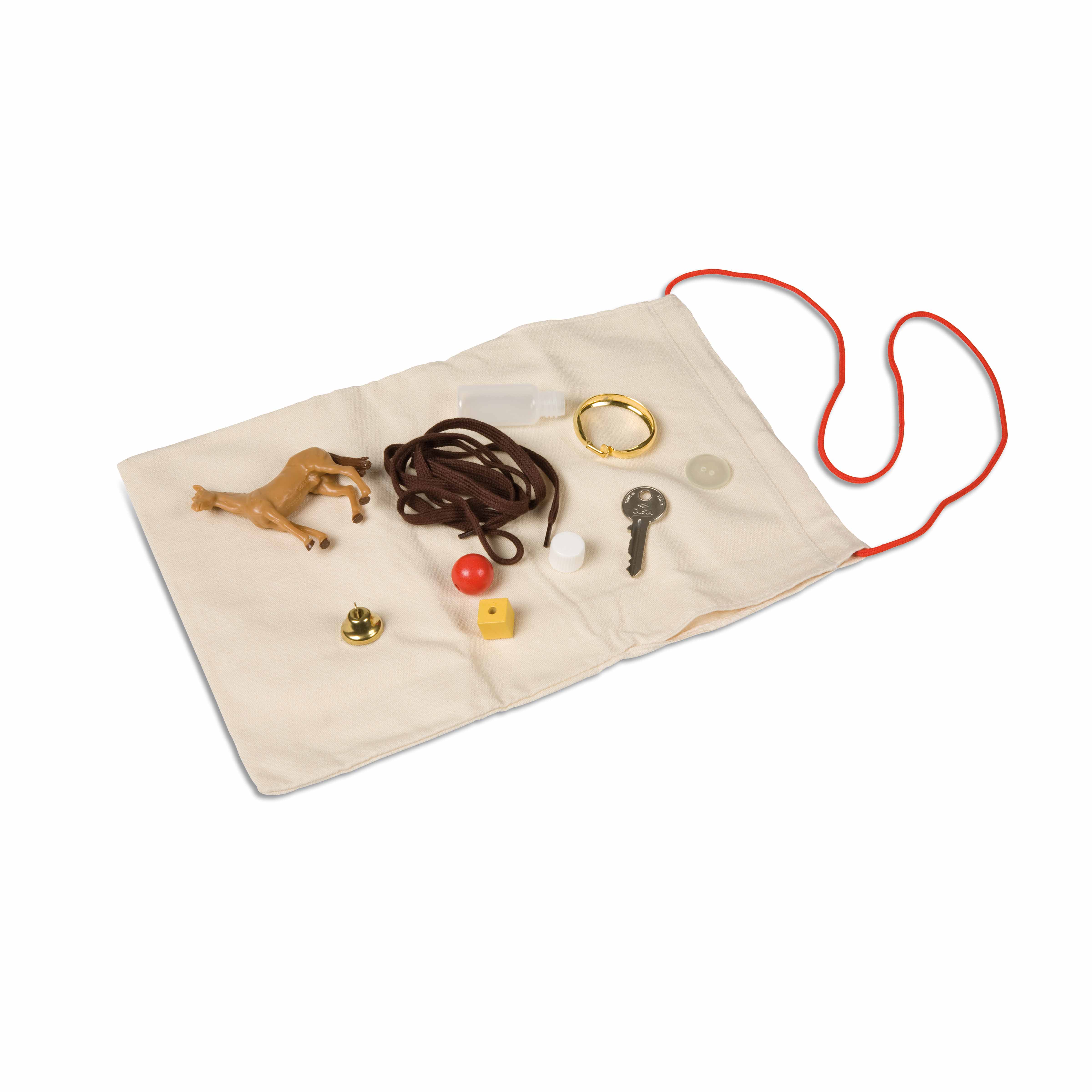
The Mystery Bag: Familiar Items is a Educational Materials Montessori material designed for children aged 3-6, crafted by Nienhuis Montessori to AMI standards.
The Mystery Bag with Familiar Items invites children to explore everyday objects through touch alone, developing tactile discrimination and vocabulary. This sensorial exercise contains approximately 8 common household items of varied textures and materials, encouraging children to identify objects using only their sense of touch while building concentration and language skills.
“The child is both a hope and a promise for mankind.”— Maria MontessoriEducation and Peace
“The hands are the instruments of man's intelligence.”
— Maria Montessori, The Absorbent Mind
The Mystery Bag: Familiar Items isolates the tactile sense by removing visual input, allowing children to develop refined touch discrimination through exploring household objects. In Montessori sensorial education, the Mystery Bag creates a controlled challenge where children must rely solely on their fingertips to identify textures, shapes, and materials of everyday items. This bag's collection of approximately 8 familiar objects provides just enough variety to engage without overwhelming, each item offering distinct tactile qualities that children can explore methodically. The Mystery Bag addresses the developmental need for sensory refinement during the sensitive period for sensorial exploration, when children naturally seek to understand their world through touch. By containing recognizable household items rather than abstract shapes, the Mystery Bag connects sensorial exploration to practical life, helping children build conscious awareness of the objects they encounter daily. The opaque bag design ensures complete visual isolation, making touch the primary pathway for learning.
Each order includes everything needed for proper presentation and long-term use.
Follow the Montessori method of presentation for optimal child development.
Demonstrate reaching into the bag and feeling one object without looking, describing what you feel aloud
Invite the child to place one hand in the bag and explore a single object through touch
Ask the child to describe what they feel using descriptive words before naming the object
Have the child remove the object to verify their guess, then place it in the basket
Continue until all objects are explored, then return items to bag for future use
Each material supports multiple areas of child development simultaneously.
Develops the ability to recognize objects through touch alone, refining tactile perception and mental imagery.
Expands descriptive language as children articulate textures, shapes, and materials they discover.
Requires focused attention to isolate tactile information without visual input.
Strengthens recall as children match tactile impressions with known objects from daily life.
Designed for child-sized hands
Professional tips from AMI-trained guides to maximize the educational value of this material.
“Rotate bag contents seasonally to maintain interest while keeping some familiar items for confidence”
Observe which textures children struggle to identify and provide isolated texture tablets for practice
Use the mystery bag during language lessons to introduce descriptive vocabulary naturally
Create themed bags (kitchen items, bathroom items) to connect to practical life activities
Everything you need to know about this material.
The bag contains approximately 8 familiar household objects with varied textures and materials, such as a small brush, cork, shell, stone, fabric piece, wooden cube, metal spoon, and rubber ball. Items may vary but are always safe, child-appropriate everyday objects.
Children reach into the bag without looking and use only their sense of touch to identify objects. They describe what they feel, guess the item, then remove it to check. This develops tactile discrimination, vocabulary, and concentration as they focus solely on touch sensations.
The Mystery Bag develops tactile discrimination, sensorial awareness, descriptive vocabulary, concentration, memory, and critical thinking. Children learn texture words (smooth, rough, soft, hard), practice patience, and build confidence in their sensory perceptions.
Yes, you can customize the bag with additional safe household items. Choose objects with distinct textures and shapes that children encounter daily. Ensure items are large enough to prevent choking hazards and avoid sharp edges or breakable materials.
For younger children (3-4), start with 4-5 very distinct items. For older children (5-6), add more challenging objects, play matching games with duplicate items, or have children describe objects for others to guess. You can also sort items by texture or material properties.
Can't find what you're looking for?
Contact Our Experts
Share your experience with this material and help other educators and parents.

