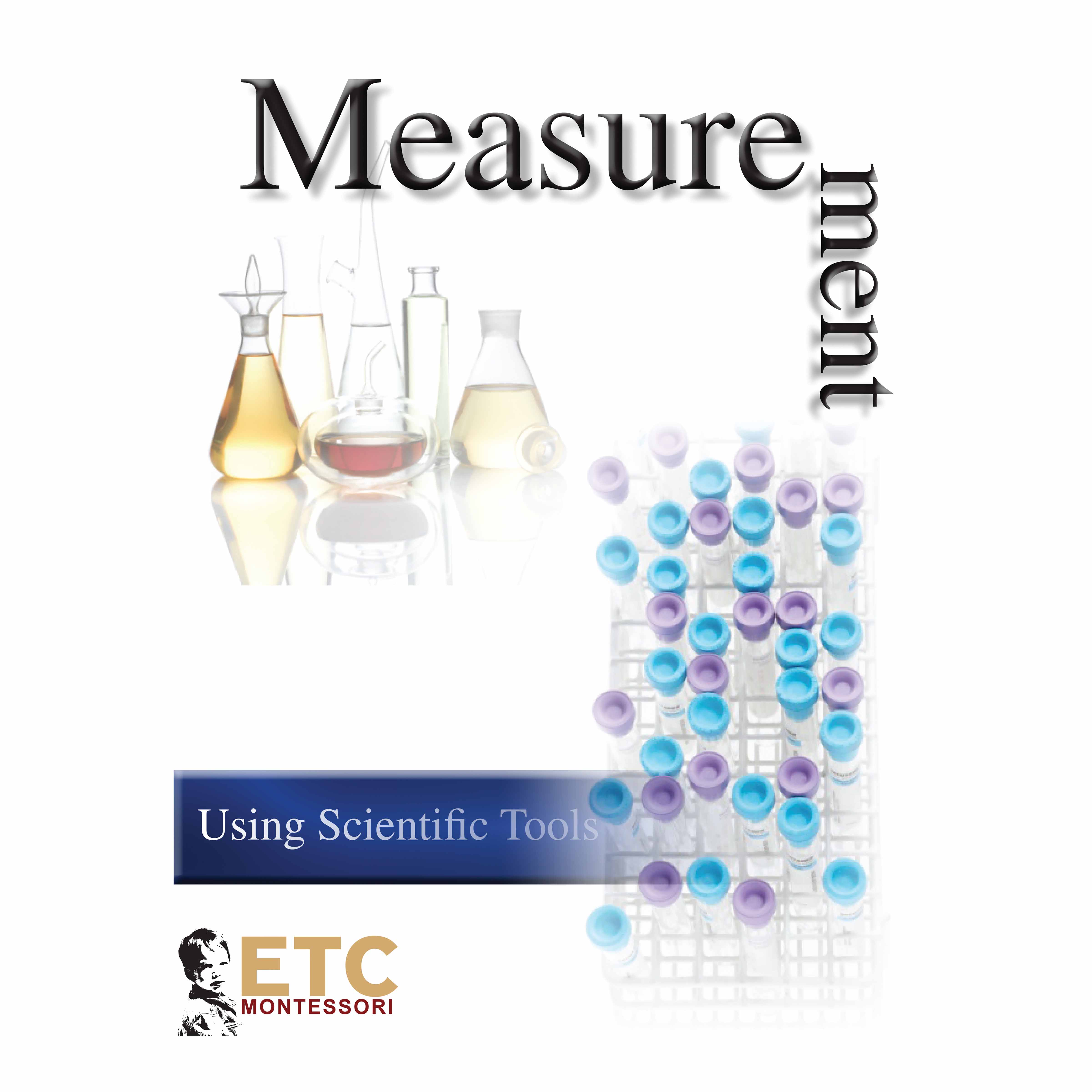
The Measurement Curriculum Level 9-12 is a Educational Materials Montessori material designed for children aged 3-6, crafted by Nienhuis Montessori to AMI standards.
This advanced Measurement Curriculum Level 9-12 introduces elementary students to precise scientific measurement through hands-on experimentation with laboratory-grade glassware. Children explore volume, capacity, and liquid measurement using professional equipment including graduated flasks, beakers, and test tubes with colorful solutions, building foundations for scientific methodology and mathematical precision.
“The child is both a hope and a promise for mankind.”— Maria MontessoriEducation and Peace
“The hands are the instruments of man's intelligence.”
— Maria Montessori, The Absorbent Mind
The Measurement Curriculum Level 9-12 addresses the elementary child's intense need for precision and scientific thinking through real laboratory glassware. Working with graduated flasks, beakers, and test tubes filled with colorful solutions, children experience measurement as scientists do, not as abstract concepts. The glass materials demand careful handling, developing concentration and motor refinement while the precise graduations on each vessel satisfy the mathematical mind's hunger for exactness. This curriculum bridges sensorial exploration with mathematical abstraction - children pour, measure, and record using professional equipment that respects their intellectual capabilities. The colorful solutions make volume visible and comparable across different shaped containers, allowing discovery of conservation principles. By using authentic scientific glassware rather than simplified versions, the curriculum honors the elementary child's desire to understand the real world through real tools, preparing them for genuine scientific investigation.
Each order includes everything needed for proper presentation and long-term use.
Follow the Montessori method of presentation for optimal child development.
Introduce each piece of glassware, demonstrating how to read graduations at eye level
Pour specific amounts into graduated beakers, checking accuracy against markings
Transfer liquids between different shaped containers, recording volumes
Create mixture recipes using precise measurements from multiple containers
Compare theoretical and actual measurements when combining liquids
Each material supports multiple areas of child development simultaneously.
Develops systematic thinking through hypothesis, experimentation, and observation with real laboratory equipment.
Builds understanding of volume, capacity, and measurement units through hands-on liquid transfer activities.
Careful pouring and handling of glassware refines hand steadiness and precision movements.
Focused attention required for accurate measurement strengthens sustained concentration abilities.
Designed for child-sized hands
Professional tips from AMI-trained guides to maximize the educational value of this material.
“Demonstrate proper glassware handling explicitly - two hands, walking slowly, setting down gently”
Create a 'measurement station' with appropriate table height for accurate eye-level readings
Prepare colored solutions weekly using food coloring for visual appeal and easy cleanup
Keep detailed observation notes on each child's precision development for parent conferences
Everything you need to know about this material.
The curriculum includes laboratory-grade glassware such as graduated flasks, beakers, and test tubes in various sizes, measuring cylinders, pipettes, safety equipment, colorful non-toxic solutions for experiments, measurement recording sheets, and a comprehensive teacher's guide with detailed lesson plans and extensions.
While marketed for ages 3-6, this Level 9-12 curriculum is designed for elementary students (typically 6-9 years) who have completed earlier measurement work. The use of real glassware requires careful adult supervision and prior experience with practical life exercises that develop careful handling skills.
This curriculum embodies Montessori principles through hands-on learning with real scientific tools, isolated concepts presented systematically, self-correcting materials that provide immediate feedback, and progression from concrete to abstract understanding of measurement concepts while fostering independence and precision.
Safety measures include constant adult supervision, establishing clear ground rules for handling glassware, using non-toxic solutions only, working on appropriate surfaces with spill protection, teaching proper pouring and carrying techniques, and having safety equipment like goggles and aprons available for experiments.
Children should have experience with basic pouring exercises, understanding of standard and non-standard measurement units, familiarity with recording data, ability to read numbers up to 1000, and completion of earlier sensorial work with dimension materials. Prior work with Levels 1-8 measurement activities is strongly recommended.
Can't find what you're looking for?
Contact Our Experts
Share your experience with this material and help other educators and parents.

