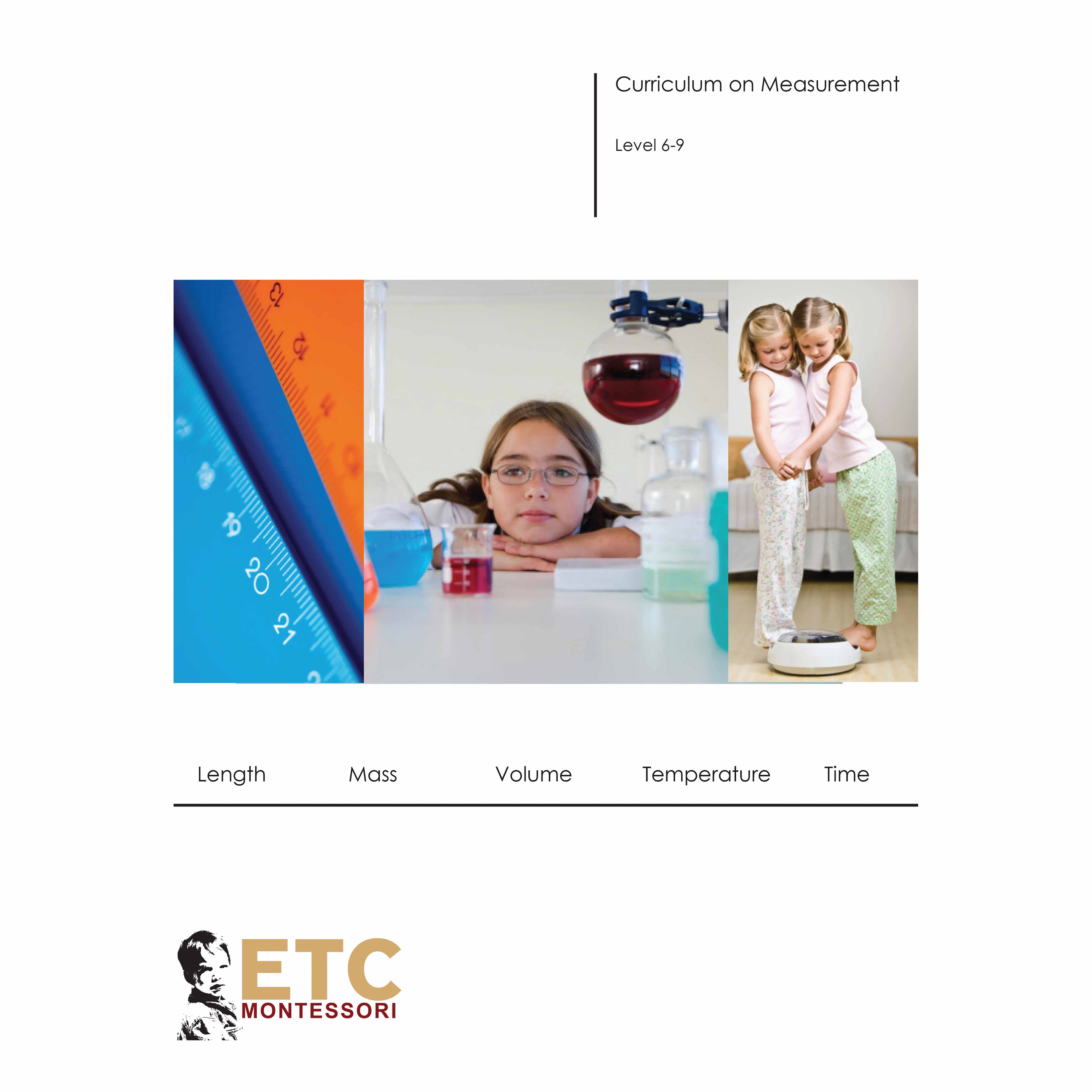
The Measurement Curriculum Level 6-9 is a Educational Materials Montessori material designed for children aged 3-6, crafted by Nienhuis Montessori to AMI standards.
This comprehensive Measurement Curriculum Level 6-9 introduces children to fundamental measurement concepts through hands-on exploration. The kit includes precision tools for measuring length, volume, mass, and observing liquid properties, supporting the Montessori approach to concrete learning. Each component enables children to discover mathematical relationships through direct manipulation and comparison.
“The child is both a hope and a promise for mankind.”— Maria MontessoriEducation and Peace
“The hands are the instruments of man's intelligence.”
— Maria Montessori, The Absorbent Mind
The Measurement Curriculum Level 6-9 embodies Montessori's principle that mathematical understanding emerges through concrete manipulation. When children use these precision tools to measure length, volume, and mass, they construct abstract concepts through sensorial experience. The curriculum's graduated complexity mirrors the child's natural progression from simple comparisons to precise quantification. Each measuring instrument in the kit serves as a bridge between the physical world and mathematical abstraction. The hands-on nature of measuring activities satisfies the young child's need to touch, manipulate, and explore while simultaneously building the foundation for advanced mathematical thinking. Through repeated use of rulers, measuring cups, and scales, children internalize units of measurement as lived experience rather than memorized facts. The Measurement Curriculum addresses the developmental need for order and precision that characterizes the mathematical mind emerging between ages three and six.
Each order includes everything needed for proper presentation and long-term use.
Follow the Montessori method of presentation for optimal child development.
Introduce length measurement using the ruler to measure classroom objects
Explore volume using measuring cups with water or rice
Compare mass using the balance scale with familiar objects
Record measurements on prepared sheets using numerals or drawings
Each material supports multiple areas of child development simultaneously.
Develops concrete understanding of abstract measurement concepts through hands-on manipulation and comparison.
Introduces scientific method through observation, measurement, and recording of data.
Refines precision movements through careful handling of measuring instruments and pouring activities.
Builds foundation for mathematical thinking through comparison and relationship discovery.
Designed for child-sized hands
Professional tips from AMI-trained guides to maximize the educational value of this material.
“Present one measurement concept thoroughly before introducing the next tool”
Create measurement stations that children can access independently during work time
Connect measurement activities to practical applications like table setting or art projects
Observe which measurement concepts each child gravitates toward and provide appropriate challenges
Everything you need to know about this material.
This comprehensive kit includes precision tools for measuring length (rulers, measuring tapes), volume (graduated cylinders, measuring cups), mass (balance scales, weights), and materials for observing liquid properties. Each tool is sized appropriately for young hands and designed for repeated use in the classroom.
The Measurement Curriculum follows the Montessori approach through concrete, hands-on learning. Children manipulate real measurement tools to discover mathematical relationships independently, moving from concrete experiences to abstract understanding. The materials are self-correcting and allow for repetition and mastery at the child's own pace.
Children explore fundamental concepts including comparing lengths, understanding volume and capacity, measuring mass and weight, observing liquid properties, and making mathematical comparisons. They learn practical skills like reading scales, using standard units, and understanding the relationship between different measurements.
Yes, the Measurement Curriculum Level 6-9 is designed for children ages 3-6 and works perfectly in mixed-age Montessori environments. Younger children can begin with simple comparisons and sorting activities, while older children progress to more complex measuring and recording tasks, supporting differentiated learning.
Teachers introduce materials through individual or small group presentations, demonstrating proper handling and use of each tool. Activities progress from simple to complex, starting with sensorial exploration and comparison, then moving to precise measurement and recording. Extension activities and cross-curricular connections are encouraged.
Can't find what you're looking for?
Contact Our Experts
Share your experience with this material and help other educators and parents.

