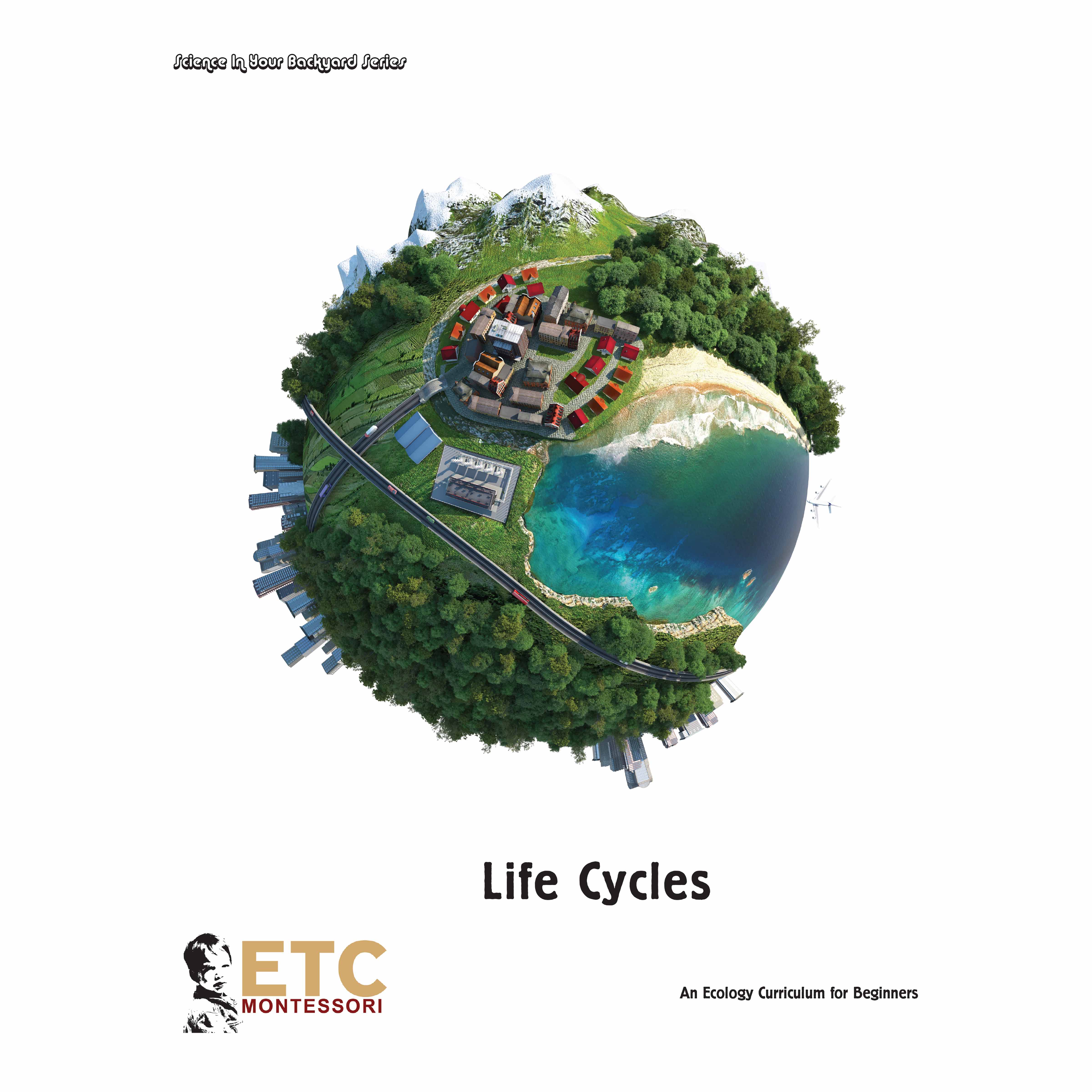
The Life Cycle Curriculum is a Educational Materials Montessori material designed for children aged 3-6, crafted by Nienhuis Montessori to AMI standards.
This comprehensive Life Cycle Curriculum guide provides educators with structured lessons for introducing natural cycles and ecological concepts to young learners. The professionally printed curriculum features a distinctive planet Earth illustration on the cover, emphasizing the interconnectedness of life systems. Designed for the primary classroom, this resource supports children's understanding of natural transformations and environmental awareness through age-appropriate activities and visual learning materials.
“The child is both a hope and a promise for mankind.”— Maria MontessoriEducation and Peace
“The hands are the instruments of man's intelligence.”
— Maria Montessori, The Absorbent Mind
The Life Cycle Curriculum guide fulfills the young child's profound need to understand transformation in nature during the sensitive period for order and classification. This professionally printed curriculum with its planet Earth illustration allows children to systematically explore how living things change through predictable stages, satisfying their desire for logical sequences. The Life Cycle Curriculum provides structured lessons that connect abstract concepts of time and growth to concrete, observable phenomena in nature. By presenting life cycles through age-appropriate visual materials, this curriculum guide enables children to grasp the fundamental pattern of birth, growth, reproduction, and renewal that governs all living things. The comprehensive Life Cycle lessons address the child's questions about where things come from and where they go, providing scientific accuracy within a framework the young mind can comprehend. Through this curriculum's ecological focus, children develop reverence for nature's processes while building vocabulary and conceptual understanding of biological transformations.
Each order includes everything needed for proper presentation and long-term use.
Follow the Montessori method of presentation for optimal child development.
Begin with familiar life cycles like butterflies or beans that children can observe directly
Present one complete life cycle using the curriculum's visual sequence cards
Introduce comparative life cycles to highlight similarities and differences
Connect life cycles to seasonal changes and environmental factors
Extend learning through outdoor observations and specimen collection
Every material is carefully selected for durability, safety, and authentic Montessori experience.
Sourced from sustainably managed European forests. Beechwood is chosen for its exceptional durability, smooth grain, and natural warmth that invites touch.
Natural, unbleached cotton in child-friendly colors. The fabric provides the right amount of friction for developing fingers while being gentle on sensitive skin.
Water-based, child-safe finish that meets the strictest European safety standards. Designed to withstand years of daily use without chipping or peeling.
Each material supports multiple areas of child development simultaneously.
Introduces fundamental concepts of life cycles, transformations, and ecological relationships through concrete, visual learning experiences.
Develops respect for nature and understanding of Earth's interconnected systems through age-appropriate activities.
Supports logical thinking and temporal understanding through exploration of natural cycles and processes.
Enriches scientific vocabulary with precise terminology for natural phenomena, life stages, and ecological concepts.
Designed for child-sized hands
Professional tips from AMI-trained guides to maximize the educational value of this material.
“Present life cycles when children show interest in baby animals or growing plants”
Use real specimens whenever possible - eggs, caterpillars, seeds, and saplings
Create life cycle books where children can illustrate their observations
Connect life cycle learning to classroom pets or garden maintenance
Everything you need to know about this material.
This comprehensive curriculum covers various natural life cycles including plants, animals, insects (butterfly, frog), seasons, water cycle, and basic ecological concepts. Each topic includes structured lesson plans with age-appropriate activities designed to help children understand natural transformations and develop environmental awareness.
While designed with the primary classroom in mind, this curriculum is equally suitable for homeschooling families and small group settings. The structured lessons and visual materials can be easily adapted for one-on-one learning or small groups, making it versatile for various educational environments.
The curriculum guide provides lesson plans and activity instructions. You may need to source additional materials such as life cycle models, specimens, magnifying glasses, planting supplies, and art materials for hands-on activities. The guide includes recommendations for supplementary resources to enhance each lesson.
The curriculum is designed to be flexible and can be adapted to your schedule. Typically, educators spread the lessons throughout the school year, integrating them with seasonal observations. Each life cycle unit can take 2-4 weeks depending on the depth of exploration and children's interest levels.
Yes, this curriculum follows Montessori principles by emphasizing hands-on learning, observation of natural phenomena, and child-led discovery. The lessons encourage concrete experiences before abstract concepts and integrate seamlessly with Montessori cultural studies and science shelves.
Can't find what you're looking for?
Contact Our Experts
Share your experience with this material and help other educators and parents.


