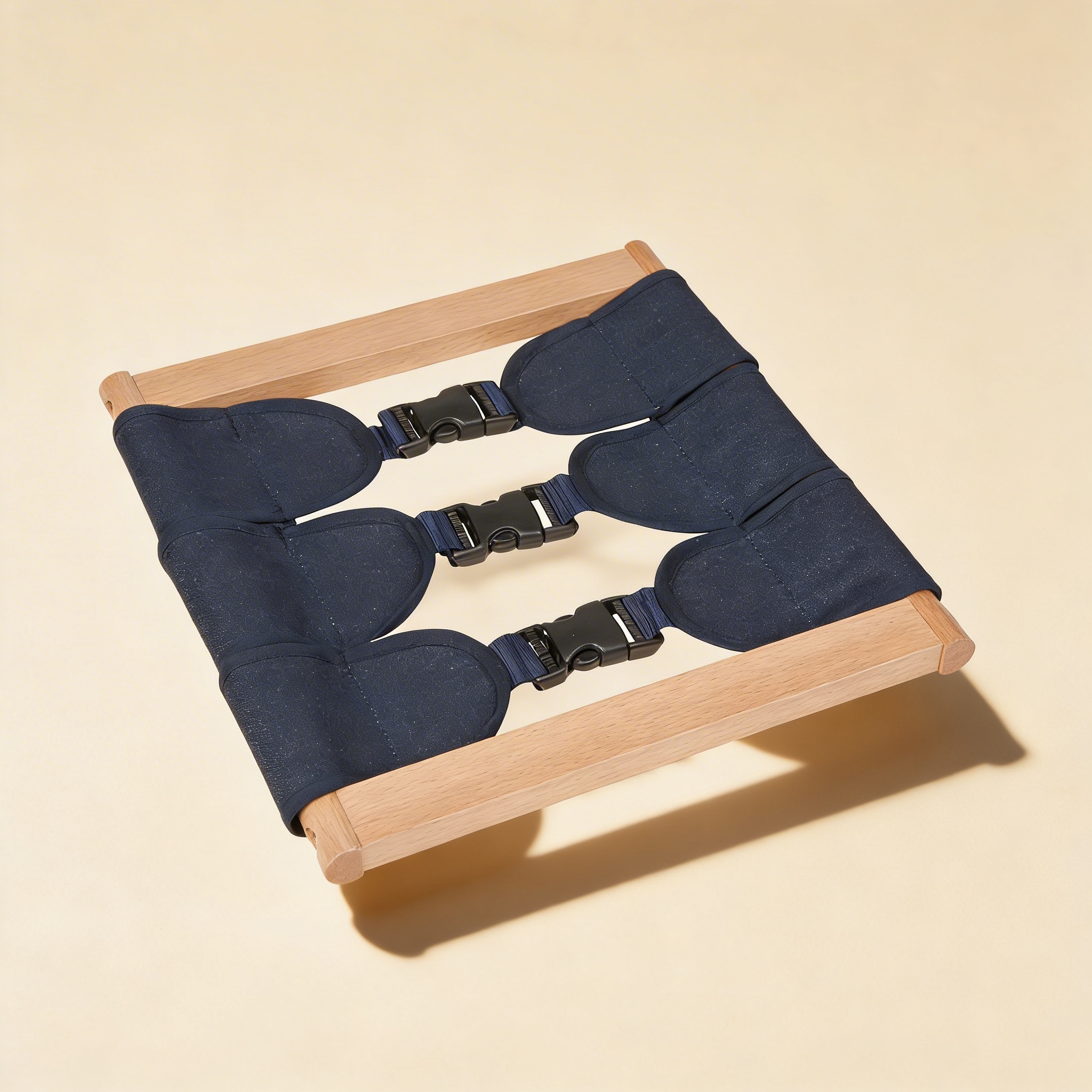
The Dressing Frame: Buckling — Progressive Side-Release Practice is a Practical Life Montessori material designed for children aged 0-3, crafted by Nienhuis Montessori to AMI standards.
This AMI-approved dressing frame introduces infants and toddlers to the essential skill of buckling through three progressively challenging side-release buckles. The sturdy wooden frame holds navy fabric panels secured by color-coded buckles, allowing young children to practice the pinching, threading, and releasing movements needed for independent dressing. Designed for the 0-3 environment, this material supports the development of fine motor control and concentration through purposeful, repetitive practice.
“The greatest sign of success for a teacher is to be able to say, 'The children are now working as if I did not exist.'”— Maria MontessoriThe Absorbent Mind
“Free the child's potential, and you will transform him into the world.”
— Maria Montessori, To Educate the Human Potential
The buckling dressing frame embodies Dr. Montessori's principle of 'education of movement' through isolation of difficulty. By presenting buckling separate from the complexity of clothing on the body, the child can focus entirely on mastering the precise hand movements required. This material honors the child's drive toward independence, responding to their sensitive period for order and movement between 18-36 months. The frame provides unlimited repetition opportunities, allowing the child to perfect their technique through self-directed practice. The color-coded buckles offer visual order and progression, supporting the child's need for clarity and sequential learning while building the foundation for practical independence in daily life.
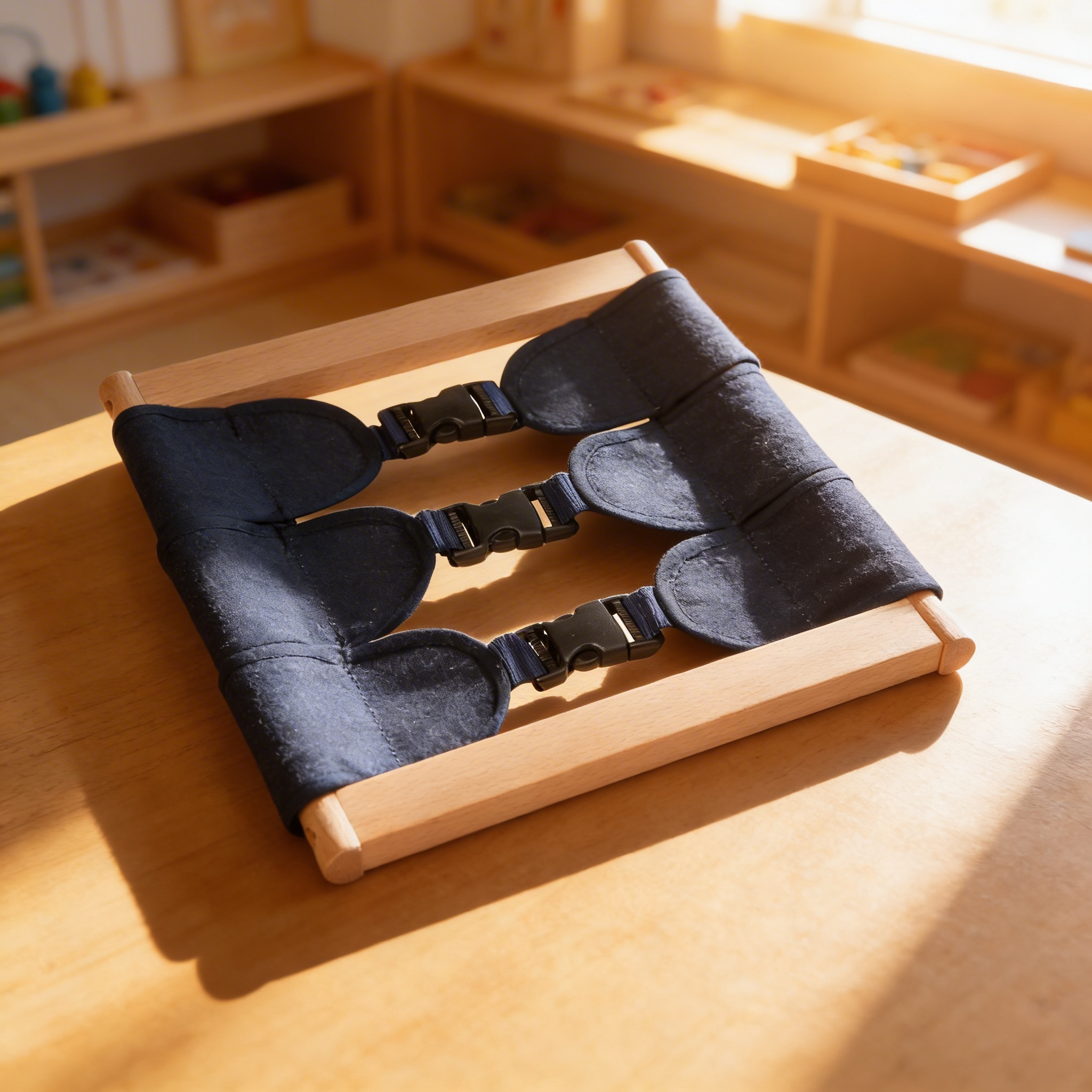
Each order includes everything needed for proper presentation and long-term use.
Follow the Montessori method of presentation for optimal child development.
Show slow, deliberate movements to open the first buckle by pinching the side tabs
Pull the male end completely out of the female buckle piece
Lay the opened buckle pieces flat against the fabric
Repeat with remaining buckles, working top to bottom
To close, align the male piece with the female opening and push until it clicks
Every material is carefully selected for durability, safety, and authentic Montessori experience.
The natural wood frame provides stability during practice while introducing children to authentic materials that connect them to their environment.
Modern buckles found on everyday items like car seats, strollers, and backpacks make this practice directly transferable to daily life.
Each material supports multiple areas of child development simultaneously.
Pinching and pressing buckle sides develops pincer grasp strength and bilateral coordination essential for later writing skills.
The multi-step process of aligning, threading, and clicking buckles builds sustained attention and sequential thinking.
Mastering buckles empowers toddlers to participate in self-care routines, fostering autonomy and self-esteem.
Children learn cause and effect by discovering how pressure points release the buckle mechanism.
Designed for child-sized hands
Professional tips from AMI-trained guides to maximize the educational value of this material.
“Present this material only when the child shows interest in buckles or after mastering simpler frames like velcro”
Use minimal language during presentation - let your hands do the teaching through slow, precise movements
Store the frame horizontally on a designated shelf at child's eye level for easy access
Check buckles weekly to ensure smooth operation - apply silicone spray if needed
Everything you need to know about this material.
This frame is designed for children from 18 months to 3 years. Start when your child shows interest in buckles on car seats, high chairs, or backpacks, and has developed enough pincer grasp to manipulate small objects.
The frame features three color-coded side-release buckles arranged from easiest to most challenging. Each buckle requires slightly different finger strength and coordination, allowing children to progress naturally as their skills develop.
The infant/toddler version features larger buckles with smoother release mechanisms suitable for smaller hands. The fabric is positioned to allow easier access, and the buckles are color-coded to help young children identify matching pairs.
Children develop bilateral coordination, pincer grasp strength, hand-eye coordination, concentration, and problem-solving skills. The repetitive practice also builds muscle memory for independent dressing and prepares for more complex fasteners.
Sit beside your child and demonstrate slowly with one buckle at a time. Show the pinching motion to release, how to separate the pieces, then how to align and click them together. Use minimal words and exaggerated, deliberate movements.
Can't find what you're looking for?
Contact Our Experts
Share your experience with this material and help other educators and parents.
Bundle related materials and save. Free curriculum guide included with every set.


