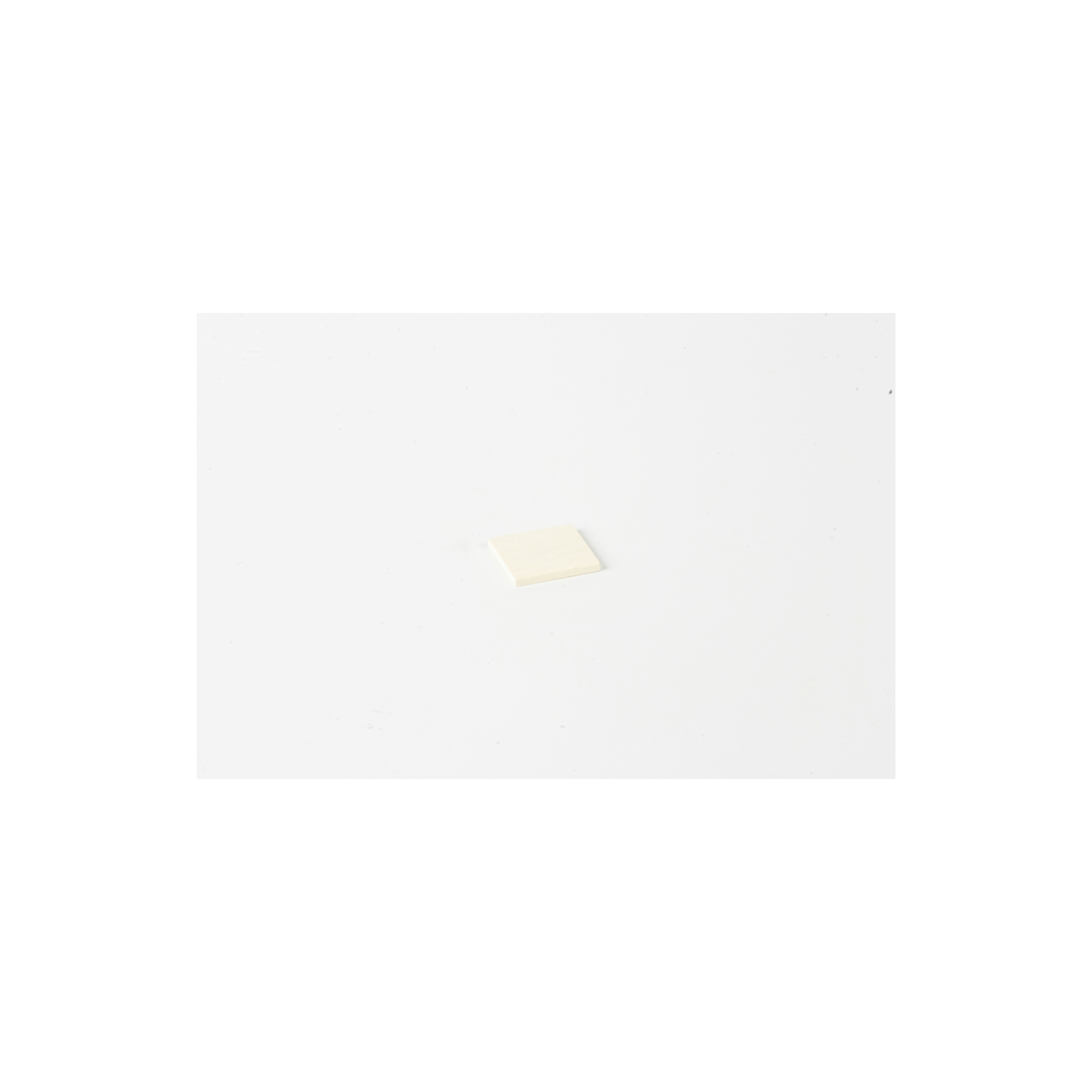
The Hundred / Pythagoras Board: Unprinted Wood Tile (1) is a Mathematics Montessori material designed for children aged 3-6, crafted by Nienhuis Montessori to AMI standards.
This unprinted wooden tile serves as a replacement or supplementary piece for the Hundred Board and Pythagoras Board activities in Montessori mathematics. The smooth, natural wood surface allows children to focus on quantity relationships and numerical patterns without visual distractions, supporting the development of mathematical abstraction through hands-on manipulation.
“Children display a universal love of mathematics, which is par excellence the science of precision, order, and intelligence.”— Maria MontessoriThe Discovery of the Child
“The greatest sign of success for a teacher is to be able to say, 'The children are now working as if I did not exist.'”
— Maria Montessori, The Absorbent Mind
The unprinted wooden tile represents a fundamental principle in Montessori mathematics education: the concrete manipulation of abstract concepts. This single wooden piece serves as a blank canvas for mathematical exploration, allowing children to physically handle numerical relationships without predetermined symbols. The smooth wood surface of the tile invites touch and movement, essential for young children who learn through their senses. Within the Hundred Board and Pythagoras Board work, each wooden tile becomes a tangible representation of quantity that children can arrange, count, and pattern. The absence of printed numbers on this tile encourages children to internalize numerical concepts rather than simply matching symbols. As children place these wooden pieces in sequence or create patterns, they build a sensorial understanding of the decimal system. The tile's simple design eliminates distractions, focusing attention on the mathematical relationships being discovered through hands-on manipulation.
Each order includes everything needed for proper presentation and long-term use.
Follow the Montessori method of presentation for optimal child development.
Invite the child to explore one tile, feeling its smooth surface and edges
Demonstrate placing tiles in sequence on the board, counting aloud as you place each one
Show how to create patterns using the blank tiles (every other square, diagonal lines, etc.)
Introduce skip counting by placing tiles only on multiples of 2, 5, or 10
Every material is carefully selected for durability, safety, and authentic Montessori experience.
Each tile is crafted from smooth natural wood, providing the perfect tactile experience for mathematical exploration. The unprinted surface allows children to project their own understanding onto the material.
Each material supports multiple areas of child development simultaneously.
Unprinted tiles encourage children to internalize number concepts without relying on printed symbols, fostering deeper mathematical understanding.
Working with blank tiles on the Hundred Board develops awareness of numerical patterns and relationships through spatial arrangement.
Placing small tiles accurately within grid spaces refines pincer grip and hand-eye coordination essential for writing.
Designed for child-sized hands
Professional tips from AMI-trained guides to maximize the educational value of this material.
“Keep extra unprinted tiles available for children who want to explore pattern-making beyond the standard 100”
Observe which children prefer working with blank tiles versus printed ones to understand their abstraction level
Use these tiles for assessment by asking children to place them in specific positions without number guides
Create extension works by having children use blank tiles to represent equations or number stories
Everything you need to know about this material.
The unprinted tile allows children to focus purely on quantity and position without number symbols, helping them develop abstract mathematical thinking and understand numerical relationships through tactile exploration and pattern recognition.
Children use the blank tile to cover numbers on the board, creating patterns, skip counting sequences, or practicing number recognition. It can also represent unknown quantities in mathematical operations or serve as a placeholder when exploring number relationships.
This tile is designed to fit perfectly in standard Montessori Hundred Board and Pythagoras Board grids, typically measuring approximately 2.5cm x 2.5cm, matching the size of numbered tiles in these materials.
Yes, this versatile tile can be used with various Montessori math materials including the Addition Strip Board, Subtraction Strip Board, and for creating custom counting activities or pattern work with other mathematical manipulatives.
Unprinted tiles encourage children to internalize number concepts rather than relying on visual cues. They promote mental math, pattern recognition, and abstract thinking while allowing for open-ended mathematical exploration and discovery.
Can't find what you're looking for?
Contact Our Experts
Share your experience with this material and help other educators and parents.


