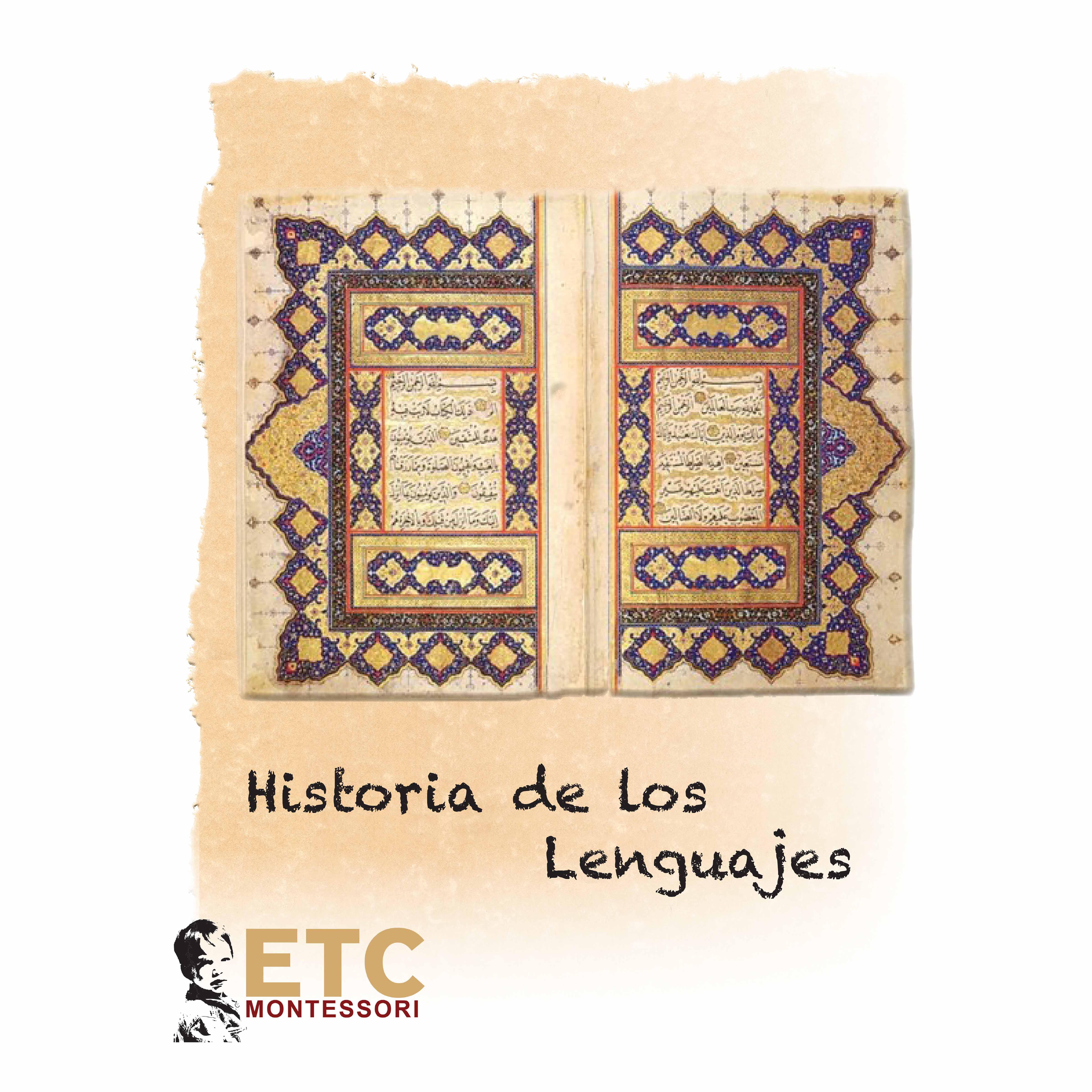
The History Of Language Nomenclature is a Language Montessori material designed for children aged 3-6, crafted by Nienhuis Montessori to AMI standards.
These beautiful History of Language Nomenclature cards introduce children to the rich heritage of Arabic script through authentic Islamic manuscript illumination. Each card features exquisite calligraphy with traditional geometric patterns and ornate borders, providing a visual and cultural exploration of written language development. This material connects children to the historical evolution of human communication while developing appreciation for artistic expression in different cultures.
“The greatest sign of success for a teacher is to be able to say, 'The children are now working as if I did not exist.'”— Maria MontessoriThe Absorbent Mind
“Free the child's potential, and you will transform him into the world.”
— Maria Montessori, To Educate the Human Potential
The History of Language Nomenclature cards respond to the young child's intense fascination with symbols and their meanings during the sensitive period for language. These cards featuring Arabic script and Islamic manuscript illumination serve as concrete representations of humanity's written communication systems. Maria Montessori recognized that children between three and six years absorb culture effortlessly, and these nomenclature cards provide visual access to Arabic calligraphy's artistic heritage. The geometric patterns and ornate borders on each card satisfy the child's need for beauty and order while introducing abstract concepts of writing systems. Through handling these cards, children discover that humans across cultures have created meaningful marks to record their thoughts. The visual richness of Islamic manuscript art engages the child's aesthetic sense while building awareness that written language takes many beautiful forms beyond their own alphabet.
Each order includes everything needed for proper presentation and long-term use.
Follow the Montessori method of presentation for optimal child development.
Invite the child to explore the cards, examining one at a time
Point out the flowing lines of Arabic script, tracing in the air
Draw attention to the geometric patterns surrounding the calligraphy
Discuss how these beautiful marks represent words and ideas
Create a display by laying out several cards for comparison
Every material is carefully selected for durability, safety, and authentic Montessori experience.
Sourced from sustainably managed European forests. Beechwood is chosen for its exceptional durability, smooth grain, and natural warmth that invites touch.
Natural, unbleached cotton in child-friendly colors. The fabric provides the right amount of friction for developing fingers while being gentle on sensitive skin.
Water-based, child-safe finish that meets the strictest European safety standards. Designed to withstand years of daily use without chipping or peeling.
Each material supports multiple areas of child development simultaneously.
Introduces children to Arabic script and Islamic artistic traditions, fostering appreciation for diverse forms of written communication.
The intricate patterns and calligraphy develop careful observation skills and attention to detail.
Provides concrete examples of how written language has evolved across different civilizations and time periods.
Exposes children to the beauty of manuscript illumination and decorative writing as forms of cultural expression.
Designed for child-sized hands
Professional tips from AMI-trained guides to maximize the educational value of this material.
“Present these cards after children show interest in letters and writing in their own language”
'calligraphy,' 'manuscript,' 'illumination,' 'geometric pattern'
Connect to other cultural materials in your environment for integrated learning
Display one card at eye level weekly to encourage repeated observation and appreciation
Everything you need to know about this material.
This set includes nomenclature cards featuring authentic Islamic manuscript illumination with Arabic calligraphy, traditional geometric patterns, and ornate borders. Each card is designed to introduce children to the historical development of written language through beautiful visual examples of Arabic script and artistic expression.
These cards align with Montessori principles by providing concrete visual representations of language history, supporting the sensitive period for language development. They help children understand that writing is a form of human expression, develop cultural awareness, and build appreciation for different writing systems while enhancing vocabulary and classification skills.
No, children do not need to know Arabic. These cards are designed to introduce the concept of written language development and cultural artistic expression. The focus is on appreciating the visual beauty of the script, understanding that different cultures have different writing systems, and developing awareness of language history rather than reading Arabic text.
Children can engage in three-part card activities, matching exercises, sorting by visual patterns, creating art inspired by the geometric designs, discussing the beauty of different scripts, comparing to their own writing system, and using them as inspiration for cultural studies. Teachers can also incorporate storytelling about language history and human communication development.
Unlike typical alphabet or vocabulary cards, these focus on the historical and artistic aspects of written language. They introduce children to the concept that writing has evolved over time and varies across cultures, featuring authentic manuscript art that combines language with visual beauty, making them unique cultural and linguistic learning tools.
Can't find what you're looking for?
Contact Our Experts
Share your experience with this material and help other educators and parents.


