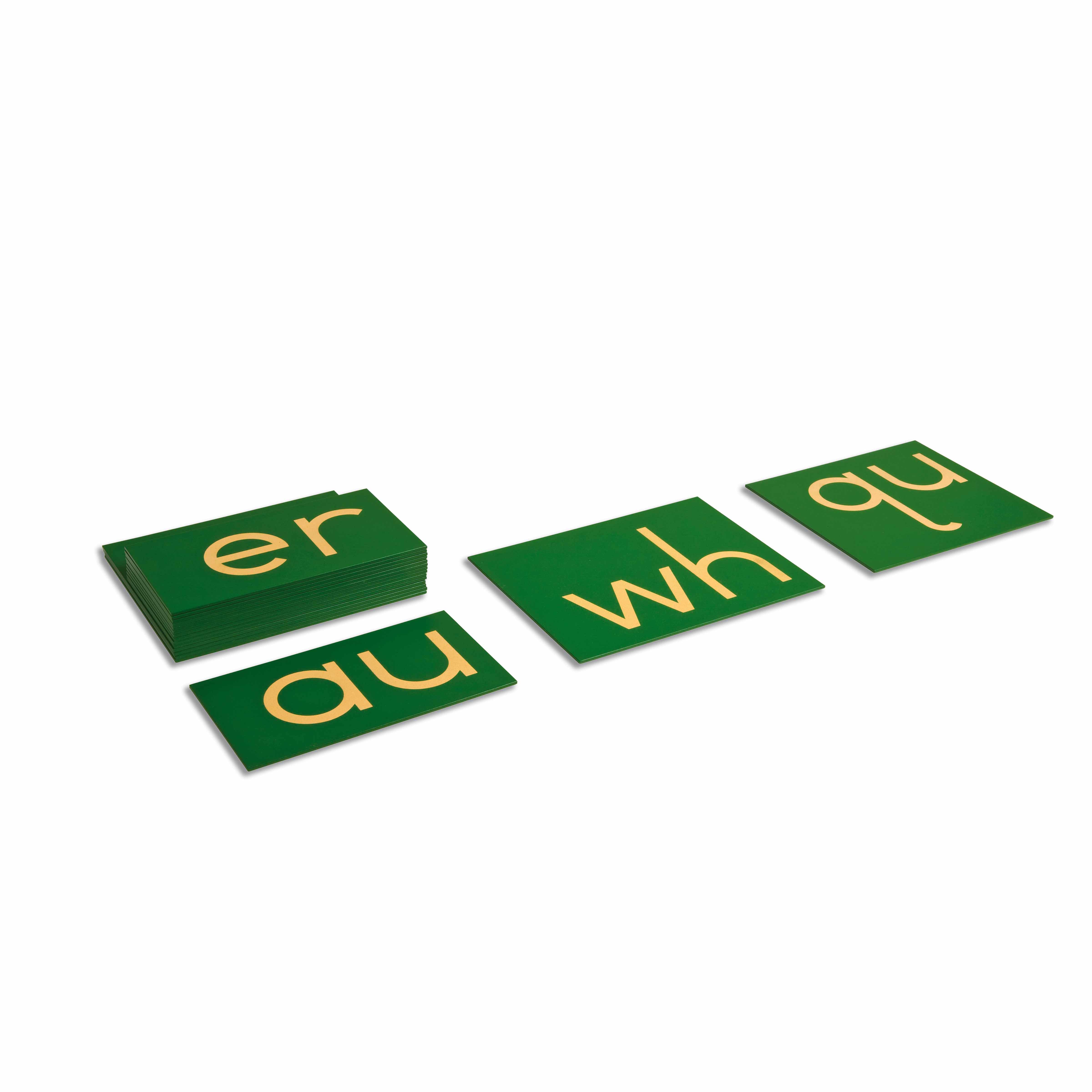
The Double Sandpaper Letters: International Print is a Language Montessori material designed for children aged 3-6, crafted by Nienhuis Montessori to AMI standards.
These AMI-standard Double Sandpaper Letters introduce children to common digraphs and letter combinations in international languages. Each card features tactile sandpaper letters on a smooth green background, allowing children to trace and internalize the formation of double-letter sounds through multi-sensory exploration. The contrasting textures support muscle memory development while preparing the hand for writing these essential letter combinations.
“The greatest sign of success for a teacher is to be able to say, 'The children are now working as if I did not exist.'”— Maria MontessoriThe Absorbent Mind
“Free the child's potential, and you will transform him into the world.”
— Maria Montessori, To Educate the Human Potential
The Double Sandpaper Letters address the complexity of international language systems where digraphs represent single sounds distinct from their component letters. Each sandpaper digraph card creates a tactile pathway that connects the visual symbol to its unique phonetic value, preventing confusion between individual letters and their combined form. The green background of these double-letter cards distinguishes them from single sandpaper letters, signaling to children that 'ch', 'th', or 'qu' function as unified sound units. Through tracing these sandpaper combinations, children internalize both the motor pattern and the phonetic principle that two letters can merge into one sound. This material bridges the gap between learning individual letters and reading fluently in languages where digraphs are essential. The sandpaper's rough texture against the smooth board creates sensory feedback that strengthens the neural pathways between seeing, feeling, and eventually writing these letter pairs.
Each order includes everything needed for proper presentation and long-term use.
Follow the Montessori method of presentation for optimal child development.
Introduce the first digraph by tracing it slowly with your index and middle fingers while pronouncing its sound clearly
Invite the child to trace while you repeat the sound, watching their finger movement
Present three digraphs using the three-period lesson format
Show word slips containing the learned digraphs, underlining the double letters
Every material is carefully selected for durability, safety, and authentic Montessori experience.
The fine-grain sandpaper provides crucial tactile feedback that helps children form muscle memory for letter shapes, engaging multiple senses in the learning process.
Each material supports multiple areas of child development simultaneously.
Tracing sandpaper letters creates muscle memory patterns that support future writing skills and letter recognition.
Learning double letters as units helps children recognize and produce digraph sounds in reading and spelling.
Careful tracing movements refine finger control and strengthen the pincer grip needed for writing.
The contrast between yellow sandpaper and green background helps children clearly distinguish letter formations.
Designed for child-sized hands
Professional tips from AMI-trained guides to maximize the educational value of this material.
“Introduce digraphs only after the child knows most single letters to avoid confusion”
Create a reference chart showing common words containing each digraph for quick examples
Store digraph cards separately from single letters to maintain the conceptual distinction
For multilingual classrooms, prioritize digraphs common across the languages spoken
Everything you need to know about this material.
This set includes common digraphs and double-letter combinations found in international languages. The specific combinations vary but typically include sounds like 'ch', 'sh', 'th', 'ph', 'qu', and other language-specific digraphs that appear frequently in European and other international languages.
Children trace the sandpaper letters with their index and middle fingers while saying the sound aloud. This multi-sensory approach combines tactile, visual, and auditory learning. The child traces from left to right, following the same direction used in writing, which helps develop proper letter formation habits and muscle memory.
The green background is specifically chosen in Montessori materials to indicate letter combinations or digraphs that create a single sound. This visual distinction helps children understand that these two letters work together as one unit, differentiating them from single consonants (pink) or vowels (blue) in the traditional sandpaper letter sets.
Children should be introduced to Double Sandpaper Letters after they have mastered single sandpaper letters and can blend simple three-letter phonetic words. Typically, this occurs around age 4-5, when children are ready to explore more complex phonetic patterns and are developing greater fine motor control for tracing.
Regular Sandpaper Letters present individual letters (one per card), while Double Sandpaper Letters show two letters together that create a single sound (digraphs). Double Sandpaper Letters are introduced after single letters to help children understand that some letter combinations work together to produce sounds that cannot be decoded by sounding out individual letters.
Can't find what you're looking for?
Contact Our Experts
Share your experience with this material and help other educators and parents.


