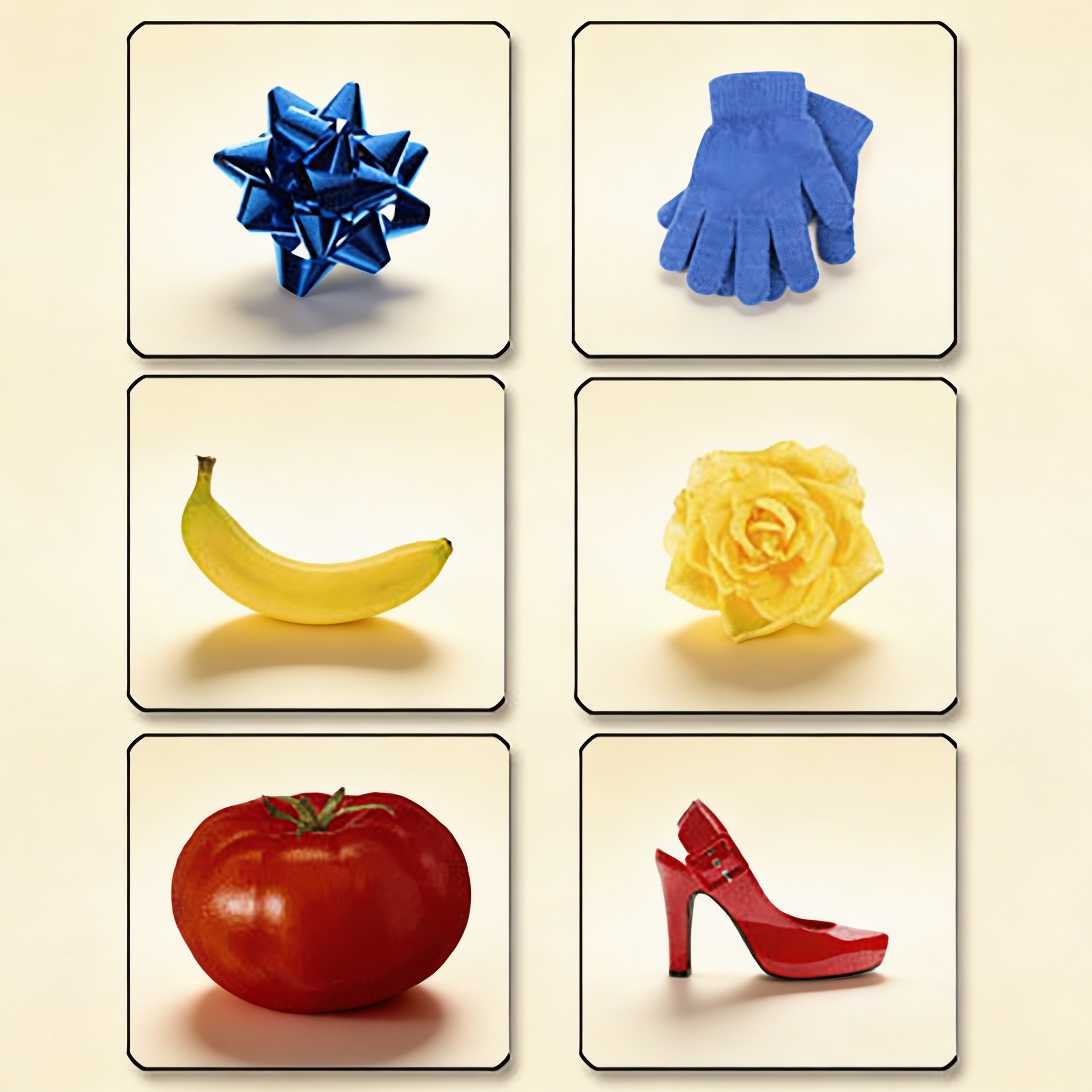
The Colour Box I — Visual Discrimination with Photo Cards is a Sensorial Montessori material designed for children aged 3-6, crafted by Nienhuis Montessori to AMI standards.
The Visual Discrimination Color Box I introduces young children to color matching through real-world photographic images. This foundational Sensorial material features six double-layered cards with vibrant photographs of familiar objects, each distinctly colored and framed for easy handling. Children develop visual discrimination skills by matching identical color cards, preparing them for more complex color work in the Montessori sequence.
“The greatest sign of success for a teacher is to be able to say, 'The children are now working as if I did not exist.'”— Maria MontessoriThe Absorbent Mind
“Free the child's potential, and you will transform him into the world.”
— Maria Montessori, To Educate the Human Potential
The Visual Discrimination Color Box I embodies Dr. Montessori's principle of isolating a single concept - in this case, color - to refine the visual sense. By presenting real-world photographic images rather than abstract color tablets, this material bridges the child's sensorial exploration with their everyday environment. The material respects the child's need for order through its systematic presentation and the control of error inherent in exact matching. This foundational work in visual discrimination prepares the mathematical mind by developing the ability to perceive subtle differences and make precise comparisons, skills essential for later academic work in mathematics, language, and scientific classification.
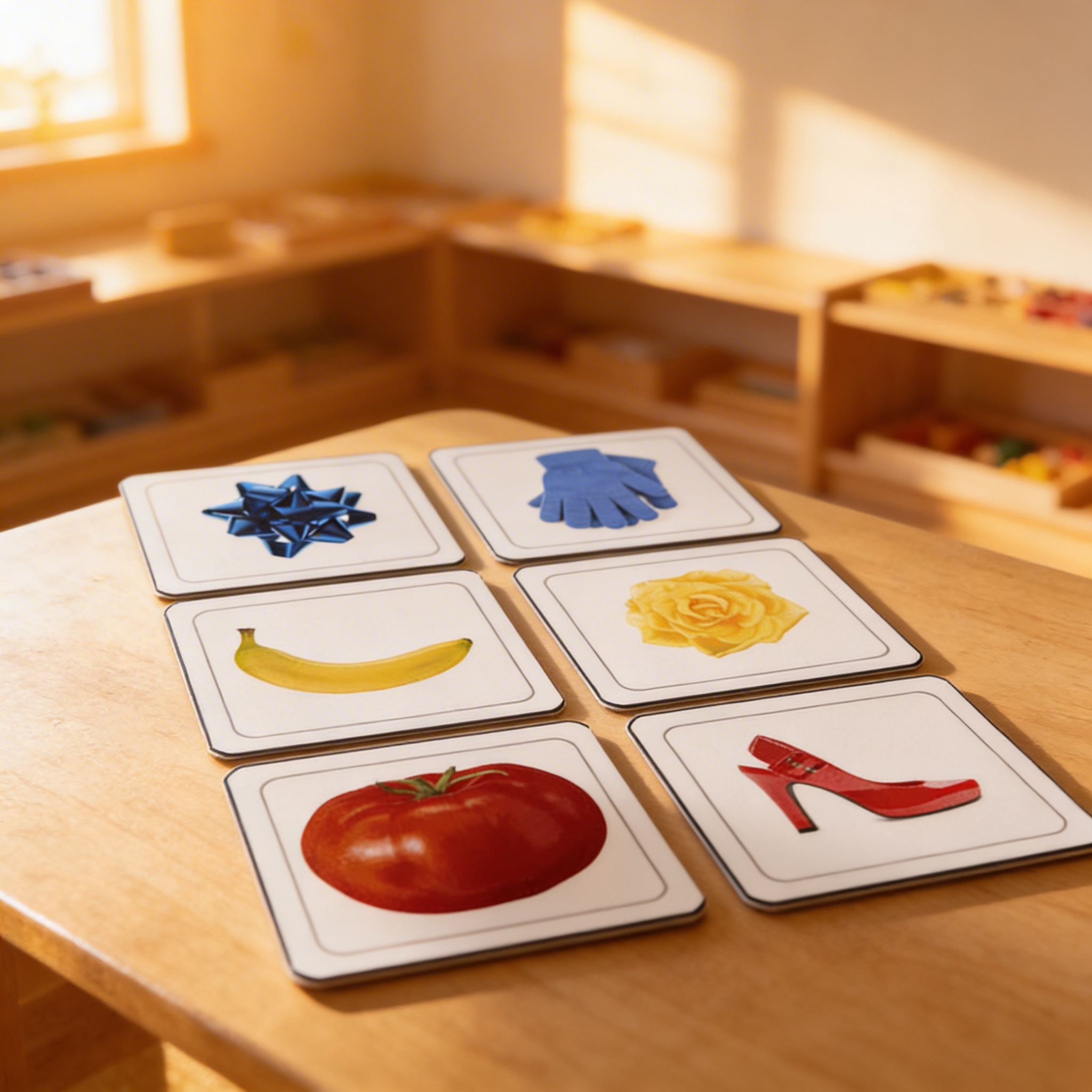
Each order includes everything needed for proper presentation and long-term use.
Follow the Montessori method of presentation for optimal child development.
Invite the child, naming the material. Select one card from the left column and examine it carefully
Slowly scan the right column from top to bottom, comparing each card to find the match
When finding the match, place the cards side by side to verify they are identical
Continue matching all pairs, then invite the child to try
Every material is carefully selected for durability, safety, and authentic Montessori experience.
Real photographs connect abstract colors to concrete objects, supporting the child's tendency to learn through real-world associations
Each material supports multiple areas of child development simultaneously.
Matching identical images refines the child's ability to perceive subtle differences in color and form
The focused matching activity develops sustained attention and careful observation skills
Pairing activities satisfy the child's need for order while introducing fundamental classification concepts
Designed for child-sized hands
Professional tips from AMI-trained guides to maximize the educational value of this material.
“Present this material before abstract color tablets to connect the child's real-world experiences with isolated color work”
Ensure optimal lighting conditions - natural light is best for accurate color perception
Observe which colors the child matches most easily to assess their visual development
Use this material to introduce color vocabulary naturally through three-period lessons after matching is mastered
Everything you need to know about this material.
The set contains 6 pairs of double-layered cards (12 cards total) featuring real photographs of familiar objects in distinct colors. Each card is framed for easy handling and durability, making them perfect for young children ages 3-6.
While traditional Color Tablets present abstract color samples, this material uses real-world photographic images of familiar objects. This approach helps children connect color concepts to their everyday experiences, making the learning more meaningful and engaging.
This material primarily develops visual discrimination and color matching abilities. It also enhances concentration, fine motor skills through card handling, and prepares children for more advanced color work like Color Box II and III in the Montessori Sensorial sequence.
Children begin by laying out one set of cards, then match the second set to the first by identifying identical colors. As they progress, they can create patterns, sort by color families, or use the cards for vocabulary development by naming the objects shown.
The double-layer construction with frames serves multiple purposes: it makes the cards more durable for frequent handling, provides a clear border that helps children focus on the image, and makes the cards easier for small hands to pick up and manipulate independently.
Can't find what you're looking for?
Contact Our Experts
Share your experience with this material and help other educators and parents.
Bundle related materials and save. Free curriculum guide included with every set.


