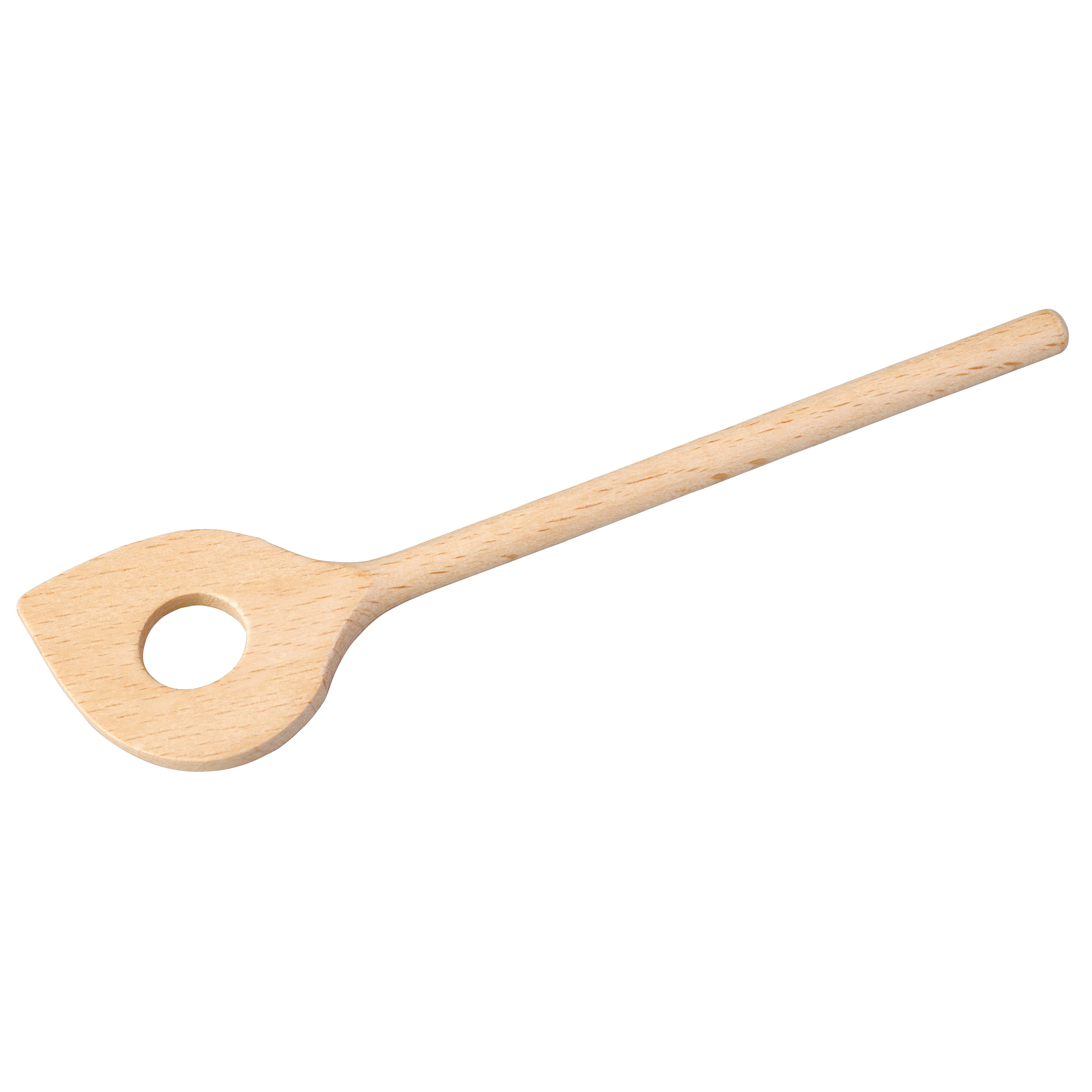
The Cooking Spoon With Hole is a Educational Materials Montessori material designed for children aged 0-3, crafted by Nienhuis Montessori to AMI standards.
This child-sized wooden cooking spoon introduces young children to practical life activities in the kitchen. The distinctive hole in the bowl serves multiple purposes - allowing liquids to drain when stirring, creating visual interest, and providing a unique sensory experience during food preparation activities.
“The child is both a hope and a promise for mankind.”— Maria MontessoriEducation and Peace
“The hands are the instruments of man's intelligence.”
— Maria Montessori, The Absorbent Mind
The Cooking Spoon With Hole represents a bridge between the child's desire to participate in adult work and their developing motor capabilities. The wooden spoon's child-sized dimensions honor the young child's physical proportions, while the distinctive hole in the bowl transforms a simple utensil into a tool of discovery. This hole serves as both a functional element for draining liquids and a point of focus that helps children understand cause and effect when stirring soups or transferring foods. In Montessori environments, real cooking tools like this wooden spoon validate the child's role as a contributing member of the community. The spoon's dual function—stirring and draining—introduces children to the concept that tools can have multiple purposes, fostering cognitive flexibility. By providing authentic kitchen implements scaled to small hands, we acknowledge that children under three are capable of meaningful work when given appropriate tools.
Each order includes everything needed for proper presentation and long-term use.
Follow the Montessori method of presentation for optimal child development.
Invite the child to carry the spoon and bowl to the work mat using two hands
Demonstrate holding the spoon with dominant hand, using a three-finger grip near the bowl end
Show circular stirring motions, letting some materials fall through the hole
Transfer materials by scooping and observing what passes through the hole
Return materials to the bowl and place everything back on the shelf
Every material is carefully selected for durability, safety, and authentic Montessori experience.
Crafted from solid wood, this spoon connects children to natural materials while developing practical life skills. The smooth grain provides sensory feedback during use.
Each material supports multiple areas of child development simultaneously.
Manipulating the spoon during stirring and scooping activities refines motor control and spatial awareness.
Using real kitchen tools builds independence and confidence in daily living activities.
The hole creates unique tactile and visual experiences when working with different textures and liquids.
Designed for child-sized hands
Professional tips from AMI-trained guides to maximize the educational value of this material.
“Introduce the spoon during snack preparation to connect the tool with real cooking purposes”
Create a progression from dry to wet materials based on each child's coordination level
'drain,' 'pour,' 'stir,' and 'scoop' during demonstrations
Observe grip development and note when children transition from fisted to refined grasps
Everything you need to know about this material.
This child-sized cooking spoon is designed for children ages 0-3, though it's most appropriate for toddlers 18+ months who can grip and manipulate objects safely under supervision.
Yes, this wooden spoon is safe for real cooking activities. It's made from untreated, food-safe wood and can be used for stirring, mixing, and serving under adult supervision.
The hole serves multiple educational purposes: it allows liquids to drain (teaching cause and effect), creates visual interest for young learners, and provides a unique sensory experience when stirring different textures.
Hand wash with warm soapy water and dry immediately. Occasionally treat with food-safe mineral oil to prevent cracking. Do not soak in water or put in the dishwasher.
Use it for practical life activities like stirring, scooping, transferring materials, water play, sensory bins, and real cooking experiences. It helps develop hand-eye coordination, wrist rotation, and concentration.
Can't find what you're looking for?
Contact Our Experts
Share your experience with this material and help other educators and parents.


