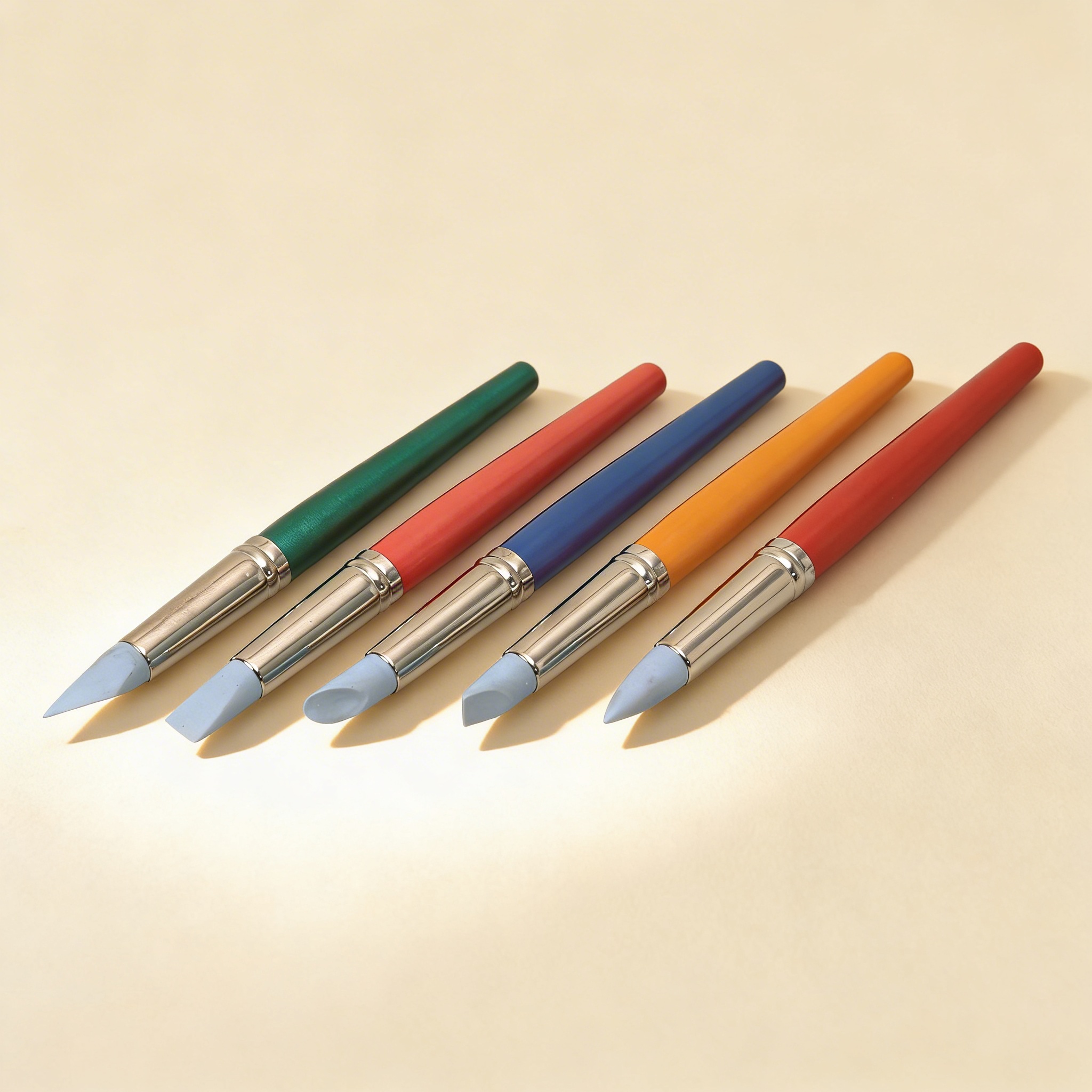
The Clay Sculpting Tools — 5-Piece Brush & Spatula Art Set is a Accessories Montessori material designed for children aged 3-6, crafted by Nienhuis Montessori to AMI standards.
A professional-quality set of 5 clay sculpting tools in the brush/spatula model, designed for creative arts and crafts activities. Each tool features a different tip profile for versatile clay and modeling work. Perfect for Montessori art areas where children explore three-dimensional creation and develop fine motor precision through sculpting.
“The hands are the instruments of man's intelligence.”— Maria MontessoriThe Absorbent Mind
“The senses, being explorers of the world, open the way to knowledge.”
— Maria Montessori, The Discovery of the Child
In the Montessori art area, children are offered real tools — not simplified toy versions — because authentic materials communicate respect for the child's capabilities. These sculpting tools embody that principle. Each different tip profile invites exploration: 'What happens when I press this edge into the clay? How does the brush tip create a different texture than the flat spatula?' Through this hands-on experimentation, children develop both artistic skill and scientific thinking. The process of sculpting also connects to practical life — learning to care for tools, clean up work spaces, and respect materials are all integral to the Montessori art experience.
Each order includes everything needed for proper presentation and long-term use.
Follow the Montessori method of presentation for optimal child development.
Show each tool briefly, demonstrating one technique per tool on a sample piece of clay.
Invite the child to select a tool and explore what marks and shapes it creates.
Encourage switching between tools to compare effects.
When finished, guide the child through cleanup: wiping each tool, returning them to their place.
Every material is carefully selected for durability, safety, and authentic Montessori experience.
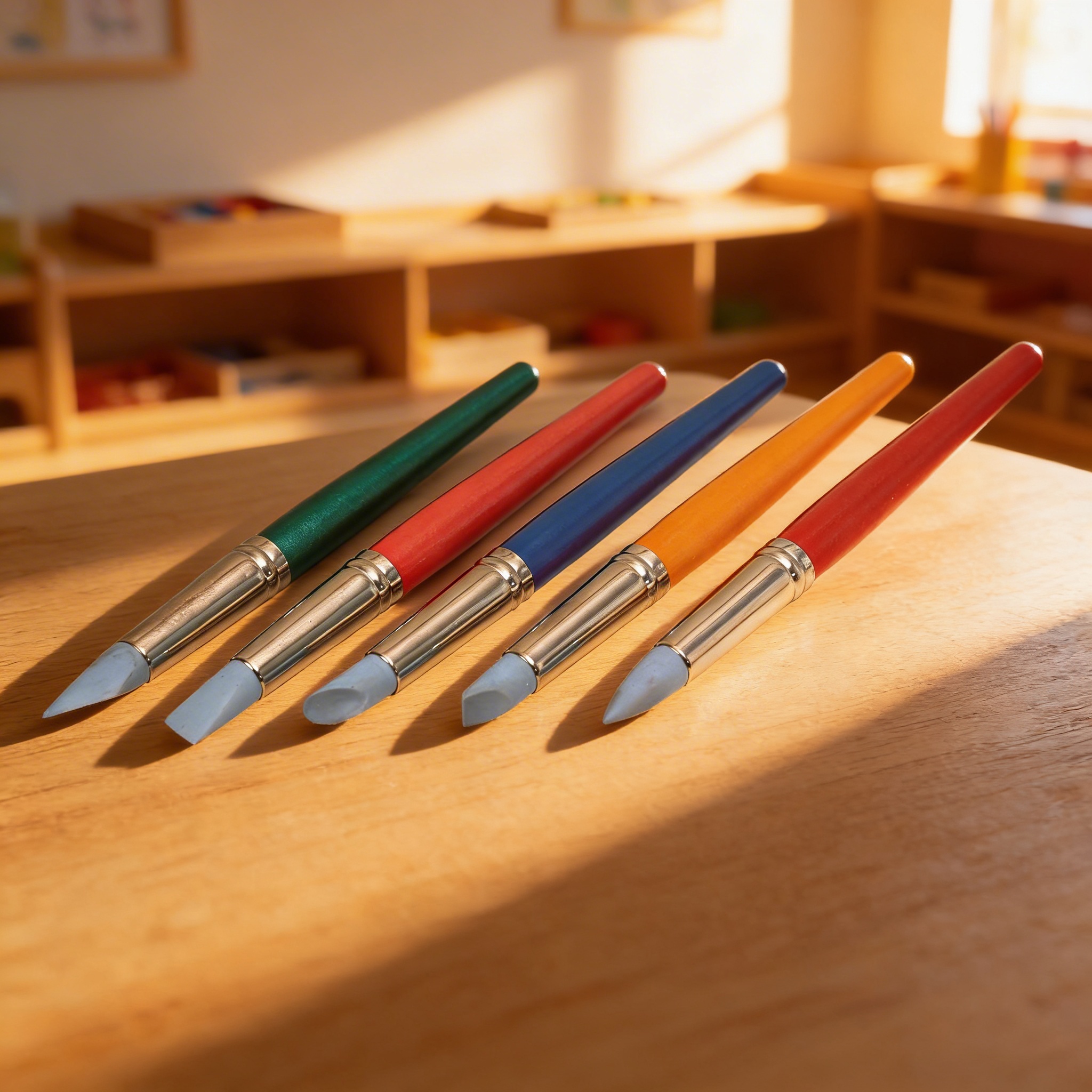
Each tool is crafted with a comfortable wooden handle sized for children's hands, paired with precisely shaped tips for different sculpting techniques. The variety of profiles — from flat spatula to fine brush-point — lets children explore textures, shapes, and surface treatments in their clay work.
Each material supports multiple areas of child development simultaneously.
Using different tool profiles develops nuanced hand control — pressing, dragging, smoothing, and carving each require different grip pressures and movements.
Three-dimensional sculpting allows children to externalize their ideas in physical form, building confidence in creative self-expression.
Learning to select and use the right tool for each task develops problem-solving skills and introduces children to the concept of specialized instruments.
The combination of tactile clay work with precise tool manipulation creates rich sensory-motor experiences that strengthen neural connections.
Designed for child-sized hands
Professional tips from AMI-trained guides to maximize the educational value of this material.
“Pair with air-dry clay for permanent sculptures or plasticine for reusable modeling.”
Label each tool with its function (smoother, carver, texture maker) for the language-rich environment.
Demonstrate proper tool handling once, then let children discover techniques independently.
These tools also work beautifully with playdough for younger children (3-4 years).
Everything you need to know about this material.
Ages 3 and up with supervision. Younger children (3-4) can use them with playdough, while older children (5-6+) can tackle more detailed clay sculpting projects.
These tools work with any modeling medium — air-dry clay, plasticine, polymer clay, or standard playdough. Each material provides a different sculpting experience.
The tools are designed with child safety in mind. Tips are functional for sculpting but not sharp enough to cause injury during normal use.
These are sculpting tools rather than pottery wheel tools, but they work excellently for hand-building techniques like coil pots, slab construction, and free-form sculpture.
Wipe with a damp cloth after each use while clay is still soft. For dried-on clay, soak briefly in warm water. Dry completely before storing.
Can't find what you're looking for?
Contact Our Experts
Share your experience with this material and help other educators and parents.
Bundle related materials and save. Free curriculum guide included with every set.


