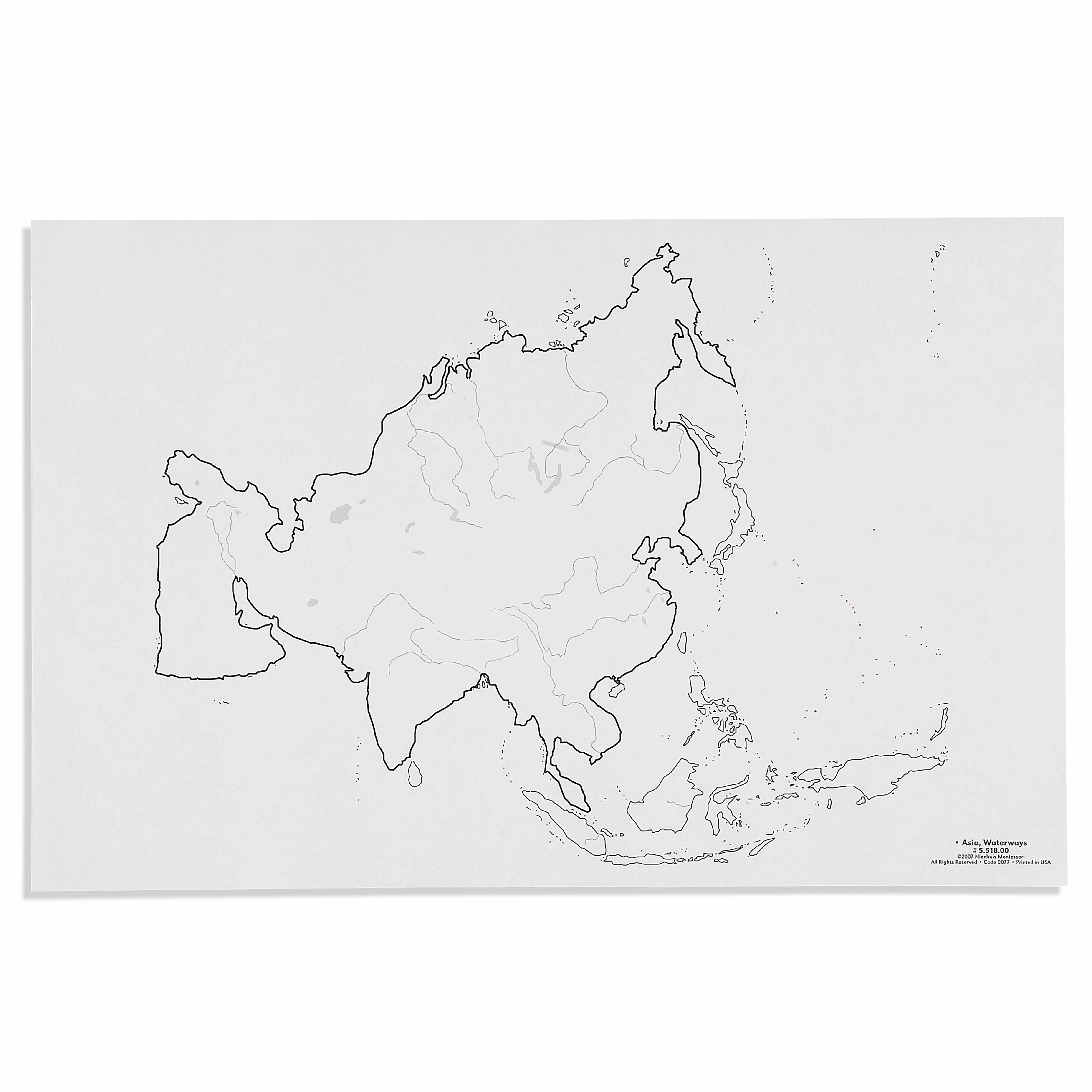
The Asia: Waterways (50) is a category.geography Montessori material designed for children aged 3-6, crafted by Nienhuis Montessori to AMI standards.
This laminated map presents Asia's extensive waterway systems, featuring major rivers, coastal outlines, and internal political boundaries. Children explore the continent's water geography through visual identification and tracing activities, building understanding of how rivers connect regions and shape human settlement patterns.
“Education is a natural process spontaneously carried out by the human individual, and is acquired not by listening to words but by experiences upon the environment.”— Maria MontessoriEducation for a New World
“The child is both a hope and a promise for mankind.”
— Maria Montessori, Education and Peace
The Asia Waterways map introduces young children to the continent's rivers and coastal boundaries through concrete, visual learning. This laminated map allows children to trace the path of the Yangtze, follow the curves of the Ganges, and observe how waterways create natural borders between countries. In Montessori geography, waterway maps serve as the child's first introduction to how water shapes human civilization - where people live, how they travel, and why cities develop along rivers. The laminated surface enables repeated tracing activities, allowing children to physically experience the flow and direction of Asia's major rivers. By presenting waterways separate from other geographical features, this map helps children isolate and understand one crucial aspect of continental geography. The clear blue lines against white background create strong visual contrast, making it easy for young eyes to distinguish individual river systems. Through working with this waterways map, children begin to understand that rivers are not random lines but purposeful paths that connect mountains to seas, carrying water that sustains billions of people across Asia.
Each order includes everything needed for proper presentation and long-term use.
Follow the Montessori method of presentation for optimal child development.
Invite the child to explore the map visually, noticing the blue lines representing rivers
Choose one major river and trace its path from source to sea with your finger
Show how to trace the same river with a blue pencil or marker on the laminated surface
Identify where the river meets the ocean and discuss coastal boundaries
Clean the traced line and invite the child to trace a different river system
Every material is carefully selected for durability, safety, and authentic Montessori experience.
Sourced from sustainably managed European forests. Beechwood is chosen for its exceptional durability, smooth grain, and natural warmth that invites touch.
Natural, unbleached cotton in child-friendly colors. The fabric provides the right amount of friction for developing fingers while being gentle on sensitive skin.
Water-based, child-safe finish that meets the strictest European safety standards. Designed to withstand years of daily use without chipping or peeling.
Each material supports multiple areas of child development simultaneously.
Builds understanding of Asia's major rivers, coastlines, and how waterways connect different regions of the continent.
Develops ability to distinguish between different waterway types and trace their paths across political boundaries.
Introduces concepts of how rivers influence settlement patterns and cultural development across Asian countries.
Establishes foundation for understanding geographic representations and spatial relationships on maps.
Designed for child-sized hands
Professional tips from AMI-trained guides to maximize the educational value of this material.
“Display the waterways map alongside the political map of Asia to show relationships between rivers and borders”
Create a set of river name labels for three-period lesson work with major waterways
Use blue glass gems to mark river sources and help children understand water flow direction
Connect this work to practical life by discussing how water travels from mountains to homes
Everything you need to know about this material.
The map features Asia's major rivers including the Yangtze, Ganges, Mekong, Yellow River, and Indus, plus coastal outlines and seas. The waterways are clearly marked in blue against land masses, making them easy for children ages 3-6 to identify and trace.
Children can trace waterways with their fingers or dry-erase markers, match river cards to the map, and explore how water systems connect different countries. The map's visual design helps young learners understand the relationship between rivers, coasts, and human settlements through hands-on exploration.
This geography material is laminated for durability, allowing repeated use with water-based markers for tracing activities. The lamination protects against spills and frequent handling by young children, making it suitable for both classroom and home use.
Yes, three-year-olds can begin by simply tracing the blue waterways with their fingers and identifying water versus land. As children develop, they can progress to naming specific rivers, understanding water flow directions, and exploring how rivers connect different regions of Asia.
Children can trace rivers from source to sea, identify which countries rivers flow through, match picture cards of Asian rivers to the map, and explore how major cities developed along waterways. The map also supports discussions about water's importance in Asian cultures and economies.
Can't find what you're looking for?
Contact Our Experts
Share your experience with this material and help other educators and parents.


