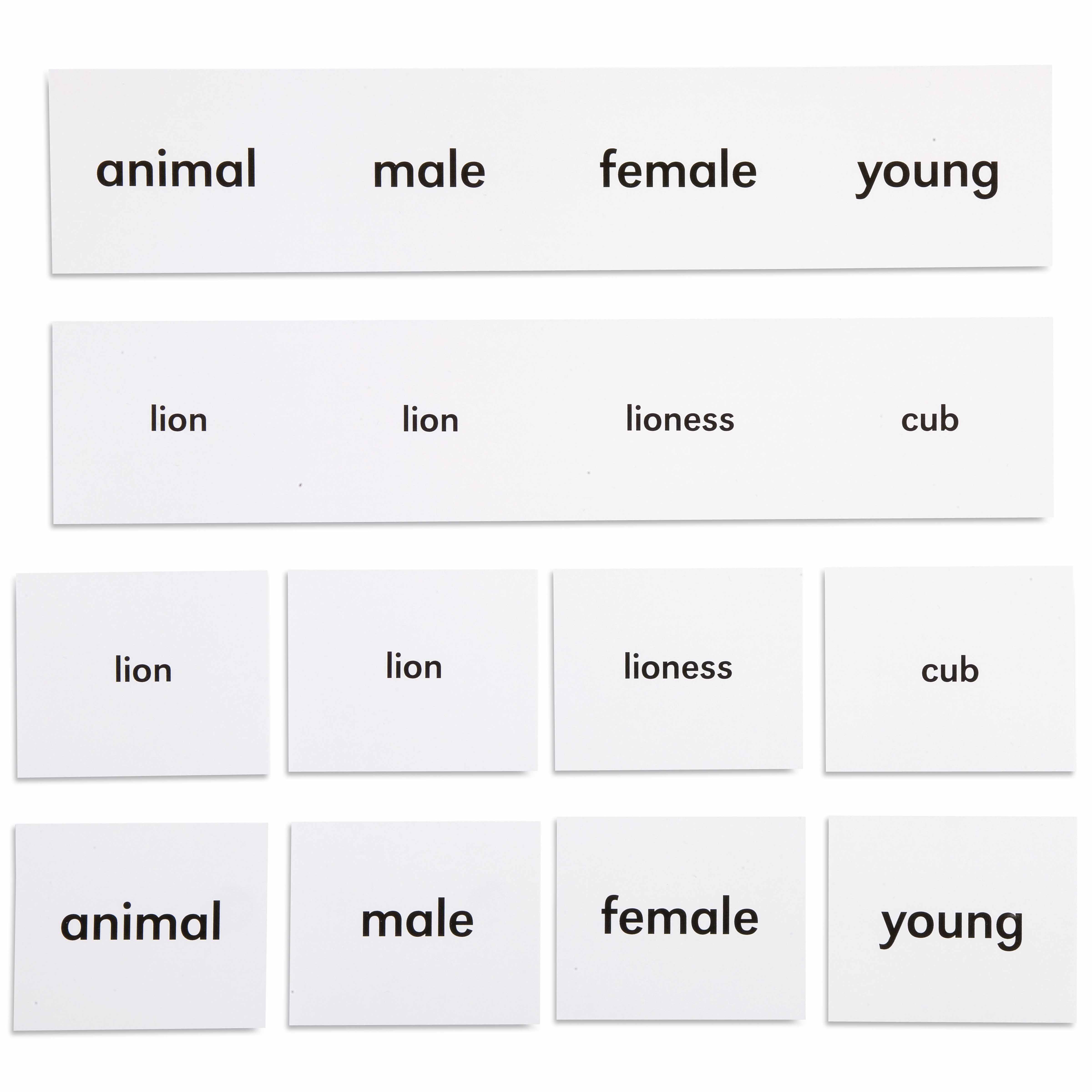
The Animal Names is a category.biology Montessori material designed for children aged 3-6, crafted by Nienhuis Montessori to AMI standards.
These Animal Names cards introduce children to zoological classification through precise vocabulary matching. The material features header cards with general animal categories paired with specific animal name cards, supporting the development of scientific language and classification skills essential to Montessori biology studies.
“Education is a natural process spontaneously carried out by the human individual, and is acquired not by listening to words but by experiences upon the environment.”— Maria MontessoriEducation for a New World
“The child is both a hope and a promise for mankind.”
— Maria Montessori, Education and Peace
The Animal Names cards fulfill the child's need for order by presenting zoological classification through precise vocabulary matching. These header cards with general animal categories create a visual framework for understanding how specific creatures relate to broader groups. The material's structured pairing system - matching individual animal name cards to their category headers - mirrors the child's developing ability to perceive relationships between parts and wholes. During the sensitive period for language, these cards provide exact terminology that satisfies the child's hunger for naming the world. The Animal Names material transforms abstract classification concepts into concrete matching work, allowing children to physically manipulate cards while building mental categories. This hands-on approach to scientific vocabulary respects the child's need to learn through movement and repetition. By working with these classification cards independently, children develop the foundational understanding that every animal belongs to a larger group, preparing them for more advanced biological studies.
Each order includes everything needed for proper presentation and long-term use.
Follow the Montessori method of presentation for optimal child development.
Select one header card and read the category name aloud
Choose animal name cards from the basket and read each one
Place each animal name card below its corresponding category header
Continue until all animal names are classified under headers
Review completed classifications by reading each column
Every material is carefully selected for durability, safety, and authentic Montessori experience.
Sourced from sustainably managed European forests. Beechwood is chosen for its exceptional durability, smooth grain, and natural warmth that invites touch.
Natural, unbleached cotton in child-friendly colors. The fabric provides the right amount of friction for developing fingers while being gentle on sensitive skin.
Water-based, child-safe finish that meets the strictest European safety standards. Designed to withstand years of daily use without chipping or peeling.
Each material supports multiple areas of child development simultaneously.
Expands zoological vocabulary and introduces scientific classification terminology through concrete matching work.
Develops logical thinking as children categorize specific animals under broader classifications.
Reinforces reading skills through clear text recognition and word-to-concept matching.
Introduces the foundation of biological taxonomy through hands-on sorting and categorization activities.
Designed for child-sized hands
Professional tips from AMI-trained guides to maximize the educational value of this material.
“Introduce biological vocabulary during group lessons before independent card work”
Rotate available categories weekly to maintain interest while building comprehensive knowledge
Connect card work to classroom pets or recent nature observations
Use three-period lessons to solidify new animal vocabulary before classification work
Everything you need to know about this material.
The Animal Names cards include header cards for major animal categories such as mammals, birds, fish, reptiles, amphibians, and insects, each paired with specific animal name cards that belong to those categories, introducing children to basic zoological classification.
These cards develop scientific vocabulary, classification skills, and logical thinking by allowing children to sort animals into their proper categories. This hands-on approach to biology builds a foundation for understanding the natural world through concrete matching activities.
Begin with 2-3 familiar categories and 3-4 animals per category. Introduce the header cards first, then demonstrate matching specific animals to their category. Gradually add more categories and animals as the child masters the initial sets, following their interest and readiness.
Yes, these cards complement other biology materials beautifully. They can be used with animal figurines, the farm or zoo environments, nomenclature cards, and later with more advanced classification work, creating a comprehensive approach to zoological studies.
Children can self-correct by using control cards that show animals grouped with their category headers, through peer collaboration, or by referencing animal books and charts. The material's design encourages independent verification and builds confidence in classification skills.
Can't find what you're looking for?
Contact Our Experts
Share your experience with this material and help other educators and parents.


