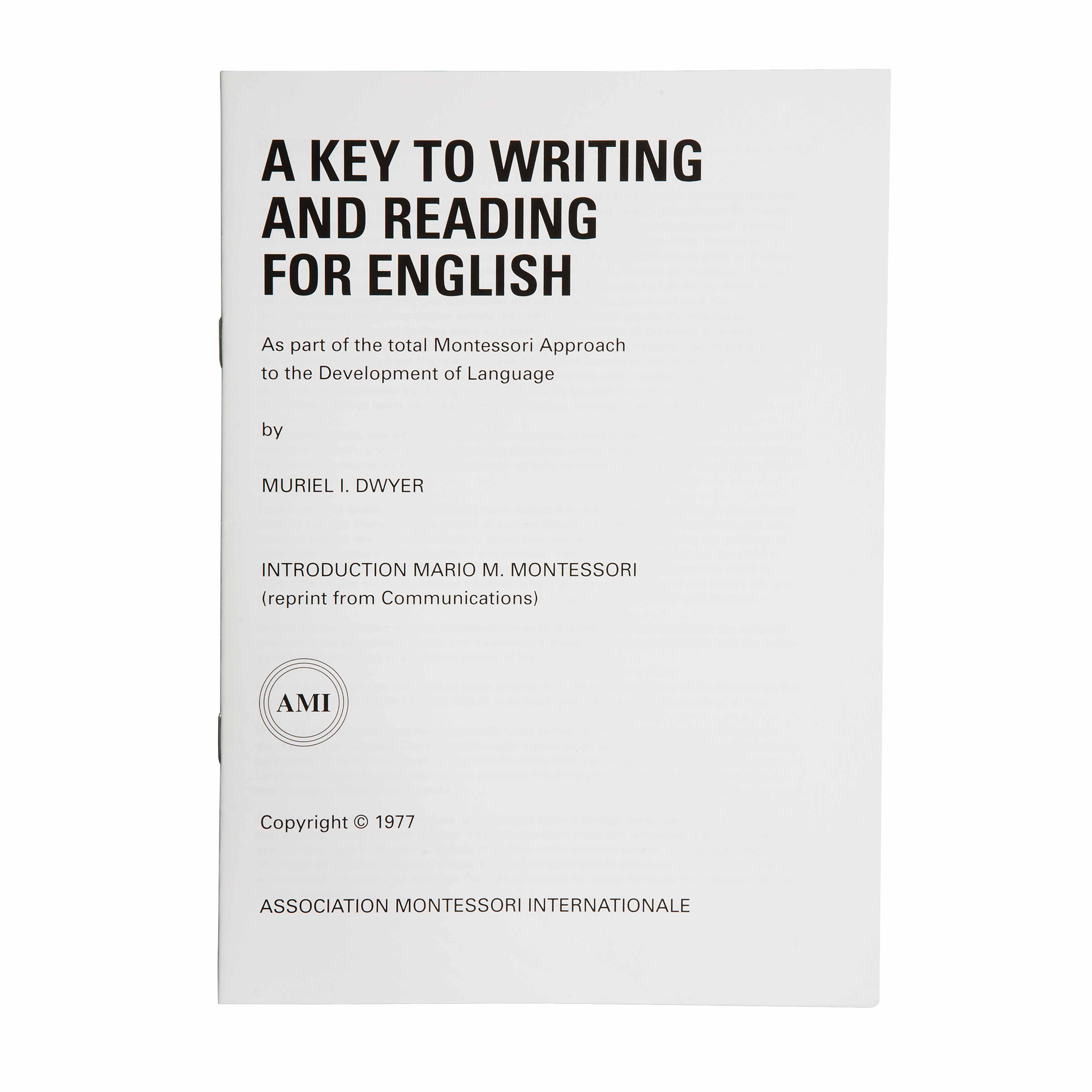
The A Key To Writing And Reading For English is a Language Montessori material designed for children aged 3-6, crafted by Nienhuis Montessori to AMI standards.
This foundational AMI guide, introduced by Mario M. Montessori, presents the systematic approach to teaching reading and writing in Montessori environments. Originally published in 1977, this authoritative text outlines the sequential presentation of language materials and exercises that help children discover the mechanics of written English through hands-on exploration.
“The greatest sign of success for a teacher is to be able to say, 'The children are now working as if I did not exist.'”— Maria MontessoriThe Absorbent Mind
“Free the child's potential, and you will transform him into the world.”
— Maria Montessori, To Educate the Human Potential
A Key to Writing and Reading for English serves as the definitive blueprint for presenting language materials in the prepared environment. This AMI guide details how children aged 3-6 construct their understanding of written language through sequential, hands-on work with sandpaper letters, moveable alphabets, and phonetic materials. The book's systematic approach reflects Dr. Montessori's observation that writing naturally precedes reading when children have concrete experiences with letter formation. Each chapter in this foundational text explains why specific language materials appear at precise developmental moments. Mario M. Montessori's introduction emphasizes how this guide preserves the original methodology while adapting to English phonetics. The book reveals how three-year-olds begin with sensorial preparation through metal insets, progress to symbol recognition with sandpaper letters, then explosion into writing with the moveable alphabet. This authoritative text ensures educators understand the developmental progression from spoken language to written expression to reading comprehension.
Each order includes everything needed for proper presentation and long-term use.
Follow the Montessori method of presentation for optimal child development.
Begin with Chapter 1 on indirect preparation through practical life and sensorial work
Study the sandpaper letter presentations, noting the precise movements described
Review the moveable alphabet sequence, understanding when to introduce each box
Examine the reading progression from phonetic words to complete sentences
Every material is carefully selected for durability, safety, and authentic Montessori experience.
Sourced from sustainably managed European forests. Beechwood is chosen for its exceptional durability, smooth grain, and natural warmth that invites touch.
Natural, unbleached cotton in child-friendly colors. The fabric provides the right amount of friction for developing fingers while being gentle on sensitive skin.
Water-based, child-safe finish that meets the strictest European safety standards. Designed to withstand years of daily use without chipping or peeling.
Each material supports multiple areas of child development simultaneously.
Provides educators with the authentic Montessori approach to introducing written language systematically.
Guides the presentation of materials from sandpaper letters through moveable alphabet to reading.
Supports the child's natural progression from sound awareness to symbol recognition and writing.
Essential reference for understanding the rationale behind Montessori language materials and their presentation.
Designed for child-sized hands
Professional tips from AMI-trained guides to maximize the educational value of this material.
“Read each chapter before introducing new language materials to ensure authentic presentation”
Use the book's progression charts to track each child's individual language development
Reference the troubleshooting sections when children encounter specific difficulties
Share relevant chapters with assistants before they present language materials
Everything you need to know about this material.
While this AMI guide is designed primarily for trained Montessori teachers, dedicated parents can use it with careful study. The systematic approach is clearly outlined, but understanding the underlying Montessori philosophy and having access to appropriate materials will enhance its effectiveness.
The guide covers the complete sequence of Montessori language materials including sandpaper letters, moveable alphabet, metal insets, phonetic reading exercises, and progression to total reading. It details the presentation methods and timing for introducing each material.
The fundamental principles of how children acquire written language haven't changed. This guide focuses on the timeless Montessori approach of following the child's natural development, making it as relevant today as when first published, particularly for understanding the authentic AMI methodology.
While the guide covers ages 3-6, most children begin formal writing preparation around 4-4.5 years when they show readiness signs like interest in letters and developed pincer grip. The guide helps identify these readiness indicators and adapt presentations to individual development.
The Montessori approach naturally accommodates various learning styles through multi-sensory materials and individualized pacing. While not specifically focused on learning difficulties, the systematic, hands-on approach often helps children who struggle with traditional reading methods.
Can't find what you're looking for?
Contact Our Experts
Share your experience with this material and help other educators and parents.


