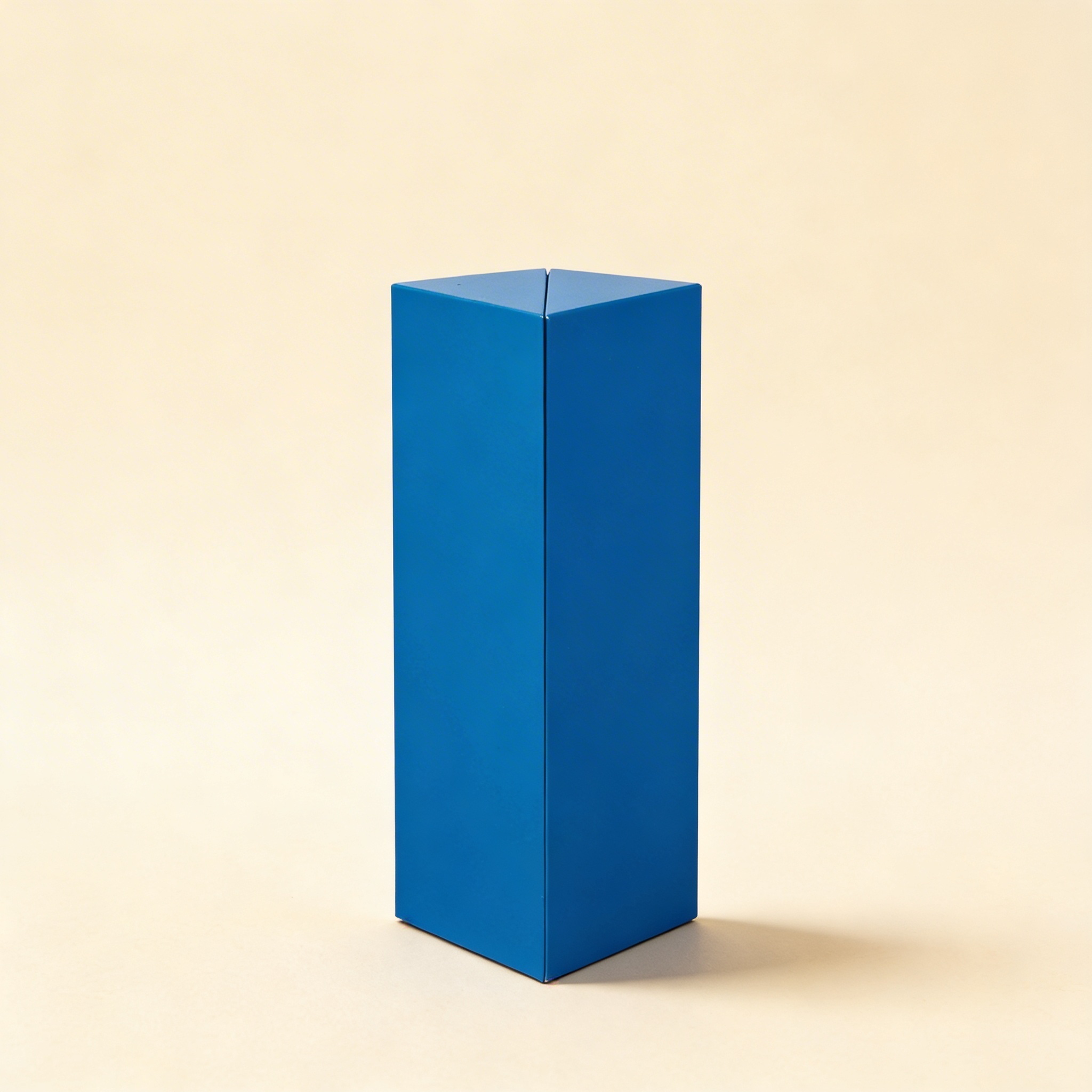
The Triangular Prisms — 2 Identical Geometric Solids for Exploration is a Sensorial Montessori material designed for children aged 6-12, crafted by Nienhuis Montessori to AMI standards.
These two identical triangular prisms form part of the Geometric Solids extension work, allowing children to explore the relationship between triangular and rectangular forms. When placed together, they demonstrate how two triangular prisms combine to create a rectangular prism, supporting advanced geometric understanding and spatial reasoning in the elementary classroom.
“The child is both a hope and a promise for mankind.”— Maria MontessoriEducation and Peace
“The hands are the instruments of man's intelligence.”
— Maria Montessori, The Absorbent Mind
The triangular prisms embody Montessori's principle of isolation of difficulty by presenting one specific geometric concept clearly. Through concrete manipulation, children discover abstract relationships between forms, supporting the elementary child's reasoning mind. This material bridges sensorial exploration with mathematical thinking, allowing children to physically construct their understanding of how shapes relate and transform. The hands-on nature satisfies the elementary child's need to understand the 'why' behind geometric principles, moving from concrete to abstract thought. By combining identical prisms to form new shapes, children experience the mathematical concept of equivalence and transformation through their senses, preparing them for advanced geometric proofs and spatial reasoning in later studies.
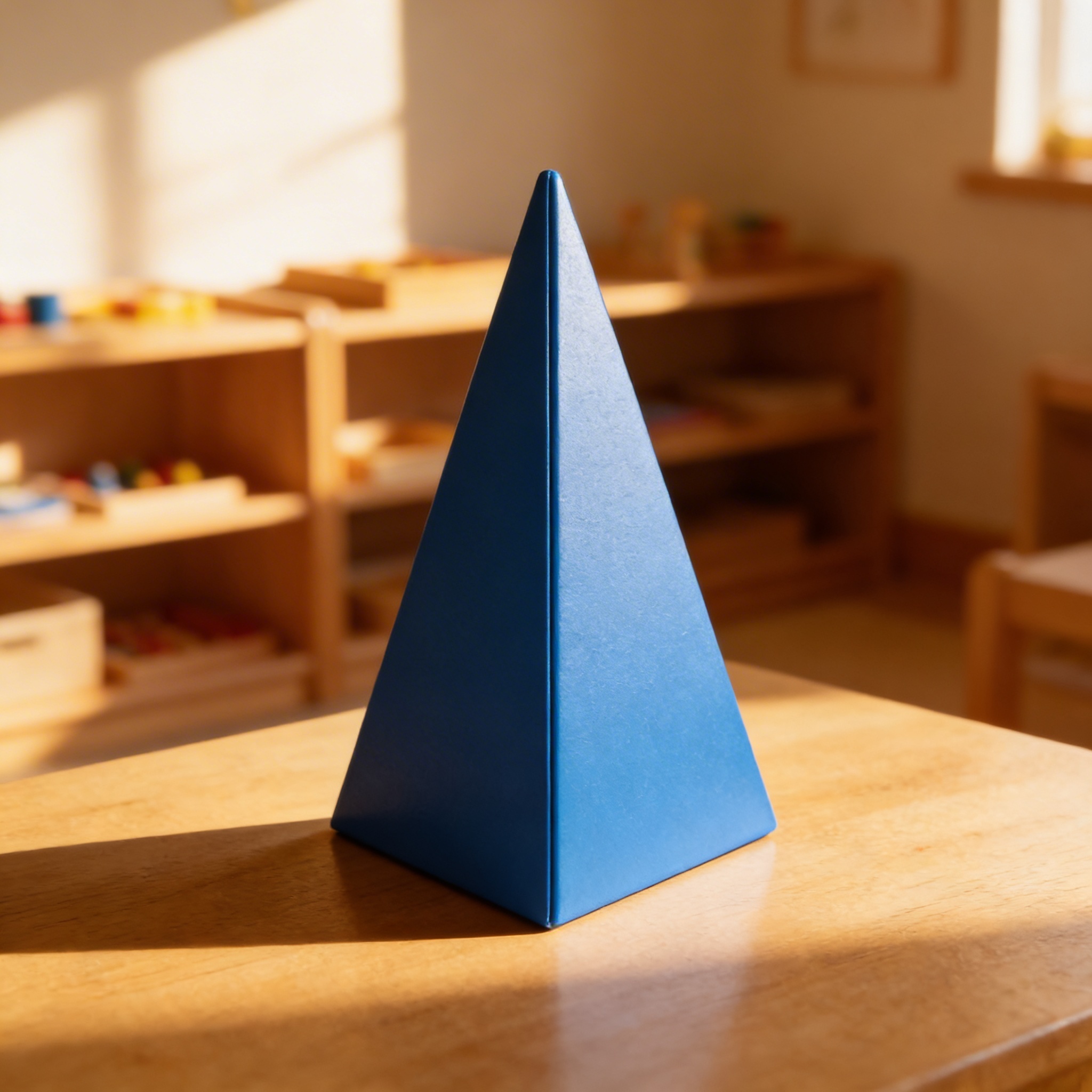
Each order includes everything needed for proper presentation and long-term use.
Follow the Montessori method of presentation for optimal child development.
Invite the child to explore one triangular prism, identifying its faces, edges, and vertices
Compare the two triangular prisms to establish they are identical (congruent)
Demonstrate joining the two prisms along their rectangular faces
Guide discovery that the combined shape forms a rectangular prism
Compare the formed rectangular prism with the solid rectangular prism
Every material is carefully selected for durability, safety, and authentic Montessori experience.
The smooth lacquered finish provides a tactile experience while the solid construction ensures durability for repeated handling during geometric explorations.
Each material supports multiple areas of child development simultaneously.
Manipulating and combining the prisms develops three-dimensional thinking and understanding of how shapes relate to one another.
Discovering that two triangular prisms equal one rectangular prism introduces concepts of volume, fractions, and geometric relationships.
Supports the transition from concrete geometric forms to abstract mathematical concepts in upper elementary studies.
Designed for child-sized hands
Professional tips from AMI-trained guides to maximize the educational value of this material.
“Connect to fraction work by showing how two halves make a whole in 3D form”
Use this material to introduce the concept of cross-sections in upper elementary
Link to cultural studies by exploring triangular prisms in architecture (roofs, bridges)
Create extension cards showing real-world examples of triangular prisms
Everything you need to know about this material.
These triangular prisms are made of solid wood with a smooth lacquered finish in Montessori blue. Each prism measures approximately 10cm in length with equilateral triangular bases. The identical size ensures they fit together perfectly to demonstrate geometric relationships.
Children discover that two identical triangular prisms combine to form a rectangular prism, reinforcing concepts of volume, surface area, and geometric relationships. This hands-on exploration helps students understand how complex shapes can be decomposed and recomposed, supporting advanced mathematical thinking.
Students can trace bases and faces, calculate surface area and volume, explore cross-sections, create geometric patterns, and combine them with other geometric solids. They're particularly useful for lessons on prisms, polyhedra, and spatial relationships in elementary mathematics.
Two identical prisms are essential for demonstrating the fundamental geometric principle that two triangular prisms equal one rectangular prism. This paired design allows children to physically manipulate and visualize this relationship, making abstract concepts concrete and memorable.
These prisms extend the work begun with the Geometric Solids in primary, connecting to elementary studies of volume, equivalence, and the nomenclature of geometric forms. They prepare students for more advanced work with the Theorem of Pythagoras and geometric cabinet extensions.
Can't find what you're looking for?
Contact Our Experts
Share your experience with this material and help other educators and parents.
Bundle related materials and save. Free curriculum guide included with every set.


